
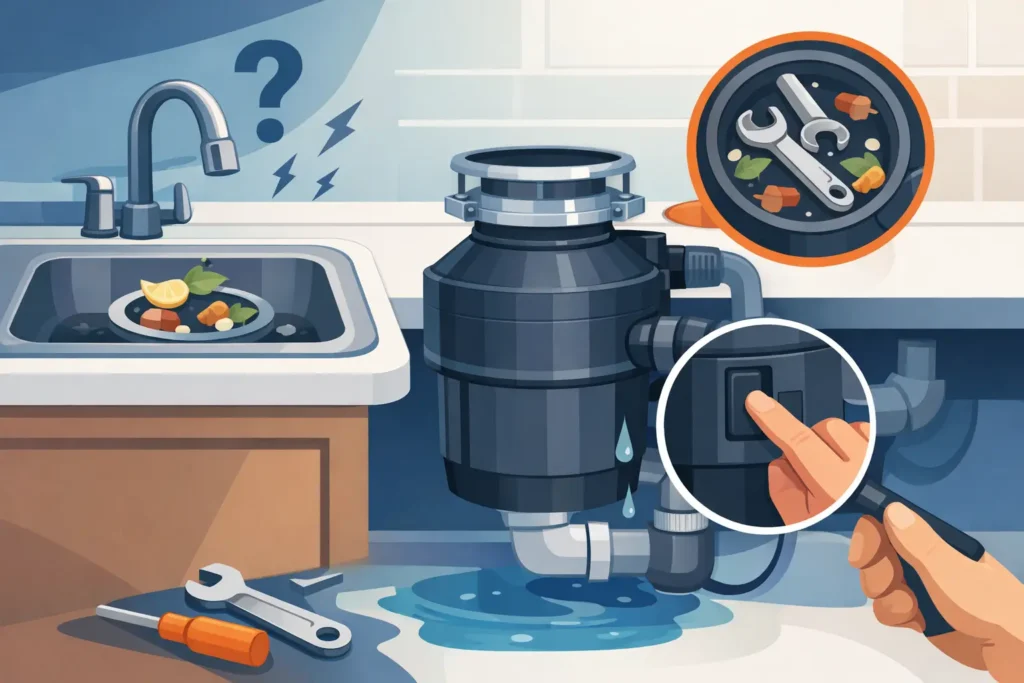
A garbage disposal usually quits at the worst time – right after dinner, with a sink full of water and a schedule that is already tight. If your garbage disposal not working situation just turned your kitchen into a backup zone, the good news is that some problems are simple to identify. The key is knowing what is safe to check yourself and what should be handled by a licensed plumber before a small issue turns into a leak, clog, or motor failure.
Why a garbage disposal stops working
Most disposal problems fall into a few categories. The unit may have lost power, the motor may be jammed, the drain line may be clogged, or the disposal itself may be worn out. From the outside, these issues can look similar. You flip the switch and nothing happens, or the unit hums without grinding, or the sink drains slowly and leaves standing water behind.
That is why guessing can waste time. A disposal that is completely silent usually points to a power issue. A humming unit often means something is stuck inside. Slow drainage can mean the disposal is working but the drain line downstream is blocked. Age matters too. If the unit is older and has been struggling for a while, repair may not be the most cost-effective fix.
Garbage disposal not working and completely silent
When a disposal makes no noise at all, start with the basics. Check whether it is plugged in. It sounds obvious, but under-sink plugs get bumped loose more often than people expect, especially in cabinets that store cleaning supplies.
Next, check your electrical panel for a tripped breaker. Some disposals also connect through a wall switch that may have failed. If the outlet has no power, the disposal may not be the real problem.
Many units also have a reset button on the bottom. If the motor overheated, that button may have popped out to protect the system. Pressing it can restore operation, but only if the underlying issue has cleared. If it trips again, there is likely a jam, an electrical problem, or a failing motor that needs professional diagnosis.
If you have power to the unit, the reset will not hold, and the disposal still stays silent, that usually points beyond a quick fix. At that stage, it makes sense to stop testing and have a plumber inspect the unit and wiring safely.
When the disposal hums but does not spin
A humming disposal is often jammed. Silverware, bottle caps, fruit pits, fibrous food, or hardened debris can lock up the grinding plate. The motor tries to turn, but it cannot move freely.
This is one of the most common service calls in kitchen plumbing because people keep flipping the switch, hoping the jam will clear itself. That can overheat the motor and turn a simple jam into a burned-out disposal.
Before doing anything, turn off the switch and cut power to the unit. Never put your hand into the disposal, even when it seems off. If the unit has a manual turning point underneath, it may be possible to free the jam with the proper tool. Once the obstruction is removed, the reset button may bring it back online.
But there is a trade-off here. If the disposal jammed because of one obvious object, the fix may be straightforward. If it keeps jamming, the blades may be worn, internal parts may be damaged, or the unit may be undersized for how the kitchen is used. In rental properties and commercial spaces, recurring jams are often a sign that the disposal is no longer a good fit for the workload.
If the sink is backing up
Sometimes the disposal runs, but the water does not drain. In that case, the disposal may not be the main issue. The problem may be in the drain piping, the trap, or the line farther down.
Food sludge, grease, coffee grounds, eggshell residue, and starchy buildup can create a thick blockage that slows everything down. If the dishwasher drains into the same line, you may also notice water backing into the sink when the dishwasher runs.
This is where a lot of homeowners make the problem worse with harsh chemical drain cleaners. Those products can damage parts, create safety hazards under the sink, and complicate later repairs. If the disposal is backed up and the line is clogged, mechanical clearing is the safer and more effective solution.
A plumber can tell whether the clog is local to the disposal drain assembly or deeper in the kitchen line. That matters because replacing the disposal will not solve a blocked drain, and snaking a line will not help much if the disposal motor itself is failing.
Common reasons disposals fail early
Not every broken disposal is just bad luck. Usage habits play a major role in how long the unit lasts.
Grease is a frequent offender. Even if it goes down warm, it cools in the pipes and traps food particles. Fibrous foods like celery, onion skins, and corn husks can wrap around moving parts. Hard items like bones and fruit pits can jam or crack internal components. Large amounts of rice, pasta, and potato peels can swell and create thick drain blockages.
Another issue is running the disposal without enough water. Water helps move ground food through the drain. Without it, debris stays in the chamber or settles in the pipe, leading to odors, clogs, and repeated strain on the unit.
Then there is simple age. Most garbage disposals do not last forever. Seals wear out, motors weaken, and internal grinding components lose effectiveness over time. When a unit is leaking from the body itself, replacement is usually the smarter option.
Repair or replace?
This depends on the condition of the unit, not just the immediate symptom. If the disposal is relatively new and the issue is a jam, reset, loose connection, or minor blockage, repair often makes sense. If the unit is older, leaking, tripping power repeatedly, or making loud metal-on-metal noises, replacement may save money and frustration.
For landlords and property managers, the decision is often about reliability. A repaired older disposal may work again, but if the tenant calls back in two weeks, the cheaper fix was not really cheaper. For homeowners planning to stay in the property, a new disposal can be worth it when the old one has become noisy, inconsistent, or prone to clogging.
A professional inspection helps avoid replacing the wrong part. What seems like a failed disposal can actually be a switch problem, wiring issue, dishwasher knockout plug issue on a newer install, or a kitchen drain clog.
What to do before calling a plumber
If your garbage disposal not working problem just started, there are a few safe checks worth making. Confirm the unit has power, check the reset button, and stop using it if it hums, leaks, or backs up the sink. If there is standing water, avoid continuing to run the disposal.
You should also look under the sink for signs of active leaking around the drain flange, dishwasher hose, or discharge pipe. Not every leak means the disposal body cracked, but identifying where the water is coming from can speed up the repair.
What you should not do is reach inside the unit with your hand, keep pressing the switch during a jam, or pour chemical cleaners into a backed-up disposal. Those are the steps that most often turn a manageable repair into a bigger plumbing job.
When it is time for professional service
If the unit is silent after a reset, humming but stuck, leaking from the housing, tripping the breaker, or causing repeated sink backups, it is time to bring in a licensed plumber. Kitchen plumbing problems tend to overlap. What starts as a disposal issue can involve the sink drain, dishwasher connection, electrical feed, or a larger drain blockage in the line.
That is where fast diagnosis matters. In a busy home or business, a disabled kitchen sink creates disruption quickly. A plumber can identify whether the disposal should be repaired, replaced, or whether the real problem is elsewhere in the system. For Tampa Bay homeowners and property managers who need quick, straightforward help, Royal King Plumbing handles garbage disposal and kitchen drain problems with the same focus customers expect during any urgent plumbing call – clear communication, honest pricing, and repairs built to last.
A disposal problem rarely improves by waiting, especially if water is backing up or leaking under the sink. The sooner the cause is identified, the easier it is to protect your cabinets, plumbing, and schedule from a much bigger mess.


