
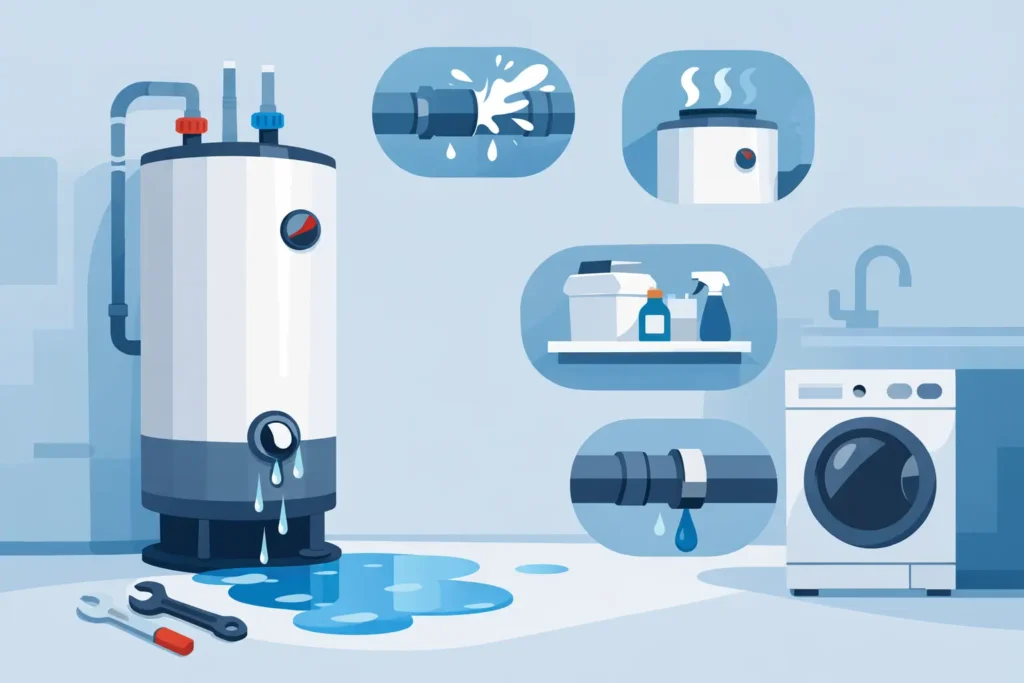
A water heater leak can go from a small puddle to damaged flooring, mold, or a complete loss of hot water faster than most property owners expect. If you are asking, why is water heater leaking, the location of the water matters. A drip from a pipe connection may be repairable. Water collecting beneath the tank can signal a much more serious problem.
Do not ignore a water heater that is actively leaking, even if it still produces hot water. Acting early gives you more repair options and helps protect your home, rental property, or business from costly water damage.
First, Find Where the Water Is Coming From
Dry the area around the water heater with towels, then watch carefully for fresh moisture. Water can travel along pipes, run down the side of the tank, and pool somewhere that makes the true source hard to spot. A licensed plumber can pinpoint the leak quickly, but a basic visual check can help you understand how urgent the situation may be.
If water is spraying, flowing steadily, or reaching electrical equipment, shut off the water supply to the heater if you can safely access the valve. For an electric unit, turn off power at the breaker. For a gas unit, avoid touching gas controls if you smell gas or hear hissing. Leave the area and call for immediate help.
For a slower leak, take these steps while arranging service:
- Move boxes, furniture, and stored items away from the water.
- Place towels or a shallow pan beneath a minor drip if it can be done safely.
- Avoid removing panels, loosening valves, or attempting to patch the tank.
- Take clear photos of the leak and the surrounding area for your plumber or property records.
Why Is Your Water Heater Leaking From the Top?
A leak at the top of the unit is often related to the cold-water inlet, hot-water outlet, shutoff valve, or nearby plumbing connections. These fittings can loosen over time, and corrosion may develop around threaded joints. In many cases, the tank itself is not the problem, which is good news. A plumber may be able to tighten, reseal, or replace a failed fitting without replacing the water heater.
Another possibility is a leak from the expansion tank, if your system has one installed above or near the heater. Expansion tanks help control pressure changes in closed plumbing systems. When their internal bladder fails or a connection corrodes, they can drip and make it appear as though the main water heater is leaking.
Condensation can also form on the outside of a tank, especially in humid Tampa Bay weather or when very cold water enters the system. Light moisture on a tank is not always a leak. However, condensation should not create a consistent puddle, cause rust streaks, or continue after the tank has warmed up. When in doubt, have the unit inspected rather than assuming it is harmless humidity.
Leaks From the Temperature and Pressure Relief Valve
The temperature and pressure relief valve, commonly called the T&P valve, is a critical safety component. It is usually located near the top or side of the tank and connects to a discharge pipe that runs toward the floor. Water coming from this pipe means the valve is opening or leaking.
Sometimes the valve itself is worn out and needs replacement. Other times, it is doing exactly what it is designed to do by releasing excess pressure or dangerously high temperature. Replacing the valve without finding the underlying cause can leave the problem unresolved.
High water pressure, a failed expansion tank, an overheating issue, or improper installation can all make a T&P valve discharge water. Do not cap, plug, or block this pipe. That turns a safety warning into a potentially hazardous situation. A professional should test the system pressure, inspect the valve, and determine whether the heater controls are operating correctly.
Water Around the Bottom of the Tank Is More Serious
When water is pooling beneath the water heater, the first question is whether it is coming from the drain valve or from the tank itself. A drain valve near the bottom can leak if it was not fully closed after maintenance, if its washer has failed, or if the valve is damaged. This is often repairable, although it should be addressed promptly.
The more concerning possibility is an internal tank leak. Conventional tank water heaters have a steel tank with a protective lining and a sacrificial anode rod. Over years of use, sediment and corrosion can wear down that protection. Once the tank wall corrodes through, water can escape from the bottom or through seams in the jacket.
A leaking tank cannot be reliably repaired. Sealants and temporary patches may slow visible water for a short time, but they do not restore the integrity of a pressurized hot-water tank. Replacement is normally the safe, lasting solution.
Age is an important clue. Many standard tank water heaters last roughly 8 to 12 years, though water quality, maintenance history, installation quality, and usage affect the timeline. If an older heater is leaking from the tank, putting money into repeated small repairs may not be the best value. A plumber can explain whether repair makes sense or whether replacement will prevent another emergency soon.
Sediment Can Cause Leaks and Shorten Heater Life
Tampa Bay water conditions can contribute to mineral buildup inside a tank water heater. As sediment settles on the bottom, it forces the unit to work harder and can create popping or rumbling noises during heating. Over time, that buildup can contribute to overheating, reduced efficiency, drain valve problems, and premature tank failure.
Flushing a water heater periodically may help reduce sediment, but it depends on the age and condition of the unit. Flushing a severely corroded older tank can sometimes reveal an existing weakness or trigger a leak that was already close to happening. That does not mean maintenance caused the failure. It means the tank had likely reached the end of its serviceable life.
For newer systems, routine maintenance is often a smart way to protect performance. For older units with rust, active drips, or inconsistent hot water, an inspection should come before any attempt to drain or flush the tank.
Tankless Water Heaters Can Leak Too
Tankless systems do not have a large storage tank, but they can still leak at internal components, isolation valves, water lines, condensate drains, pressure relief valves, or heat exchangers. A small leak beneath a tankless unit should not be dismissed simply because there is no tank to rust through.
Some tankless leaks are caused by worn seals or loose connections and can be repaired. Others involve scale buildup, freeze damage, or a failed heat exchanger. The right repair depends on the model, installation setup, water quality, and source of the leak. Professional diagnosis matters because opening a tankless unit without proper experience can damage components or create electrical and gas safety concerns.
When to Call for Emergency Water Heater Service
A minor drip deserves timely attention, but certain warning signs call for immediate plumbing service. Call right away if you have a steady flow of water, a leaking tank, no hot water combined with visible water damage, discolored water, strong rust around the heater, or water near electrical connections.
Gas water heater concerns also require urgency. If you smell gas, hear a gas leak, or suspect a venting issue, leave the area and contact the appropriate emergency service provider. Do not attempt to relight or repair the unit yourself.
For homeowners, landlords, and business owners in Tampa, Clearwater, Largo, Safety Harbor, and St. Petersburg, fast diagnosis can make the difference between a contained repair and extensive cleanup. Royal King Plumbing provides clear explanations, honest pricing, and durable water heater repairs or replacements based on what the system actually needs.
A water heater should provide dependable hot water, not leave you watching a growing puddle. If you see water where it should not be, protect the area, avoid risky DIY fixes, and get the source checked before a small leak becomes a property-wide problem.


