Tankless Water Heater Review for Florida Homes
A tankless water heater can solve a familiar household problem: the shower turns cold just as someone starts the dishwasher or laundry. But a tankless system is not automatically the right answer for every property. This tankless water heater review explains what these units do well, where they can fall short, and what Florida homeowners, landlords, and business owners should consider before replacing a conventional tank.
How a Tankless Water Heater Works
Unlike a conventional water heater that stores and reheats 40 to 80 gallons of water, a tankless unit heats water only when a fixture calls for it. Cold water enters the unit, passes through a heat exchanger, and leaves hot within seconds. The unit stops heating when the demand stops.
That on-demand design is the main appeal. There is no stored tank of hot water to run out during a long morning of showers. A properly sized tankless system can provide hot water continuously, provided the demand stays within its flow-rate capacity.
That last detail matters. “Endless hot water” does not mean unlimited hot water for every fixture at once. If several showers, a washing machine, and a dishwasher operate together, an undersized unit may struggle to keep the temperature stable. Proper sizing is more important than the name on the box.
Tankless Water Heater Review: The Real Advantages
For the right home or commercial application, a tankless water heater offers meaningful benefits. The first is efficiency. Conventional tank systems use energy to maintain the temperature of stored water, even when no one is using it. Tankless systems avoid much of that standby heat loss because they fire only when hot water is needed.
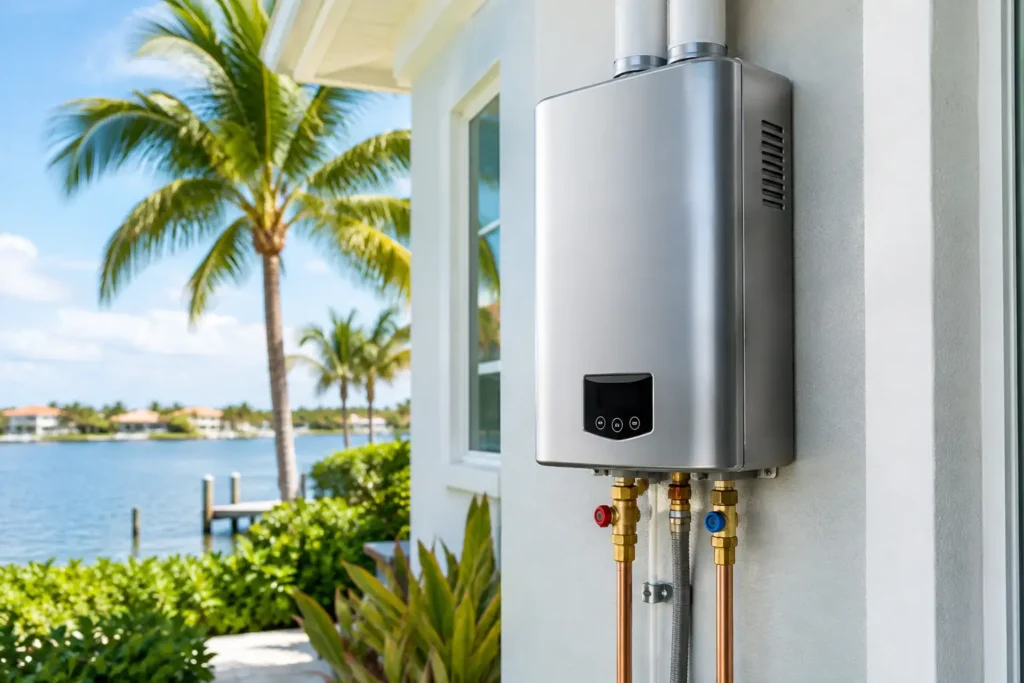
The second benefit is space. A wall-mounted tankless unit takes up far less room than a large storage tank. That can be valuable in condos, smaller homes, rental properties, utility closets, garages, and businesses where every square foot matters.
A tankless unit can also have a longer service life than a standard tank water heater when it is installed correctly and maintained on schedule. There is no large tank that can rust through and release dozens of gallons of water onto a floor. That does not make tankless equipment maintenance-free, but it does remove one common source of major water heater failures.
For homes with frequent back-to-back showers, the comfort factor is often the biggest reason to switch. The system does not need recovery time between users in the way a tank system does. If the household’s demand is within the unit’s rated capacity, hot water remains available.
Where Tankless Systems Fall Short
The upfront cost is the most common drawback. A tankless water heater itself typically costs more than a basic tank model, and installation can be significantly more involved. Gas units may need a larger gas line, new venting, a condensate drain, electrical work, or changes to the installation location. Electric tankless units can require substantial electrical capacity and multiple dedicated circuits.
Those upgrades are not optional details. They are part of a safe, code-compliant installation. Choosing the lowest initial price without addressing gas supply, venting, drainage, or electrical demand can lead to poor performance, repeated error codes, or unsafe conditions.
Tankless systems can also be sensitive to water quality. Mineral buildup affects the heat exchanger, especially where hard water is present. Periodic flushing helps remove scale and protects efficiency. Without maintenance, the unit may lose performance and wear out sooner than expected.
Another potential issue is the slight delay before hot water reaches a faucet. Tankless heating is fast, but it cannot instantly move hot water through a long run of pipe. A recirculation system can reduce that wait, though it adds cost and should be selected based on the home’s layout and daily use.
Gas vs. Electric Tankless Water Heaters
Gas tankless water heaters are often the better fit for larger households and properties with high simultaneous demand. They generally provide higher flow rates than electric units and can support multiple fixtures more comfortably. However, they require proper combustion air, venting, gas capacity, and professional installation.
Electric tankless models are compact and do not require gas venting. They can be a practical option for a small point-of-use application, such as a guest bathroom, office sink, or detached space. Whole-home electric systems deserve closer review because their electrical demand can be high. In some homes, the existing panel simply cannot support the required load without an upgrade.
A licensed plumber can evaluate the plumbing side of the project, while electrical capacity may need to be confirmed by a qualified electrician. Clear answers before installation are better than surprise costs after a unit has been purchased.
Sizing Matters More Than Marketing Claims
Tankless sizing is based primarily on flow rate and temperature rise. Flow rate is the number of gallons per minute the unit can heat. Temperature rise is the difference between the incoming water temperature and the temperature you want at the fixture.
Florida’s relatively warm groundwater can help tankless units perform efficiently because the unit does not have to raise the water temperature as dramatically as it would in a colder climate. Even so, a family home with two or three bathrooms needs a different system than a one-bedroom condo or a small commercial restroom.
Before recommending a unit, a professional should consider how many showers may run at once, the type of fixtures installed, the home’s gas or electrical supply, pipe layout, and whether the unit will serve the entire property or one area. For a rental property, it also helps to consider tenant turnover, maintenance access, and the cost of downtime if the equipment needs service.
Do not size a system based only on the number of bathrooms. A low-flow shower and a high-flow rainfall shower place very different demands on a water heater. The goal is consistent hot water during real-life peak use, not a rating that looks good on paper.
Installation Quality Affects Performance
A quality tankless water heater can still disappoint if the installation is rushed. Venting must use approved materials and follow the manufacturer’s requirements. Gas piping must be sized correctly. Condensate from high-efficiency gas models needs proper drainage. Water shutoff valves, service valves, and accessible connections make future maintenance safer and simpler.
The location also matters. Outdoor units can work well in appropriate locations, but they still need to be protected from damage and installed according to local requirements. Indoor units need proper venting and drainage. In either case, the installation should be clean, documented, and tested before the job is complete.
Ask for straightforward explanations of what is included in the estimate. A clear, itemized scope should address the unit, labor, permit requirements where applicable, venting or electrical changes, valves, disposal of old equipment, and expected maintenance. Honest pricing means knowing what you are paying for before work begins.
Maintenance Is Part of Ownership
Tankless water heaters need routine service to stay efficient. Annual maintenance is a sensible starting point for many homes, though water quality and usage can change the schedule. A professional flush removes mineral scale from the heat exchanger. The technician can also inspect filters, venting, connections, drainage, and error-code history.
Ignoring maintenance may not cause a problem immediately. Over time, however, scale buildup can reduce flow, affect temperature consistency, and place extra stress on internal parts. Regular service costs less than waiting for a no-hot-water call at the worst possible time.
For landlords and property managers, documented water heater maintenance can be especially useful. It creates a service history, helps identify recurring issues early, and supports better planning for replacement costs.
Is a Tankless Water Heater Worth It?
A tankless system is often worth the investment for households that use a lot of hot water, need more space, or plan to remain in the property long enough to benefit from efficiency and longevity. It can also be a strong choice when an aging tank heater is due for replacement and the property already has suitable gas, venting, or electrical infrastructure.
A conventional tank water heater may be the more practical choice when the budget is tight, hot-water demand is modest, or major upgrades would be required to support tankless equipment. There is nothing wrong with a properly installed, properly sized tank system. The best choice is the one that fits the building, budget, and daily demand.
If your current water heater is leaking, producing rusty water, making unusual noises, or failing to maintain temperature, do not wait for a full breakdown. Royal King Plumbing can assess the existing setup, explain the repair or replacement options clearly, and help you choose a dependable solution that makes sense for your property.
Leave a Reply