
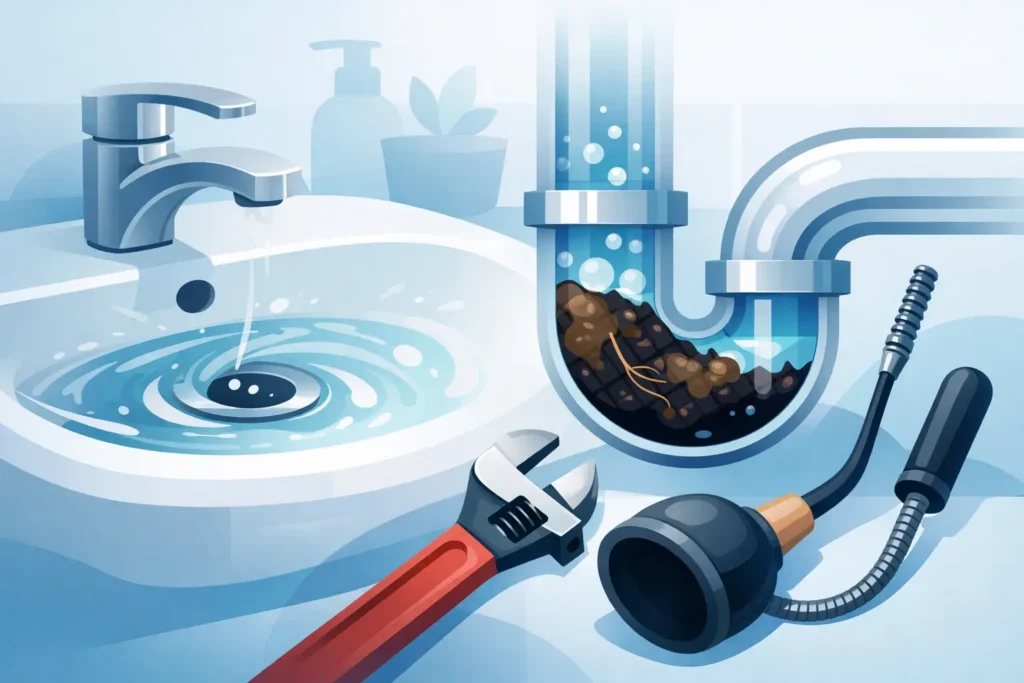
A slow drain usually starts as an annoyance. Then the sink backs up before work, the shower holds dirty water around your feet, or a tenant calls because the toilet is gurgling again. Removing clogs from drains is one of those jobs that seems simple until it turns into a bigger plumbing problem.
The right approach depends on where the clog is, what caused it, and how the drain is behaving. Some blockages respond to a basic fix. Others are warning signs of buildup deeper in the line, damage in the pipe, or a sewer issue that needs immediate attention. Knowing the difference can save time, money, and a lot of frustration.
Removing clogs from drains starts with the symptoms
Not every clog looks the same, and the details matter. A bathroom sink that drains slowly but still clears is different from a kitchen sink that backs up immediately when the dishwasher runs. A single shower drain clog points to one fixture. Multiple drains slowing down at once often points to a larger issue in the main line.
If water backs up in one fixture when you use another, that is not a minor inconvenience. For example, if flushing a toilet causes water to rise in a tub, or running a washing machine leads to backup in a floor drain, the blockage may be farther down the system. That is where DIY methods often stop helping and start wasting time.
Bad odors, bubbling sounds, and recurring clogs are also signs to take seriously. When the same drain keeps clogging after you have already cleared it once, the problem is usually not fully gone. It may be grease lining the pipe, compacted debris, or a partial blockage that catches more material each week.
What you can safely try first
For a minor clog, start with the least aggressive option. In many cases, a sink or tub drain can be improved by removing visible debris from the stopper area and flushing with hot water. This works best on soap scum, light grease, or hair near the surface. It will not do much for a dense blockage deeper in the line.
A plunger is still one of the most effective basic tools when used correctly. On sinks, seal the overflow opening first so the pressure goes where it should. Use steady, controlled plunges instead of quick, shallow pumps. On tubs and showers, the same principle applies. Good pressure matters more than force.
If that does not work, a hand drain snake can help with clogs close to the fixture. Hair, paper, and sludge near the trap are common targets. Go slowly. Forcing the cable can scratch older pipes, damage fittings, or simply punch through part of the clog without removing the full mass.
Taking apart the P-trap under a sink is another reasonable step if you are comfortable doing it. Place a bucket underneath, loosen the fittings carefully, and clean out any debris inside. This is often effective for bathroom sinks and some kitchen sink blockages. The trade-off is that reassembly has to be done correctly, or you create a leak while solving a drain problem.
What to avoid when removing clogs from drains
Chemical drain cleaners are the shortcut many people reach for first, but they are rarely the best answer. They can sit in the pipe without fully clearing the blockage, especially if the clog is solid or deep in the line. That leaves you with standing chemical water in the fixture and a tougher repair situation afterward.
They can also be hard on older plumbing. In homes and commercial properties with aging pipes, repeated chemical use may weaken joints or accelerate pipe deterioration. Even in newer systems, these products do not remove the full cause of many clogs. They may burn a narrow path through buildup while leaving the rest behind.
Store-bought plastic barbed tools can help with hair near the drain opening, but they are not a cure-all. Used too aggressively, they can break off, catch on rough pipe interiors, or compact soft debris farther into the line. The same goes for improvised tools like wire hangers. They often create more trouble than they solve.
Kitchen drains need a different strategy
Kitchen clogs are usually not just about food scraps. Grease is the real problem in many cases. It may go down the drain warm and liquid, but it cools inside the pipe and sticks to the walls. Over time, it traps food particles and creates a stubborn blockage that keeps coming back.
That is why hot water may help with a mild slowdown but not a true clog. If grease buildup is already heavy, you need more than a quick flush. Garbage disposals can add to the issue, especially when fibrous foods, coffee grounds, pasta, rice, and grease are all part of the mix.
A kitchen sink that clogs on both sides, backs up when the dishwasher drains, or smells foul even after cleaning usually needs a more thorough mechanical cleaning. At that point, the goal is not just poking a hole through the blockage. It is clearing the pipe wall buildup so water flows normally again.
Bathroom drains usually point to buildup close to the fixture
In bathrooms, hair and soap scum are the usual causes. Showers, tubs, and vanity sinks collect gradual buildup that narrows the pipe until drainage becomes noticeably slow. These clogs often respond well to manual removal and snaking if handled early.
The challenge is that repeated slow drainage can also point to venting issues or a blockage farther down the branch line. If you clean out visible hair and still hear gurgling, or if multiple bathroom fixtures are sluggish at the same time, the issue may be beyond the fixture drain.
Toilets are their own category. A single clogged toilet may clear with a proper flange plunger. But if the toilet overflows easily, drains weakly after plunging, or backs up along with nearby fixtures, it is time to stop treating it like a simple blockage. That pattern often points to a larger drain line issue.
When it is time to call a licensed plumber
Some drain problems should be handled professionally from the start. If wastewater is backing up into tubs, showers, floor drains, or lower-level fixtures, you may be dealing with a main line blockage. That is not the time for repeated plunging or another bottle of drain cleaner.
The same goes for recurring clogs, sewage odors, and drains that stay slow after you have already tried the obvious fixes. A licensed plumber can identify whether the problem is routine buildup, root intrusion, a damaged section of pipe, or a more serious obstruction. That diagnosis matters because the right repair for one problem can be the wrong one for another.
Professional drain cleaning also tends to be more complete. Snaking can break up many clogs, but in some lines, hydro jetting or camera inspection is the better path. It depends on the material in the pipe, the condition of the line, and whether the issue is isolated or part of a larger pattern.
For property managers and business owners, speed matters even more. A clogged drain in a restaurant, office, rental, or retail space is not just inconvenient. It can interrupt operations, create sanitation concerns, and trigger damage if the backup spreads. Fast, accurate service limits downtime and prevents the problem from escalating.
Preventing the next clog is usually simpler than fixing the current one
Once a drain is cleared, the next step is changing what goes into it. In kitchens, that means keeping grease, oils, and food waste out of the sink as much as possible. In bathrooms, drain screens do a lot of good because they catch hair before it reaches the line.
Routine maintenance also matters. If a drain has a history of slowing down every few months, waiting until it fully blocks is usually the expensive option. Early service can remove buildup before it turns into an emergency call.
For older properties in Tampa Bay, prevention can be especially valuable. Mature landscaping, aging drain lines, and heavy plumbing use all increase the chance of recurring issues. A professional inspection can catch patterns that are not obvious from the fixture level.
When you are dealing with a stubborn drain problem, the goal is not to guess harder. It is to solve the actual cause, cleanly and without creating a larger repair. That is the standard Royal King Plumbing believes customers should expect, whether it is a simple fixture clog or a drain issue that needs urgent attention. A drain should do one job well – carry water away without delay, odor, or backup. If yours is not doing that, it is worth fixing it the right way before the problem spreads.


