
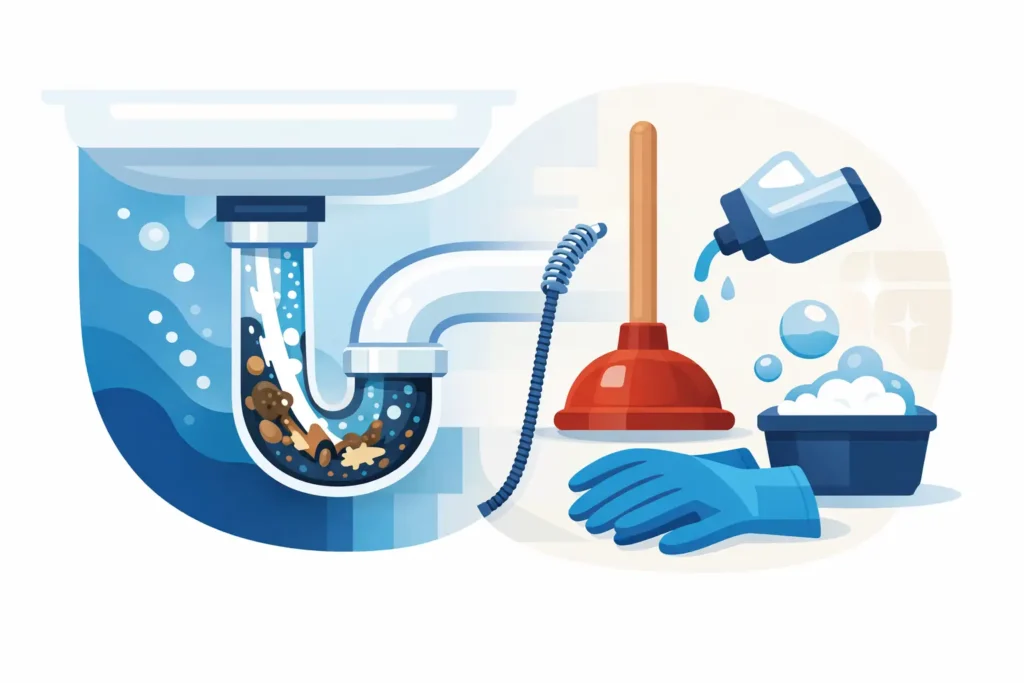
A slow drain usually starts small. Water hangs around your feet in the shower, the kitchen sink takes a little longer to empty, or a bathroom sink begins to gurgle after you brush your teeth. If you are searching for how to clean out a drain, the main goal is simple: clear the clog without damaging your pipes or turning a minor problem into an emergency.
Most drain clogs are caused by everyday buildup. In bathroom sinks and tubs, that usually means hair, soap scum, toothpaste, and residue that sticks to the inside of the pipe over time. In kitchen drains, grease, food particles, coffee grounds, and starches are common problems. In commercial spaces or rental properties, repeated heavy use can speed that process up.
How to clean out a drain without making it worse
The safest approach is to start with the least aggressive method and move up only if needed. That matters because some drain problems are close to the surface and easy to remove, while others are deeper in the line and need professional equipment.
Start by removing any visible debris around the drain opening. In a bathroom sink or tub, you may be able to pull out a hair wad by hand using gloves or a simple plastic drain tool. It is not glamorous, but it is often effective. If the clog is right at the top, this may solve the problem immediately.
Next, try hot water, but use some judgment. Hot tap water can help loosen soap scum and light grease buildup. Pour it slowly in stages rather than all at once. If you have older pipes, especially PVC joints or fragile drain assemblies, boiling water is not always the best idea. Extremely high heat can stress certain materials, so hot tap water is usually the safer choice.
If that does not work, use a plunger made for sinks or tubs. A good seal is important. In a bathroom sink, cover the overflow opening with a rag so you can build proper pressure. In a kitchen sink with two basins, seal the second side before plunging. A few steady plunges are usually better than frantic ones.
For clogs that still will not move, a drain snake or hand auger is often the next step. Feed it in slowly, rotate as needed, and avoid forcing it. If you hit resistance, you may have found the clog, or you may be pushing into a bend in the pipe. Force is where many DIY attempts go wrong. Too much pressure can damage the drain, disconnect fittings, or compact the clog deeper into the line.
When a homemade fix can help
A simple mix of baking soda and vinegar gets a lot of attention. Sometimes it helps with odor or light residue, but it is not a cure-all for real blockages. If your drain is moving slowly because of mild organic buildup, it may freshen things up. If you have a dense hair clog or grease-packed kitchen line, it usually will not do enough.
Dish soap followed by hot water can help in a kitchen sink if the issue is minor grease buildup, but again, there is a limit. Once grease hardens or combines with food debris deeper in the pipe, surface-level fixes stop being useful.
That is the trade-off with DIY drain cleaning. It can work well for small, accessible clogs. It does not work as well for repeated backups, deep line obstructions, or anything affecting more than one fixture.
What not to do when cleaning out a drain
Chemical drain cleaners are the biggest mistake we see homeowners make. They are marketed as fast and easy, but they often create more trouble than they solve. These products can sit in the pipe, generate heat, damage older plumbing, and make future service more hazardous. If the clog remains, you still need a plumber, except now the drain may contain caustic chemicals.
It is also a bad idea to keep plunging or snaking a drain for an hour when the signs point to a bigger problem. If water backs up into another fixture, if the toilet bubbles when the sink drains, or if multiple drains are slow at once, that is usually not a simple surface clog. It may be a main line issue, and that calls for professional diagnosis.
Another common mistake is taking apart plumbing under the sink without a clear plan. Yes, some P-trap clogs are easy to remove. But if the trap is not reinstalled correctly, you can end up with leaks, sewer gas odors, or fittings that drip into the cabinet long after the clog seems gone.
How to tell where the clog is
Location matters. A bathroom sink that drains slowly but does not affect anything else often has a localized clog near the stopper or trap. A tub that fills around your ankles is commonly dealing with hair buildup near the drain opening. A kitchen sink that backs up on both sides, especially when the dishwasher runs, may have a deeper branch line blockage.
If one drain is slow, you may be able to handle it yourself. If several fixtures are acting up together, the problem is likely farther down the system. That is when camera inspection or professional drain cleaning starts to make more sense than trial and error.
For landlords and property managers, pattern matters too. If the same unit or restroom has recurring drain issues, the real problem may be pipe scale, poor slope, root intrusion, or years of buildup that never fully clears with basic tools.
When to call a plumber for drain cleaning
If the drain has completely stopped, comes back after a temporary fix, smells foul, or is affecting multiple fixtures, it is time to bring in a licensed plumber. Fast service matters here, because drain issues can escalate quickly. A backed-up sink can turn into cabinet damage. A clogged floor drain can become a cleanup problem. A main line issue can affect the whole property.
Professional drain cleaning is not just about punching a hole through the clog. A good plumber will identify what the blockage is, where it sits, and whether there is pipe damage contributing to it. In some cases, a drain snake is enough. In others, hydro jetting or camera inspection is the better option.
That is especially true for commercial properties and older homes around Tampa Bay, where aging pipes, heavy use, or hidden buildup can create repeat problems. The right fix is the one that actually lasts.
How to keep drains clear after you clean them out
Once the water is flowing again, prevention becomes much easier than emergency cleanup. In bathroom drains, use a hair catcher and clean it regularly. In kitchen sinks, avoid washing grease, oils, rice, pasta, and coffee grounds down the drain. Run water when using the garbage disposal, but remember that a disposal is not a license to send anything down the line.
It also helps to flush drains periodically with hot tap water, especially in sinks that see daily soap or grease use. That will not replace real cleaning, but it can slow down buildup.
For rental and commercial properties, a maintenance plan can save a lot of time and frustration. Preventive drain service is often far less expensive than dealing with an overflow during business hours or after a tenant call late at night.
How to clean out a drain when the problem keeps coming back
A recurring clog is a sign that the first fix was partial or the problem is structural. You may have removed enough debris to restore flow, but not enough to clear the full restriction. Or the pipe may have scale, corrosion, root intrusion, or a belly in the line that catches waste over and over.
That is why repeat drain issues deserve a closer look. Temporary relief can be misleading. If the same sink, shower, or floor drain clogs every few weeks, the goal should not be another short-term workaround. The goal should be finding the reason it keeps happening.
At that point, professional equipment gives you answers a bottle or hand tool cannot. A licensed plumber can inspect the line, explain what is happening in plain terms, and recommend the repair or cleaning method that fits the situation.
If you are dealing with a stubborn clog, the safest answer is not always the most aggressive one. It is the one that clears the drain, protects the pipe, and keeps the problem from coming right back. When in doubt, getting the line checked early can save you from a much bigger plumbing call later.


