That slow-draining shower usually starts the same way – a little standing water, a gurgling sound, and then a full clog at the worst possible time. If you are searching for a drain cleaner hair and clog remover, the real question is not just what clears the blockage today. It is what clears it safely without creating a bigger plumbing problem tomorrow.
Hair clogs are one of the most common drain problems in homes, rental properties, and commercial restrooms. They build gradually, often mixing with soap scum, shaving residue, grease, and mineral buildup inside the pipe. Some products can help with a minor blockage near the drain opening. Others only offer a temporary fix, and some can make the situation worse if the line is already heavily blocked.
What a drain cleaner hair and clog remover can actually do
A good drain cleaner hair and clog remover is designed to break up or pull out organic material that collects in bathroom sinks, showers, and tubs. Hair is the main culprit, but it rarely acts alone. Once strands start catching in the drain, they collect soap, body oils, toothpaste, and other debris. Over time, that sticky mass narrows the pipe and slows water flow.
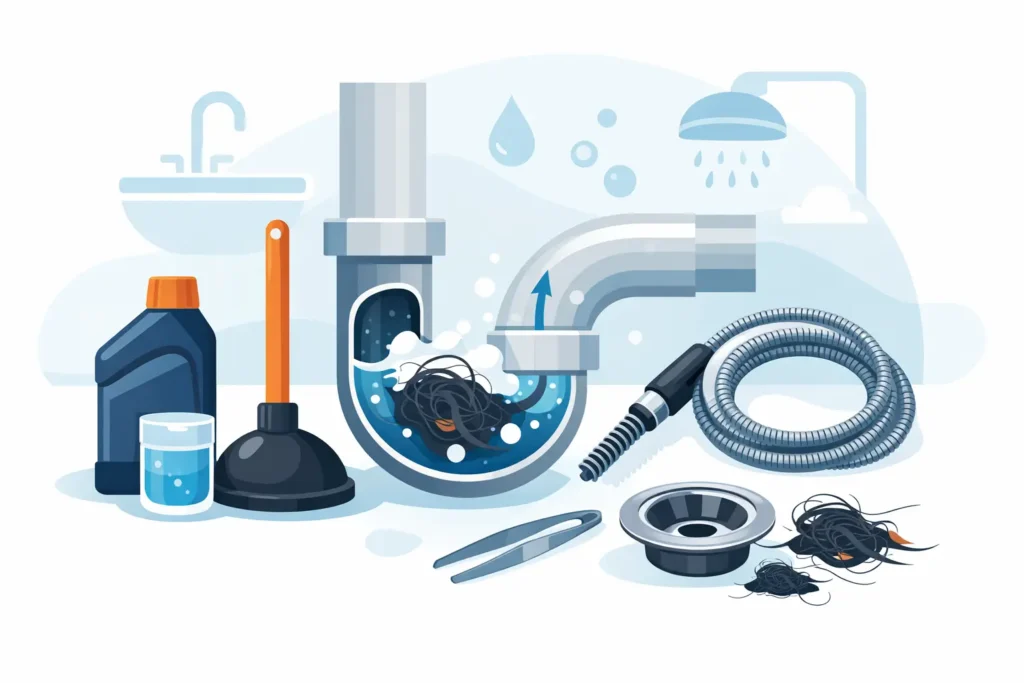
For a small clog close to the drain opening, a manual remover tool often works better than a chemical product. Plastic drain snakes, barbed strips, and retrieval tools can physically remove the hair without introducing harsh substances into the plumbing system. That is usually the safest starting point for bathroom drains.
Chemical drain cleaners have a narrower role. Some are made to dissolve organic matter, but results vary depending on how deep the clog is, how compacted it has become, and what type of pipe is in place. If water is fully backed up or draining extremely slowly, chemicals may sit in the line without reaching the clog effectively.
The safest options for hair clogs
When customers call about recurring shower or sink backups, the most reliable solution is usually simple mechanical removal first. That means removing the stopper, pulling out the visible hair, and clearing the trap or nearby section of pipe if needed.
In many homes, a basic drain tool can solve the issue if the clog is still local. Hot water can help loosen soap residue, though it will not do much against a thick hair blockage by itself. A plunger can also help in some sink and tub situations, especially when the clog is not tightly compacted.
Enzyme-based cleaners are another option for maintenance. These products work more slowly than chemical cleaners, but they are generally gentler on pipes. They are better for preventing buildup than for clearing a severe clog. If you are expecting a fast fix for a completely blocked drain, they may not deliver the result you need.
When chemical drain cleaners are a bad idea
Not every clogged drain should be treated with store-bought liquid cleaner. In fact, some should not be treated that way at all.
Older pipes, partially damaged lines, and repeated clogs are all situations where chemical products can create risk. Harsh drain cleaners can generate heat and fumes, and if they sit in the pipe too long, they may contribute to corrosion or damage certain materials. If someone later opens the drain or disassembles the trap, there is also a safety concern from chemical exposure.
This matters even more in commercial properties and rental units, where multiple people may have already tried different products before a plumber arrives. Mixing cleaners is never a good idea. It can create dangerous reactions and makes professional service more difficult.
If the drain backs up again soon after treatment, that usually points to a deeper issue than surface hair. The clog may be farther down the line, or there may be a buildup problem that needs proper drain cleaning equipment rather than another bottle from the store.
Signs the clog is deeper than hair
Hair clogs are common, but they are not the only reason a drain slows down. If more than one fixture is affected, or if the problem keeps returning, the issue may be in the branch line or main drain.
Watch for water backing up into another fixture, foul drain odors that do not go away, bubbling noises after flushing or draining, or repeated slow drainage even after using a remover tool. In kitchens, grease and food debris can mimic the symptoms of a hair clog. In older properties, scale buildup and pipe wear can also restrict flow.
At that point, using a drain cleaner hair and clog remover over and over is mostly guesswork. You may get a little improvement, but you are not solving the actual problem. A professional inspection helps identify whether the blockage is local, deep in the line, or tied to pipe condition.
How professional drain cleaning is different
Professional drain service is not just stronger drain cleaner. It is a more accurate way to diagnose and remove the blockage.
A licensed plumber can assess where the clog is located, what it is made of, and whether there is any pipe damage contributing to the backup. Depending on the issue, that may involve a drain snake, auger, or other specialized equipment designed to clear the line without unnecessary damage.
That distinction matters. A shower drain clogged with surface hair requires a different approach than a commercial restroom line with long-term buildup. The goal is not just to get the water moving for a few hours. It is to restore proper flow and reduce the chance of the same problem coming right back.
For homeowners and property managers, this can save time and money. Repeatedly buying products, dealing with recurring backups, and risking damage to the plumbing often costs more in the long run than getting the line cleared correctly the first time.
Preventing the next hair clog
The best way to deal with hair clogs is to stop them before they build up. That does not require complicated maintenance, but it does require consistency.
Drain screens in showers and tubs are one of the simplest and most effective tools. They catch hair before it enters the pipe and are easy to clean. Regular stopper cleaning also helps, especially in bathroom sinks where hair and toothpaste combine into a dense blockage.
It is also smart to avoid treating drains like a catch-all. Wipes, paper towels, cotton swabs, grease, and hygiene products all create buildup problems that no hair remover tool is designed to handle. In rental properties and multi-user spaces, clear expectations make a difference.
A periodic professional drain cleaning may also make sense for properties with frequent use, older plumbing, or a history of repeat clogs. That is especially true for landlords, restaurants, salons, and other businesses where downtime becomes disruptive fast.
When to stop trying DIY methods
There is nothing wrong with trying a simple drain tool for a minor bathroom clog. But there is a point where DIY stops being efficient.
If the drain is completely blocked, if multiple fixtures are affected, if sewage odor is present, or if previous attempts have failed, it is time to bring in a professional. The same goes for emergency situations where toilets, showers, or sinks are overflowing or backing up into occupied areas.
Fast response matters in those moments. Water damage, sanitation issues, and tenant complaints can escalate quickly when drainage problems are left unresolved. A qualified plumbing team can identify the issue, explain the repair clearly, and handle it without unnecessary delays.
For Tampa Bay property owners, that practical, straightforward approach is what matters most. Royal King Plumbing handles drain issues with the same focus customers expect during any urgent plumbing call – quick diagnosis, honest pricing, and repairs built to last.
Choosing the right drain solution is really about knowing the difference between a small nuisance and a system problem. A simple hair remover may be enough for a fresh, shallow clog. If the problem keeps coming back, your plumbing is asking for more than a temporary fix. Acting early is usually the cleanest, safest, and least expensive move.


