
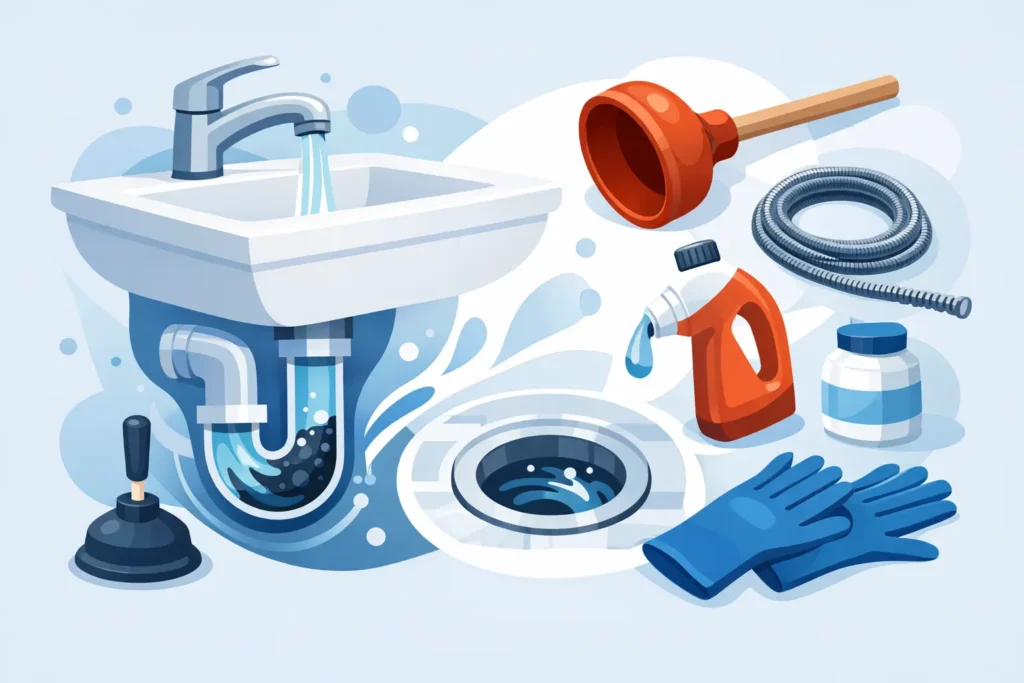
A sink that starts draining slowly at dinner time has a way of turning into a full backup by morning. When people search for drain cleaners clog remover sink solutions, they usually want one thing – a fast fix that will not turn a simple clog into pipe damage, cabinet leaks, or a bigger plumbing bill.
That urgency makes sense. A blocked kitchen or bathroom sink affects the whole property, and the wrong product or DIY method can make the situation worse. Some clogs respond to a simple cleaning. Others are deeper in the line, packed with grease, soap scum, hair, food debris, or scale buildup that needs professional drain cleaning equipment to remove safely.
How drain cleaners clog remover sink products really work
Most store-bought drain cleaners fall into a few categories. Chemical cleaners use heat or corrosive action to break down organic material. Enzyme and bacteria-based products work more slowly and are generally marketed for maintenance rather than urgent backups. Foaming cleaners try to coat the pipe walls, while liquid formulas are designed to cut through standing water and reach the clog.
The problem is that packaging often makes every option sound universal. It is not. A bathroom sink clogged with hair and toothpaste behaves differently from a kitchen sink packed with grease and food residue. A disposal line with years of buildup is different again. If the clog is caused by a foreign object, a misaligned pipe, or a blockage farther down the branch line, a bottle from the hardware store may do very little.
There is also the pipe condition to consider. Older metal pipes, already weakened fittings, and certain drain assemblies do not always respond well to harsh chemicals. What looks like an easy fix can create a leak under the sink or inside the wall if the pipe is already compromised.
When a sink clog remover helps and when it does not
A mild slow drain with early buildup is the best-case scenario for a basic sink clog remover. If water is still moving and the issue is limited to soap residue or light grease, a non-aggressive approach may buy you time. That usually means manual cleaning of the stopper, flushing with hot water when appropriate, and using a product that matches the type of clog.
If the sink is fully backed up, draining into another fixture, gurgling loudly, or producing foul odors that keep returning, it is usually no longer a simple surface clog. At that point, the blockage may be deeper in the line, and liquid cleaners often sit in one place without clearing the real problem. Repeated use can leave caustic liquid in the trap and drain, which also creates a safety issue for anyone who has to open the piping later.
For commercial spaces and rental properties, time matters even more. A recurring sink clog can disrupt tenants, customers, kitchen operations, or restroom access. Temporary chemical fixes often cost more in the long run because the line never gets fully cleaned.
The biggest risks with chemical drain cleaners
The main selling point of chemical drain cleaners is speed, but speed on the label does not always mean speed in the pipe. If the product cannot reach the blockage properly, it may heat up, sit in standing water, and weaken nearby pipe material without solving the clog.
That is especially risky with older plumbing systems. Corrosion, past repairs, and loose slip-joint connections under sinks can all be aggravated by repeated chemical exposure. Even newer systems can have issues if the cleaner is overused or mixed with another product. Mixing chemicals is one of the most common homeowner mistakes, and it can create dangerous fumes or splash hazards.
There is also the issue of false confidence. If a sink drains for a day after chemical treatment, many people assume the problem is gone. In reality, the cleaner may have punched a narrow hole through buildup while most of the obstruction remains on the pipe walls. That is why the same sink often clogs again within days or weeks.
Safer first steps before using a drain cleaner
If the sink is slow but not overflowing, start with the basics. Remove and clean the stopper if accessible. In bathroom sinks, hair and soap paste near the drain opening are common and easy to miss. In kitchen sinks, check for grease-heavy residue and food waste around the basket strainer and disposal connection.
A careful plunger can help if used correctly on a sink with enough water to create suction. For double-bowl kitchen sinks, one side needs to be sealed while the other is plunged. If there is a garbage disposal, make sure power is off before inspecting anything near the unit.
A manual drain snake is often more effective than a bottle cleaner for localized clogs. It physically removes or breaks apart debris rather than trying to dissolve it. That said, snaking has limits. If there is heavy grease, scale, or a blockage farther into the branch line, a small homeowner tool may not clear enough of the pipe to restore proper flow.
Signs the clog is deeper than the sink drain
Some sink problems start at the fixture but point to a larger drainage issue. If more than one sink is slow, if a dishwasher backs up into the kitchen sink, or if nearby fixtures gurgle when water drains, the blockage may be farther down the system. In a commercial property, that can mean a shared line issue. In a home, it may involve a branch drain or even the main line.
Recurring clogs are another red flag. If you have used a drain cleaners clog remover sink product more than once for the same fixture, it is worth asking why the problem keeps returning. The answer is usually that buildup was never fully removed, or there is a structural issue such as belly, offset piping, root intrusion, or scale restricting the line.
Odors matter too. A persistent sewer smell or rotten odor near a sink can come from trapped debris, but it can also signal venting issues, severe buildup, or drainage problems beyond the trap. That is not something to ignore, especially in a business or rental setting where sanitation complaints can escalate quickly.
Why professional drain cleaning is often the better fix
Professional drain service is not just about getting water to go down again. It is about identifying where the blockage is, what it is made of, and whether the drain line has damage or heavy buildup that will keep causing trouble. That diagnosis is what turns a temporary fix into a lasting repair.
A licensed plumber can use the right tool for the job instead of guessing. That may include a professional cable machine, a more effective drain auger, or hydro jetting when the pipe condition and clog type make it the right choice. In some cases, a camera inspection is the smartest next step because it shows whether the issue is simple buildup or something more serious inside the line.
For property owners, that saves time and prevents repeat service calls. For homeowners, it reduces the chance of hidden leaks, cabinet damage, and the frustration of a sink that keeps backing up at the worst time. Fast response also matters when the sink is tied to a busy kitchen, tenant turnover, or customer-facing restroom.
Choosing the right help for sink clog problems
When you call for drain service, clear communication matters as much as the repair itself. You want to know what caused the blockage, what was done to clear it, and whether there are signs of a larger issue. Honest pricing matters too, especially when a simple stoppage turns out to be a deeper line problem.
That is why many Tampa Bay property owners prefer a plumber who can respond quickly, explain the issue in plain language, and document the work clearly. Royal King Plumbing built its reputation around that kind of service – fast arrival, straightforward answers, and repairs that are meant to last instead of patching over the problem.
A sink clog is easy to put off when it still drains a little. But slow drains rarely fix themselves, and repeated chemical treatments often buy less time than people expect. If the sink is backing up, keeps clogging, or shows signs of a deeper drain issue, the smartest move is to address it before a small blockage turns into a messy interruption.


