
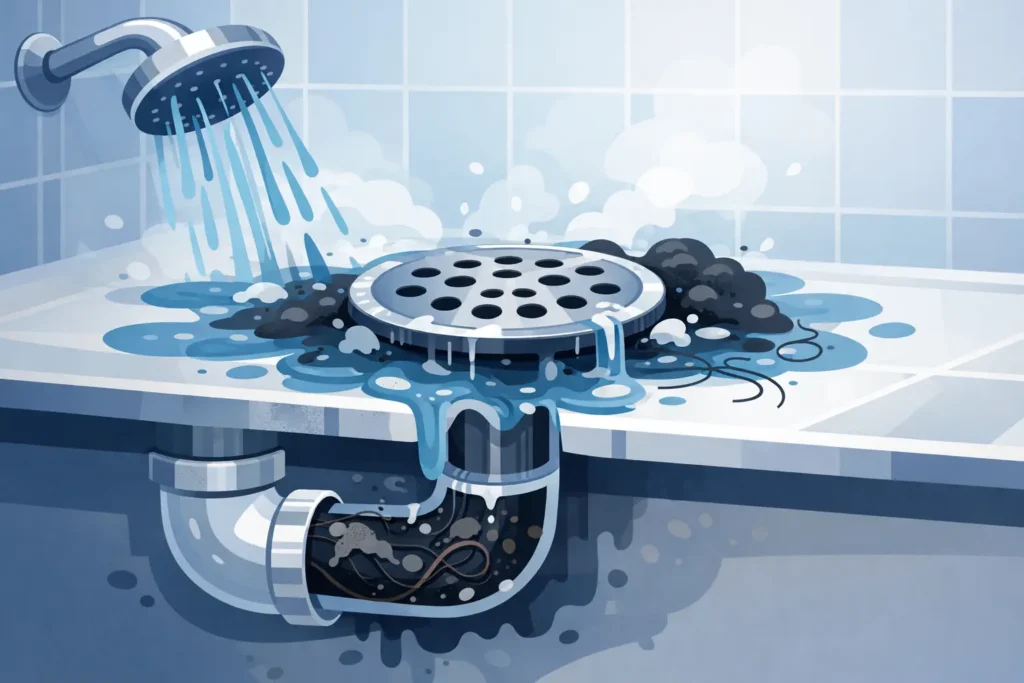
You step into the shower, turn on the water, and within minutes you are standing in a shallow pool that should not be there. A shower drain backing up is not just annoying. It is usually a sign that water is being blocked somewhere in the drain line, and the longer it sits, the more likely it is to turn into a bigger plumbing problem.
In many Tampa Bay homes and commercial properties, the cause is straightforward – hair, soap residue, or buildup near the drain opening. But not every backup starts and ends at the shower. Sometimes the issue is deeper in the line, tied to a larger drainage problem, or connected to multiple fixtures in the property. Knowing the difference matters because the right fix depends on where the blockage actually is.
What causes a shower drain backing up?
Most shower backups come from gradual clogs. Hair catches in the drain, soap scum sticks to pipe walls, and over time water loses the space it needs to move freely. At first the drain may only seem a little slow. Then it starts pooling. Eventually, it backs up almost as soon as the shower starts running.
Older properties can be more prone to this because drain lines may already have years of buildup inside them. In homes with multiple occupants, the drain simply sees more daily use. In commercial spaces or rental properties, heavy use can speed the problem up even more.
There are also cases where the shower is not the real source of the clog. If a toilet, sink, or tub is draining poorly at the same time, the blockage may be farther down the branch line or even in the main drain. That is when a simple surface cleaning is less likely to solve it.
Signs the problem is more than a simple shower clog
A basic clog near the drain usually causes slow drainage in just that one shower. If the water backs up every time and nothing else in the property seems affected, the blockage may be close to the opening.
If you hear gurgling from nearby drains, notice water coming up in another fixture, or find that the toilet and shower seem to affect each other, the issue may be deeper in the system. A main line problem can show up in a shower because it is one of the lowest drain points in the building. Water looks for the easiest place to rise, and the shower often becomes that spot.
Bad odors are another clue. A shower that smells foul along with backing up can point to buildup, trapped debris, or a more serious drainage issue in the line. That does not always mean an emergency, but it does mean the problem should be checked sooner rather than later.
What you can try first
If the backup is minor and limited to one shower, start with the simplest step. Remove the drain cover and check for visible hair or debris. In many cases, a drain hook or similar tool can pull out a surprising amount of material. That alone may restore normal drainage.
Hot water can help with light soap residue, but it will not clear a packed clog farther down. A plunger may work in some showers if there is enough water to create a seal, though results vary depending on the drain design.
Be careful with chemical drain cleaners. They can seem like the fastest option, but they often do more harm than good. Some products only burn through part of the clog, leaving the rest behind. Others can damage older pipes, create safety risks, or make the plumber’s job harder if the line still needs to be opened professionally.
If the water is backing up quickly, returning after you clear surface debris, or affecting other drains, it is time to stop experimenting. At that point, the goal should be diagnosis, not guesswork.
When a shower drain backing up needs a plumber
A shower drain backing up repeatedly is usually telling you that the blockage was never fully removed. Temporary fixes may improve drainage for a day or two, but if the line still has heavy buildup or a deeper obstruction, the backup comes right back.
Professional drain cleaning is designed to solve the actual restriction, not just poke a hole through it. Depending on the condition of the line, that may involve a drain machine, a camera inspection, or another method that shows exactly where the blockage is and what is causing it.
This matters because not all clogs are the same. Hair and soap buildup need one approach. Grease, scale, wipes, foreign objects, or root intrusion need another. If a property has recurring drainage issues, the plumber may also look at pipe condition, slope problems, or breaks in the line.
For homeowners, landlords, and business owners, speed matters, but so does getting a lasting repair. A quick visit that only partially clears the drain can lead to another service call, more disruption, and more expense.
Why shower backups can turn urgent
Not every shower clog is an emergency, but some become one quickly. If the shower is the only bathing fixture in the home, the inconvenience is immediate. If wastewater starts coming up into the shower from another drain line, that is a sanitation issue and should be addressed right away.
For rental properties and commercial spaces, the stakes can be higher. Tenants expect working plumbing. Customers and staff do too. A drain issue that spreads to multiple fixtures can affect daily operations, create complaints, and damage trust if it is not handled promptly.
That is why fast response matters. Waiting too long can allow pressure to build in the drain system, especially if the clog is in a shared line. What starts as a slow shower may become a wider backup involving toilets, sinks, or floor drains.
How plumbers diagnose the real cause
A licensed plumber will usually start by narrowing down whether the problem is isolated or system-wide. They may ask which fixtures are affected, how long the issue has been happening, and whether the backup is constant or intermittent.
From there, the inspection can reveal a lot. If the clog is close to the shower drain, clearing it may be simple. If the line is still slow after that, deeper cleaning or camera inspection may be needed. A camera is especially useful when the issue keeps returning because it shows whether there is a hidden problem such as scale buildup, pipe damage, or a blockage farther along the line.
Good diagnosis saves time and money. It prevents the common cycle of treating the symptom while the real cause stays in place.
Preventing the next backup
Once the drain is flowing properly again, a few simple habits can reduce the chances of another backup. A drain screen helps catch hair before it enters the line. Regular cleaning of the shower drain cover and visible trap area also helps. In properties with heavy use, routine drain maintenance can be worth it, especially if slow drainage has happened before.
It also helps to pay attention to small changes. A shower that drains a little slower than usual is easier to deal with than one that suddenly stops entirely. Early service is often simpler, cleaner, and less disruptive than waiting until the line fully blocks.
For older homes and buildings, prevention sometimes means looking beyond the shower itself. If drain lines have recurring buildup or the property has a history of plumbing issues, periodic professional inspection can catch problems before they affect daily use.
Choosing the right help in Tampa Bay
When you are dealing with a drain backup, you want more than a temporary fix. You want a plumber who responds quickly, explains the issue clearly, and solves it without leaving a mess behind. That is especially true when the problem may involve more than one fixture or could point to a larger drainage issue.
For property owners in Tampa, Clearwater, Largo, Safety Harbor, and St. Petersburg, local experience matters. Drain systems vary from property to property, and fast, honest service makes a stressful situation easier to manage. Royal King Plumbing focuses on that kind of response – licensed service, clear communication, and repairs built to last.
If your shower is backing up, trust what the fixture is telling you. Water should move out quickly and cleanly. When it does not, acting early gives you the best chance of fixing a small problem before it becomes a much bigger one.


