
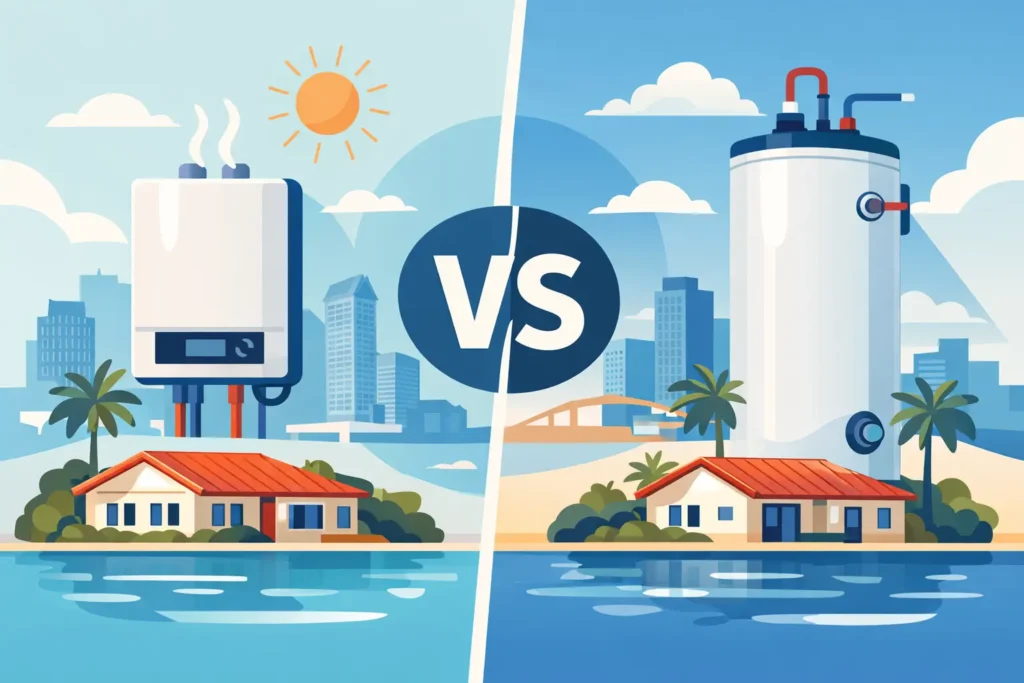
A water heater usually gets attention only when the shower turns cold, the utility room floor is wet, or a tenant calls with no hot water. When replacement time comes, the tankless vs tank water heater decision affects more than the equipment price. It affects your daily comfort, available space, energy use, installation requirements, and how reliably your property can keep up with demand.
For Tampa Bay homeowners, landlords, and business owners, there is no one-size-fits-all answer. A properly sized tank water heater remains a dependable, cost-conscious choice for many properties. A tankless unit can be an excellent long-term upgrade when endless hot water, efficiency, and space savings are worth the higher upfront investment.
Tankless vs Tank Water Heater: The Main Difference
A traditional tank water heater stores a set amount of heated water, commonly 40 to 80 gallons. When someone opens a hot-water fixture, the unit sends stored hot water through the plumbing system. Once the tank is depleted, it needs time to heat a new supply. That recovery time is why a busy household can run out of hot water after several back-to-back showers, loads of laundry, or dishwasher cycles.
A tankless water heater heats water only when you need it. Cold water flows through the unit, where a gas burner or electric heating element raises the temperature before the water reaches the faucet, shower, or appliance. Because it does not rely on a stored tank of hot water, it can provide hot water for a long period – as long as the unit is sized correctly for the number of fixtures running at once.
The key word is correctly. A tankless system does not create unlimited hot water for unlimited demand. If the unit is undersized, running two showers, a washing machine, and a kitchen faucet at the same time can exceed its flow capacity. Proper sizing is the difference between a worthwhile upgrade and a frustrating one.
Upfront Cost and Installation Requirements
A conventional tank water heater generally costs less to purchase and install. If your existing unit is similar in fuel type, capacity, venting, and location, replacement can be relatively straightforward. That makes a tank model especially practical when a failed water heater needs fast replacement and the property has a limited budget.
Tankless installation often costs more because the unit itself is more expensive and the supporting work can be more involved. A gas tankless heater may require a larger gas line, new venting, electrical work, or a different mounting location. An electric tankless unit may require substantial electrical capacity and additional circuit breakers. These details should be inspected before anyone promises a final installation price.
For a rental property or commercial space, this planning matters even more. A lower purchase price can be attractive, but an undersized or improperly installed unit can lead to repeat service calls and unhappy occupants. Honest recommendations start with the building’s hot-water usage, fuel source, utility setup, and plumbing layout – not just the equipment sitting on a shelf.
Hot-Water Demand: Where Tankless Can Win
Tankless systems are often a strong fit for households that regularly use hot water over extended periods. A large family, a home with multiple bathrooms, or a property where showers happen one after another may benefit from not waiting for a tank to recover.
They are also useful when floor space is limited. Traditional tanks need a dedicated footprint in a garage, utility closet, or mechanical room. A tankless unit mounts to the wall, freeing up usable space. That can be valuable in smaller Tampa Bay homes, condos, remodeled properties, and businesses with tight utility areas.
However, flow rate must guide the choice. Incoming water temperature, fixture count, and desired shower temperature all affect a tankless unit’s performance. Tampa’s warmer groundwater can help compared with colder climates, but it does not eliminate the need for accurate sizing. A licensed plumber can calculate realistic demand instead of relying on broad manufacturer claims.
When a Tank Water Heater Makes More Sense
A tank water heater is not an outdated compromise. For many homes, it is the most practical solution. It delivers predictable performance, has a lower entry cost, and is familiar to most property owners. When sized appropriately, a modern tank unit can comfortably serve a typical household’s daily needs.
A tank may be the better choice if your budget is the primary concern, your current installation is already set up for a standard replacement, or your household does not use several hot-water fixtures at once. It can also be a sensible option when quick replacement is necessary after a leak or complete failure.
There is a trade-off: the tank maintains a reservoir of hot water even when no one is using it. That standby heating can increase energy consumption over time. Tanks also occupy more space and have a finite supply during periods of heavy use. Once the stored water runs out, recovery time becomes part of the morning routine.
Energy Efficiency and Long-Term Value
Tankless water heaters can reduce energy use because they heat water on demand instead of keeping a full tank hot around the clock. The savings are real in the right situation, particularly for properties with moderate hot-water use and a properly installed, high-efficiency gas unit.
Still, energy savings alone do not always justify the higher installation cost. A household with very high, constant water demand may use enough hot water that the efficiency gap becomes less dramatic. Your local utility rates, household habits, and the condition of your existing gas or electrical systems all affect the payback period.
Traditional tanks have improved as well. Better insulation and higher-efficiency models can reduce standby loss compared with older units. If you are replacing a decades-old water heater, a new tank model may provide a noticeable improvement in efficiency without the added cost of converting to tankless.
The best value is not always the unit with the lowest monthly operating cost. It is the system that fits your property, performs reliably, and does not require avoidable modifications or frequent repairs.
Lifespan, Maintenance, and Tampa Bay Water Conditions
Both types of water heaters need maintenance. Tank units benefit from periodic flushing to remove sediment that settles at the bottom. Over time, sediment can reduce efficiency, create popping noises, and put extra strain on the unit. Checking the anode rod can also help protect the tank from internal corrosion.
Tankless systems should be flushed to remove mineral buildup from the heat exchanger. This is particularly important in areas with hard water or mineral-heavy water supplies. Ignoring maintenance can reduce flow, affect temperature consistency, and shorten the unit’s service life.
Tankless units can often last longer than conventional tanks when maintained properly, in part because they do not have a large tank holding water day after day. But longer expected life does not mean maintenance-free operation. Property owners should plan for professional service based on the manufacturer’s recommendations and the water conditions at the property.
Safety and Installation Details You Should Not Ignore
Water heater work involves water lines, pressure relief protection, drainage, gas connections, venting, combustion air, and electrical components. A mistake can cause leaks, poor performance, property damage, or serious safety risks.
For tank models, proper drain pan placement, pressure relief valve discharge piping, and secure connections are essential. For tankless models, gas-line sizing, vent material, clearances, condensate drainage on condensing units, and electrical requirements must all be handled correctly.
That is why an in-home evaluation is more useful than a quick recommendation over the phone. A plumber should inspect the existing setup, ask how the property uses hot water, explain the available options in plain language, and provide clear pricing before work begins.
Choosing the Right Water Heater for Your Property
Choose a traditional tank water heater when you want dependable hot water at a lower upfront cost, have a straightforward replacement setup, and do not regularly exceed the tank’s capacity. Choose tankless when you value extended hot-water availability, wall-mounted space savings, and potential long-term efficiency, and you are prepared for a higher initial investment.
If your current water heater is leaking, producing rusty water, making unusual noises, or failing to hold a steady temperature, do not wait for a complete breakdown. Royal King Plumbing can assess your existing system, explain whether repair or replacement makes better financial sense, and install a properly sized tank or tankless system with clear, professional documentation.
The right water heater should make hot water one less thing to think about – whether you are getting the family ready in the morning, turning over a rental, or keeping a business running without interruption.


