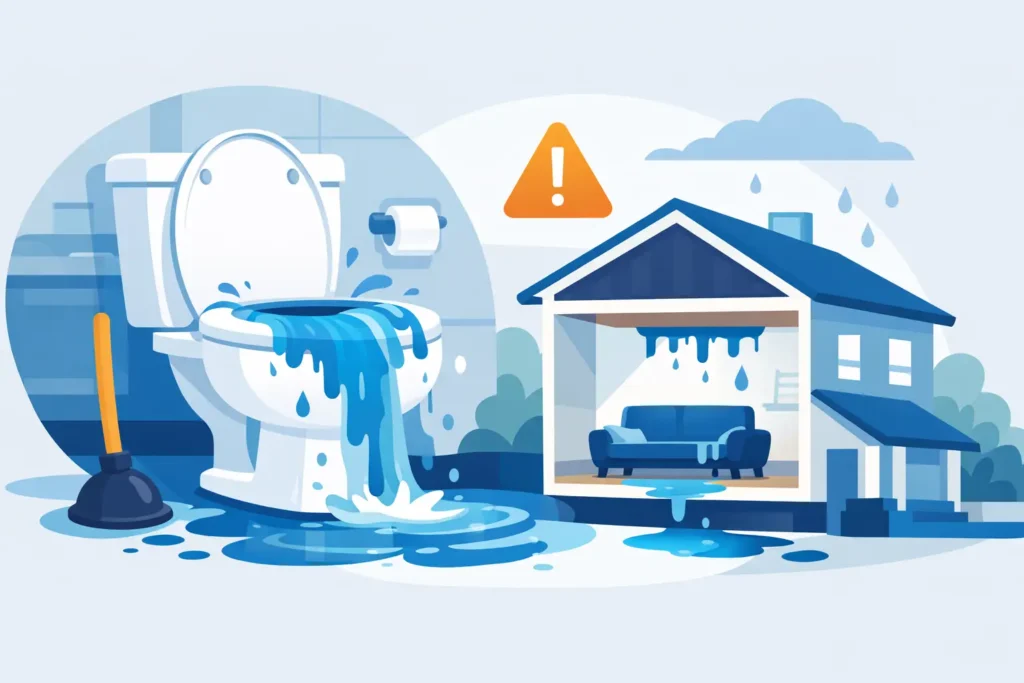
A toilet bowl rising toward the rim gives you very little time to react. Knowing how to stop toilet overflow can protect your floors, walls, and belongings from contaminated water damage – and may save you from a much larger repair. The first priority is not clearing the clog. It is stopping the water.
How to Stop Toilet Overflow Fast
If the toilet has just been flushed and the water is climbing, do not flush it again. A second flush can turn a minor clog into water across the bathroom floor.
Start by removing the tank lid carefully and setting it on a towel or stable surface. Porcelain lids crack easily. Inside the tank, find the rubber flapper at the bottom. Push it closed to stop more water from entering the bowl. If the water continues to rise or you cannot reach the flapper quickly, shut off the toilet’s water supply.
The shutoff valve is usually on the wall or floor behind the toilet, connected to a small supply line. Turn the valve clockwise until it stops. Do not force a corroded or stuck valve. If it will not turn, keep the flapper closed and call for plumbing help.
Once the water has stopped, follow these steps:
- Keep people and pets out of the bathroom. Toilet overflow water may contain bacteria, especially if it has reached the floor.
- Put on rubber gloves if you have them. Use old towels around the toilet base to limit the spread of water.
- Move rugs, bath mats, baskets, and nearby items away from the wet area. Anything absorbent can hold contaminated moisture against flooring.
- Remove standing water with towels, a mop, or a wet/dry vacuum designed for liquid pickup. Do not use a regular household vacuum.
- Clean and disinfect the floor, toilet exterior, and any nearby surfaces after the plumbing issue has been addressed.
If water is already on the floor, act quickly but do not panic. The goal is to contain the damage, stop the supply, and avoid making the blockage worse.
If the Tank Is Still Filling
Sometimes the bowl is not the main problem. A faulty fill valve, stuck float, or flapper that does not seal can cause the tank to keep adding water after a flush. Lift the float inside the tank. If lifting it stops the flow, the fill valve may need adjustment or replacement.
Turning off the shutoff valve remains the safest move when you are unsure. A toilet with a failing internal part can overflow again even if the drain itself is clear.
Why Does a Toilet Overflow?
Most overflows come from a clog in the toilet trap or the drain line beyond it. Too much toilet paper, disposable wipes, paper towels, hygiene products, toys, or other items that should never be flushed can restrict the line. Even products labeled “flushable” may not break down fast enough to move safely through older plumbing.
A simple clog usually affects one toilet and responds to a proper plunger. But a deeper issue can look similar at first. If the toilet bubbles when a sink drains, water comes up in the tub or shower, or more than one fixture is backing up, the problem may be in the main sewer line rather than the toilet itself.
In Tampa Bay, older properties, shifting soil, invasive roots, and aging drain pipes can all contribute to recurring sewer and drain problems. The right repair depends on where the blockage is and what is causing it. Clearing the toilet alone will not solve a main-line backup.
Clear the Clog Only After the Water Is Controlled
Once the bowl level has dropped and the water supply is off, you can decide whether a careful DIY attempt makes sense. For a minor clog, use a flange plunger – the type with a fold-out rubber sleeve beneath the cup. A flat sink plunger does not create the same seal in a toilet bowl.
Place the plunger over the drain opening and make sure the cup is covered by enough water to create suction. Start with a few gentle pushes to remove trapped air, then use firm, controlled strokes for about 15 to 20 seconds. Pull up sharply at the end. Repeat once or twice if needed.
Do not keep plunging for several minutes if nothing changes. Excess force can splash contaminated water, damage a weak wax seal, or push an obstruction farther into the line. Never add chemical drain cleaner to an overflowing toilet. These products can damage pipes, create hazardous splashes, and make a later repair more dangerous for the plumber.
A closet auger can sometimes remove a blockage deeper in the toilet trap. However, it must be used carefully to avoid scratching porcelain or getting the cable stuck. If you suspect an object was flushed, if the toilet has overflowed more than once, or if you do not have the right equipment, professional drain cleaning is the safer choice.
Test Before Turning the Water Fully Back On
After plunging, do not immediately give the toilet a full flush. Turn the shutoff valve back on slowly. Let the tank fill, then flush only once while watching the bowl closely. If water rises above its normal level, close the valve again before it reaches the rim.
A normal flush should move water down quickly, refill the bowl to its usual level, and stop running once the tank is full. Gurgling, slow draining, or a weak flush means the blockage may still be present.
When an Overflow Calls for an Emergency Plumber
Some toilet overflows are more than a quick plunger job. Call a licensed plumber promptly when sewage has reached flooring, the toilet keeps overflowing after you clear it, or water backs up in a shower, tub, sink, or another toilet. Those signs often point to a larger drain-line or sewer issue.
You should also call for help if the shutoff valve will not close, water is leaking from the base of the toilet, or you can see damage to the toilet, flange, or supply line. A leak at the base may mean the wax ring has failed, but it can also indicate a cracked toilet or a serious drain blockage. The source needs to be diagnosed before repairs begin.
For landlords, property managers, and business owners, an overflow should be treated as a sanitation and property-protection issue. Document the affected area, keep people away from the bathroom, and arrange service as soon as possible. Fast response can limit floor damage, reduce downtime, and prevent a small plumbing failure from affecting multiple tenants or customers.
Royal King Plumbing provides fast-response emergency plumbing for homeowners and businesses throughout Tampa Bay, with clear explanations of the problem and repair options before work begins.
Prevent the Next Toilet Overflow
The best prevention is simple: flush only toilet paper and human waste. Keep wipes, cotton swabs, dental floss, paper towels, feminine hygiene products, grease, and small household items out of the toilet. A covered trash can within reach makes this easier for guests and children.
If a toilet clogs often, do not assume everyone is using too much paper. Repeated clogs can signal a partial obstruction, poor venting, mineral buildup, a low-flow toilet that is no longer performing well, or a developing sewer-line problem. A professional inspection can identify the cause before the next flush becomes an emergency.
A stopped overflow is a good first step, but a toilet that repeatedly backs up deserves a real diagnosis. Taking care of the cause now is the best way to protect your bathroom, your property, and your peace of mind.


