
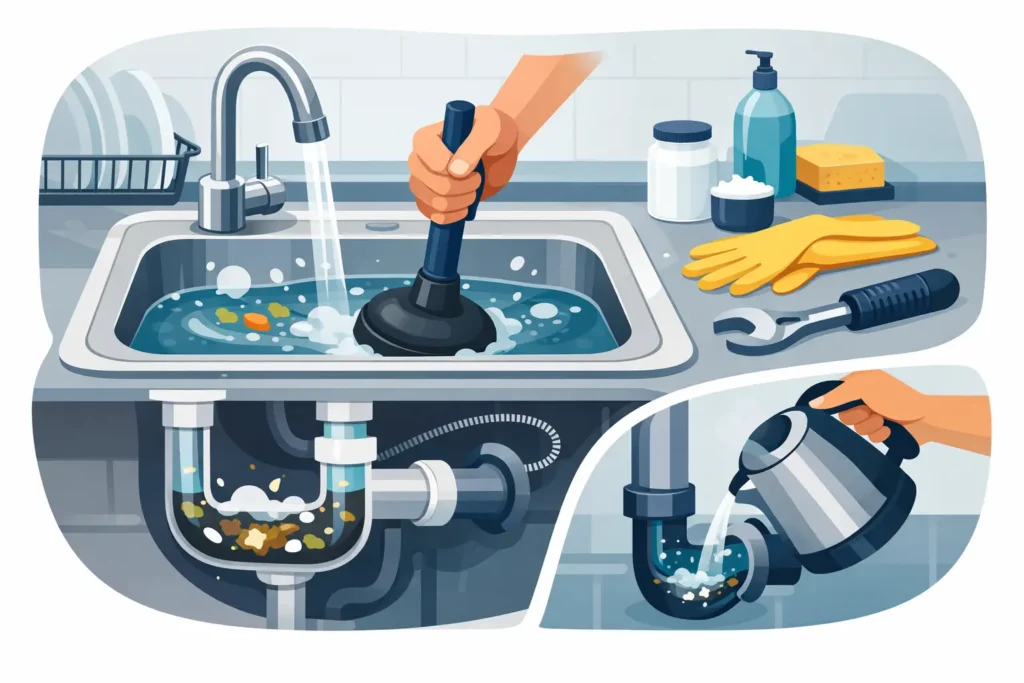
A kitchen sink that fills with murky water right after dinner is more than an inconvenience. It can shut down cleanup, create odors, and quickly become an overflow risk. Knowing how to unclog kitchen sink drains the right way can save time, but using the wrong method can damage pipes, jam a garbage disposal, or turn a small blockage into a bigger repair.
Start with the safest option and work your way up. If water is rising toward the countertop, leaking from under the cabinet, or backing up into another fixture, stop using the sink and call a licensed plumber promptly.
First, Identify What Kind of Kitchen Sink Clog You Have
Most kitchen sink clogs develop gradually. Grease, food scraps, soap residue, coffee grounds, and starches stick to the inside of the drain line until water can no longer pass freely. A slow drain usually means a partial blockage near the sink. Standing water that will not move at all may mean a denser clog in the P-trap or farther down the branch drain.
If one side of a double-bowl sink drains while the other fills up, the blockage may be in the connecting drain pipe. If both sides fill and you have a garbage disposal, the disposal or the shared drain line may be involved.
Pay attention to what happens elsewhere in the property. Gurgling, water backing up in a nearby bathroom sink, or repeated clogs can point to a larger drainage issue that will not be solved with a plunger alone.
How to Unclog Kitchen Sink With Simple, Safe Steps
Before starting, remove dishes and clear out as much standing water as possible with a cup or small container. Keep a bucket and towels nearby, especially if you plan to work under the sink.
Check the Garbage Disposal First
If your kitchen sink has a garbage disposal, make sure it is not the source of the problem. Never put your hand inside the disposal, even if it is turned off.
Turn off power at the wall switch and, if possible, the circuit breaker. Look into the drain with a flashlight for visible utensils, bottle caps, or food debris. If the disposal hums but does not spin, use the disposal wrench that came with the unit or a compatible hex key in the opening on the bottom of the disposal. Turn it back and forth to free the jam.
After removing the obstruction, restore power and run cold water while testing the disposal. Use cold water because it helps keep grease more solid as it moves through the disposal and drain line. If the unit leaks, makes grinding noises, or continues to trip the reset button, it needs professional service rather than more force.
Use a Sink Plunger Correctly
A cup-style plunger can clear many common food-and-grease clogs. For a double sink, plug the second drain opening with a wet rag or drain stopper. This creates the pressure needed to work on the clog instead of sending water into the other bowl.
Add enough water to cover the plunger cup. Place it firmly over the drain, then make 15 to 20 steady plunges. Avoid wild, aggressive pumping. Controlled pressure and suction are more effective and reduce the chance of loosening a drain connection under the sink.
Remove the plunger and see whether water begins to drain. Repeat once or twice if it is improving. If there is no change after several attempts, move on rather than continuing to force the issue.
Flush a Light Grease Buildup With Hot Water and Dish Soap
For a slow drain without standing water, dish soap and hot water may help loosen fresh grease buildup. Squirt a generous amount of grease-cutting dish soap into the drain. Follow it with a pot of hot tap water.
Use hot water, not boiling water. Boiling water can be hard on some PVC fittings and may soften certain older pipe materials or seals. This method is best for mild buildup, not a fully blocked drain. If the sink is holding water, hot water will simply sit above the clog and cool down.
Clean the P-Trap if You Can Do It Safely
The curved pipe beneath the sink is called the P-trap. It holds water to block sewer gases, but it is also a common place for debris to collect. If plunging and flushing have not worked, cleaning the trap may remove the blockage.
Place a bucket directly beneath the trap. Loosen the slip nuts by hand if possible, then carefully remove the curved section. Expect dirty water and debris. Clean out the trap, inspect the washers, and reconnect the pipe securely without overtightening the plastic fittings.
Run water slowly once it is reassembled and check for leaks. If the pipes are corroded, difficult to loosen, or connected in a way that is not clear, stop there. Forcing an old fitting can create a cabinet leak and a more expensive repair.
What Not to Put Down a Kitchen Sink Drain
Many clogs are preventable. Garbage disposals are useful, but they are not designed to handle every leftover from a meal. Avoid sending grease, cooking oil, coffee grounds, eggshells, fibrous vegetables, pasta, rice, flour, and large amounts of food down the drain.
Grease is especially misleading because it looks liquid when warm. Once it cools inside the pipe, it sticks to the walls and catches other debris. Let grease cool in a container and throw it away instead.
A drain strainer is a small upgrade that prevents a surprising number of service calls. Empty it into the trash after washing dishes rather than rinsing food particles into the disposal or drain.
Skip Chemical Drain Cleaners
Chemical drain cleaners promise a quick fix, but they often create more problems than they solve. Their harsh ingredients can damage older metal pipes, weaken seals, and leave dangerous chemical residue in standing water. They can also make a later repair more hazardous for anyone working on the drain.
Do not mix drain cleaners with bleach, vinegar, ammonia, or another cleaning product. Mixing chemicals can create toxic fumes or dangerous reactions. Baking soda and vinegar are generally less harmful, but they are not powerful enough to remove most significant kitchen drain clogs. They should not replace mechanical cleaning or professional drain service.
When a Kitchen Sink Clog Needs a Plumber
A plumber is the better choice when the clog keeps coming back, the sink will not drain after basic steps, or water is backing up into other fixtures. Those signs can mean the blockage is farther down the line, grease has accumulated in the drain pipe, or there is a pipe problem that needs proper diagnosis.
Property managers and business owners should act quickly when a kitchen drain backs up. In a rental property, restaurant break room, office kitchen, or retail space, delayed drain repairs can lead to water damage, sanitation concerns, and disruption for tenants or staff.
Professional drain cleaning reaches blockages that sit beyond the P-trap and can identify whether the problem is buildup, a damaged pipe, or a larger sewer-line concern. A licensed plumber can also inspect the garbage disposal, replace worn drain components, and verify that everything is draining properly before leaving.
For Tampa Bay homeowners and businesses, Royal King Plumbing provides fast-response drain and kitchen plumbing service with clear explanations and honest pricing. When a clog will not clear or water is threatening your cabinets and flooring, getting experienced help quickly is the safest move.
Keep the Sink Draining After the Clog Is Gone
Once the drain is flowing again, run cold water for several seconds before and after using the garbage disposal. Scrape plates into the trash, use a sink strainer, and avoid treating the disposal like a food waste bin. A periodic flush with hot tap water and dish soap can help with everyday grease residue, especially in busy kitchens.
The goal is not just to get water moving today. It is to prevent the next backup from arriving when you have a full sink, guests on the way, or a business to run.


