
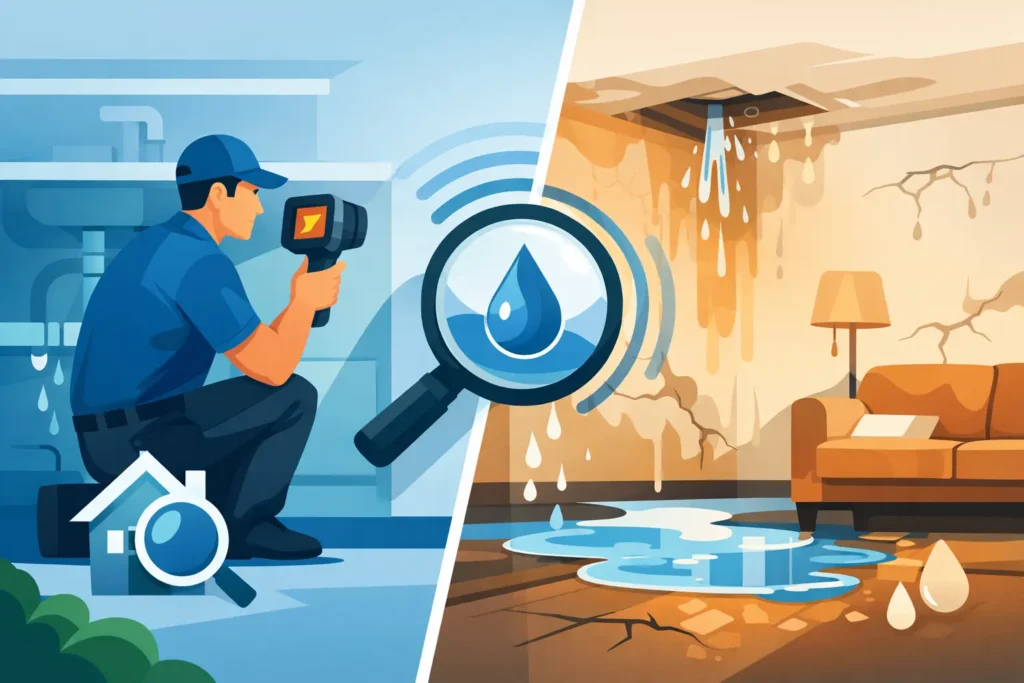
A hidden plumbing leak rarely announces itself with a burst pipe or a flooded floor. More often, it starts with a higher water bill, a faint musty smell, or a small stain that seems to grow overnight. Knowing how to detect hidden leaks gives Tampa Bay homeowners, landlords, and business owners a chance to stop damage before it reaches drywall, flooring, cabinets, or the structure of the property.
Hidden leaks can occur behind walls, under slabs, inside ceilings, beneath sinks, and along underground water lines. Florida’s humidity can make early warning signs easier to overlook, because dampness and mildew may seem like a normal moisture issue. The difference is that a plumbing leak does not go away on its own. It usually gets worse until the source is repaired.
Start With Your Water Meter
Your water meter is one of the most reliable ways to check for a hidden leak. First, make sure no one is using water inside or outside the property. Turn off faucets, irrigation systems, washing machines, dishwashers, ice makers, and any equipment connected to the water supply.
Then locate the meter and look at the leak indicator, if your meter has one. This is often a small dial or triangle that moves when water is flowing. If it moves while every fixture is off, water is likely escaping somewhere in the plumbing system.
For a more thorough check, write down the meter reading, avoid using water for one to two hours, and check it again. A changed reading points to a leak. This test does not identify the exact location, but it tells you that further investigation is needed.
Keep in mind that automatic irrigation, water treatment equipment, and some pool-fill systems can affect the result. If the meter changes only during certain times of day, these systems may be part of the issue. If the meter changes continuously, treat it as a plumbing concern and schedule a professional inspection.
Watch for Changes in Your Water Bill
A sudden increase in water use is often the first sign of a concealed leak. Compare your current bill with the same month last year if possible. Seasonal changes matter in Tampa Bay, especially when outdoor watering increases, but a major spike without a clear reason deserves attention.
A running toilet can waste a surprising amount of water, and it is easier to fix than a leak in a wall or slab. Before assuming the worst, listen for toilets refilling by themselves and check for dripping faucets or outdoor spigots. If those obvious issues are not present, the higher bill may point to a hidden supply-line leak.
Property managers should take unexplained usage increases seriously between tenant turnovers as well. An unoccupied unit with rising water use can have a toilet leak, failed appliance line, or a problem under the slab that continues around the clock.
Look, Listen, and Smell for Warning Signs
Water takes the path of least resistance, so the visible evidence is not always directly below the leak. A pipe leak in an upstairs bathroom may show up as a ceiling stain in the room below. A leak behind a kitchen wall may damage the baseboard on the other side of the room.
Pay attention to discoloration, peeling paint, bubbling drywall, warped flooring, loose tile, or soft spots around cabinets. These signs can also come from roof leaks, window problems, or condensation, which is why proper diagnosis matters. A plumber can determine whether the moisture is coming from a water line, drain line, fixture, or another source.
Your senses can reveal problems that are not yet visible. A persistent musty odor often means moisture has been trapped long enough for mold or mildew to develop. You may also hear a faint hissing, ticking, or running-water sound behind a wall when every fixture is turned off. Do not ignore warm spots on a floor, either. They can indicate a hot-water line leaking beneath a slab.
How to Detect Hidden Leaks Around Fixtures
Some leaks hide in plain sight. Check beneath kitchen and bathroom sinks with a dry paper towel, especially around shutoff valves, supply hoses, drain traps, garbage disposals, and dishwasher connections. Even a slow drip can damage a cabinet base before it becomes visible from the outside.
To test a toilet, add a few drops of food coloring to the tank and wait about 15 minutes without flushing. If color appears in the bowl, the flapper is allowing water to pass through. This is not a hidden wall leak, but it can cause significant water waste and may explain a changing meter reading.
Inspect the area around showers, tubs, and toilets for loose caulk, damaged grout, or flooring that feels soft underfoot. Failed seals allow water into subfloors and walls, particularly when a shower is used daily. The repair may involve more than replacing caulk if moisture has already reached framing or flooring.
For water heaters, look for pooling, rust at fittings, damp insulation, or water near the temperature and pressure relief valve discharge line. A small leak from a water heater connection can become an urgent problem quickly, particularly in a closet, garage, or commercial utility room where it may go unnoticed.
Check Outside and Under the Property
Not every hidden leak is inside. Walk around the exterior and look for damp soil, unusually green patches of grass, pooling near the foundation, or areas where the ground stays wet without recent rain. These can signal an underground water-line leak.
If your property has a slab foundation, also watch for cracks in flooring, warm areas on tile or concrete, unexplained mildew along baseboards, or the sound of water beneath the floor. Slab leaks require professional leak detection because opening floors based on a guess can create unnecessary damage and cost.
In commercial properties, check restrooms, break rooms, mechanical rooms, and areas near water-using equipment. A slow leak behind a wall in an office, restaurant, or retail space can disrupt operations and create liability if it affects neighboring suites. Early documentation of stains, meter readings, and affected locations helps speed up diagnosis.
Do Not Rely on Moisture Alone
A moisture meter, thermal camera, or acoustic listening equipment can help locate hidden water, but these tools require interpretation. Moisture in a wall may come from a pipe, a roof issue, condensation from an air-conditioning line, or an older leak that has already been repaired. Thermal imaging can show temperature differences, but it cannot always prove where water is escaping.
This is where professional leak detection saves time. Licensed plumbers can isolate sections of the plumbing system, pressure-test lines, inspect fixtures, and use specialized equipment to narrow down the source without removing large sections of wall or flooring unnecessarily. The goal is not just to find wet material. It is to identify the failed component and make a repair that lasts.
When to Call for Immediate Leak Detection
Turn off the main water supply and call for prompt service if you see active water damage, a rapidly growing ceiling stain, water near electrical outlets, a collapsed ceiling area, or a meter that continues moving quickly with all fixtures off. These situations can cause extensive damage in a short time.
You should also call when a musty smell persists, flooring feels warm or soft, or your water bill rises without explanation. Waiting for a hidden leak to become obvious often means paying for more repairs later, including mold remediation, drywall replacement, flooring work, and damaged belongings.
Royal King Plumbing provides fast-response leak detection and repair for homes and businesses throughout Tampa Bay. A qualified plumber can explain what is happening, show you the affected area when possible, and provide clear repair options before work begins.
If something in your property feels off, trust the warning sign. A quick meter check and a timely call can be the difference between a contained plumbing repair and a much larger restoration project.


