
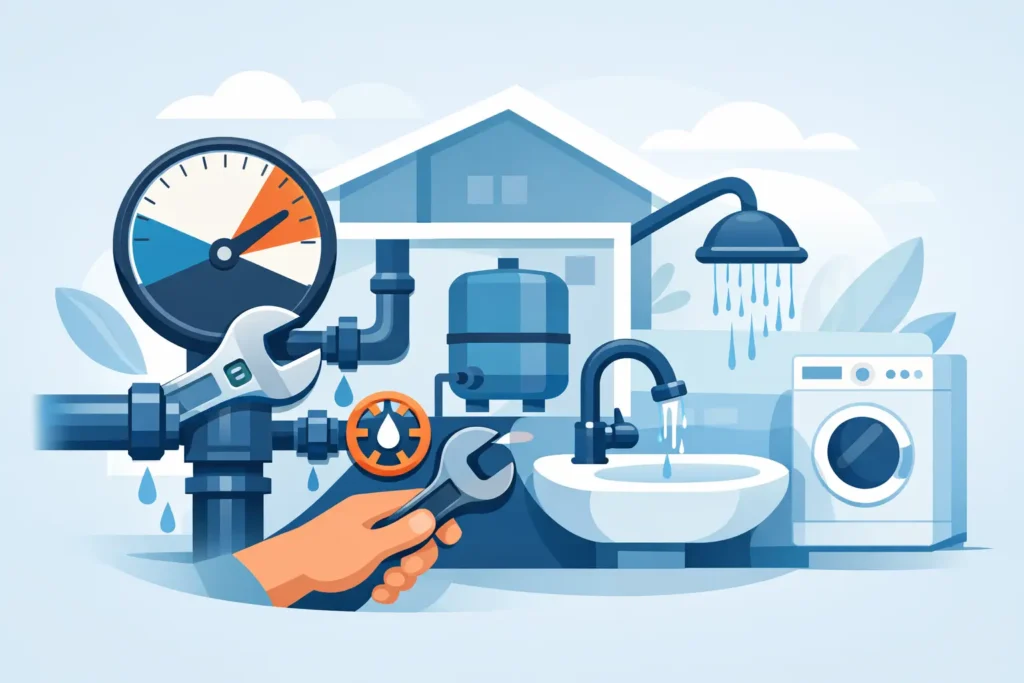
A shower that barely rinses shampoo, a kitchen faucet that takes forever to fill a pot, or weak flow throughout the building can turn a normal day into a plumbing headache. Knowing how to fix low water pressure starts with identifying where the problem is happening. A single slow fixture calls for a different repair than low pressure at every faucet, shower, and appliance.
For Tampa Bay homeowners, landlords, and business owners, pressure problems can be caused by something simple, such as a clogged aerator, or something more serious, including a hidden leak, aging pipes, or a failing pressure regulator. The right response is not to guess or force a repair. It is to narrow down the cause quickly and protect your plumbing from further damage.
First, Find Out Where the Pressure Is Low
Start by testing cold and hot water at more than one fixture. Turn on the kitchen sink, a bathroom faucet, and a shower. If the pressure is low at only one location, the issue is usually inside that fixture or its supply line. If cold water is strong but hot water is weak throughout the property, the water heater or hot-water piping may be involved.
When every fixture has weak flow, the problem may be at the main water supply, the pressure regulator, the shutoff valve, or the plumbing system itself. This distinction matters because cleaning a faucet screen will not solve a whole-house pressure issue.
If pressure dropped suddenly, think about what changed. Recent plumbing work, a water outage, construction nearby, a new water heater, or a higher-than-normal water bill can all point to the source. A sudden drop paired with damp spots, discolored walls, pooling water, or a meter that keeps moving when water is off should be treated as a possible leak.
How to Fix Low Water Pressure at One Fixture
A faucet with weak water flow is often the simplest type of low-pressure problem to address. Mineral buildup, sediment, and small debris can collect in the aerator – the threaded screen at the end of the spout. This is especially common after water service interruptions or plumbing repairs that stir up sediment in the lines.
Turn off the faucet and carefully unscrew the aerator by hand. If it is stuck, use a cloth between the tool and the metal to avoid scratching the finish. Rinse the screen, remove visible debris, and soak it in white vinegar if mineral deposits are present. Reinstall it and test the flow. If pressure returns, the repair is complete.
For a showerhead, remove it if possible and inspect the spray holes for buildup. A vinegar soak can clear light mineral deposits. If the showerhead is old, corroded, or still restricted after cleaning, replacing it may be more practical than spending time on repeated cleaning.
Do not overlook the angle stop valve under a sink or behind a toilet. A partially closed valve limits flow. Make sure it is fully open by turning it counterclockwise. If the valve is stiff, leaking, or will not turn without force, stop there. Older shutoff valves can fail when disturbed and may need professional replacement.
Check the Main Shutoff Valve and Water Meter Valve
Low water pressure throughout a home or commercial space can occur when a main valve is not completely open. This sometimes happens after a repair, renovation, water heater installation, or emergency shutoff.
The main shutoff is commonly located near where the water line enters the building, in a utility area, garage, exterior wall, or mechanical room. A wheel-style gate valve should be turned fully counterclockwise. A lever-style ball valve should be aligned with the pipe when fully open.
There may also be a customer-side valve near the water meter. Be cautious around meter equipment. In many areas, the utility controls part of the assembly, and forcing the wrong valve can create a bigger problem. If you are unsure which valve is yours, a licensed plumber can verify it without putting the service line at risk.
Look for Signs of a Leak Before Making Adjustments
A hidden leak can reduce water pressure while increasing your utility bill and damaging walls, flooring, or foundations. Leaks are not always obvious. A pipe can lose water underground, inside a wall, beneath a slab, or in an unoccupied section of a commercial property.
A quick meter check can help. Turn off all water-using fixtures and appliances, including ice makers and irrigation if possible. Then look at the water meter. If the leak indicator is moving or the reading changes after several minutes, water may be escaping somewhere in the system.
Other warning signs include the sound of running water when everything is off, warm areas on a floor, mildew odors, unexplained wet spots, and a water heater that seems to run more often than usual. These problems require accurate leak detection, not trial-and-error repairs. Cutting into walls or digging without confirming the leak location can add unnecessary cost and disruption.
When the Pressure Regulator May Be the Problem
Many properties have a pressure-reducing valve, also called a pressure regulator, installed on the main water line. Its job is to reduce high municipal water pressure to a safer level for the plumbing system. When it begins to fail, water pressure may become consistently weak, fluctuate from room to room, or surge and then drop.
A pressure gauge attached to an outdoor hose bib can provide useful information. Residential water pressure often falls in the range of 40 to 80 PSI. Pressure that is too low affects showers, washing machines, dishwashers, and water heaters. Pressure that is too high can be just as damaging, placing extra strain on pipes, fixtures, supply lines, and appliance connections.
Some regulators can be adjusted, but adjustment is not always the solution. If the valve is worn, corroded, or unable to hold a stable setting, replacement is the safer long-term repair. Improperly increasing pressure can turn a weak-flow complaint into a burst supply line or leaking fixture.
Consider Aging Pipes and Water Heater Issues
Older galvanized steel pipes can corrode internally over time. The outside may look fine while the inside diameter has narrowed from rust and mineral accumulation. This type of restriction often develops gradually and may affect certain branches of the plumbing more than others. Cleaning an aerator will not correct deteriorated pipe walls.
In Tampa Bay, pipe condition can also be affected by age, prior repairs, water quality, and the materials used during original construction. A professional inspection can determine whether targeted pipe repair will solve the issue or whether a larger repiping plan makes more financial sense.
If only hot water has low pressure, sediment buildup in the water heater, a restricted hot-water valve, or a failing component near the heater may be responsible. Tankless systems can also develop flow-related issues if filters or internal components need service. Because water heaters involve hot water, gas or electrical connections, and safety controls, this is not a repair to improvise.
Know When to Call a Plumber for Low Pressure
Simple fixture cleaning is a reasonable first step. But professional help is the right choice when low pressure affects the whole property, returns soon after cleaning, changes suddenly, or comes with signs of a leak. It is also time to call when you find corroded valves, old pipes, water heater concerns, or inconsistent pressure that makes normal use difficult.
A licensed plumber can test pressure, inspect valves, locate hidden leaks, assess pipe condition, and explain the repair options clearly before work begins. For property managers and business owners, fast diagnosis is especially valuable because weak pressure can disrupt tenants, customers, restrooms, kitchens, and daily operations.
Royal King Plumbing provides prompt plumbing support across Tampa Bay with straightforward communication, honest pricing, and repairs designed to last. When pressure issues cannot be solved with a simple screen cleaning, getting an experienced plumber involved early can prevent water damage and unnecessary downtime.
Low water pressure is frustrating, but it is also useful information from your plumbing system. Pay attention to when it started, where it occurs, and whether it comes with leaks or unusual water use. Those details help lead to a faster repair and a reliable flow of water where you need it most.


