A toilet that bubbles when the washing machine drains is not a problem to put off until next week. Neither is sewage coming up through a shower drain, a persistent sewer odor outside, or several fixtures draining slowly at once. If you are asking who repairs sewer lines, the answer is a licensed plumbing professional with the equipment and experience to diagnose and repair the main sewer line safely.
A sewer issue can affect every drain in a home or business. The right plumber does more than clear the immediate blockage. They determine what caused it, explain the repair options clearly, and help prevent the same problem from coming back.
Who Repairs Sewer Lines for Homes and Businesses?
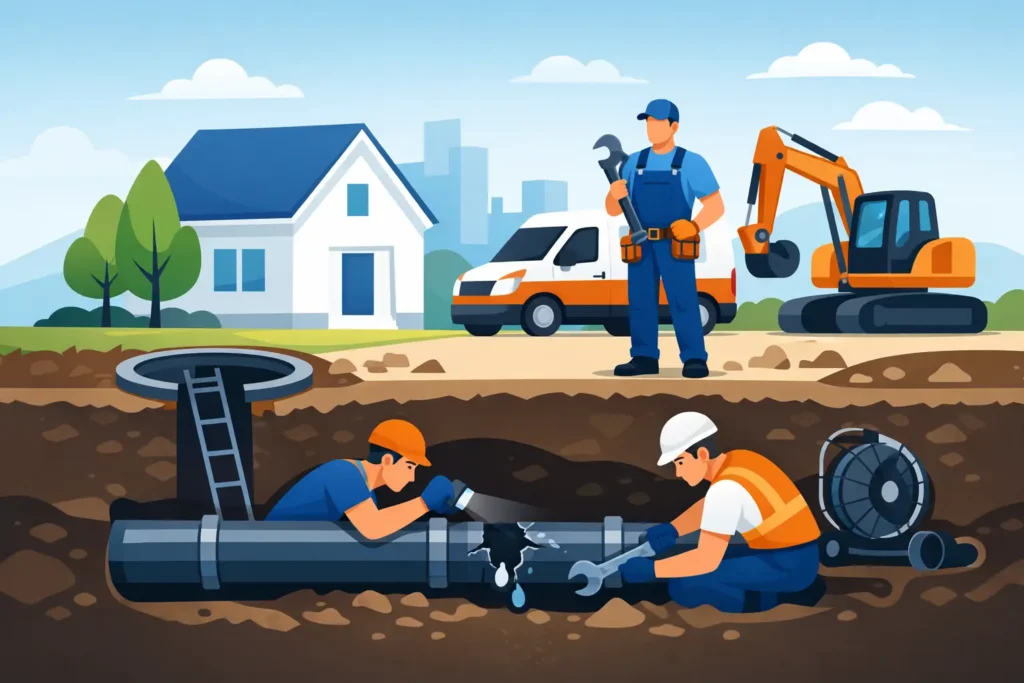
Licensed plumbers repair most private sewer lines, also called sewer laterals. This is the pipe that carries wastewater from your property to the public sewer connection or, in some cases, to a septic system. A qualified plumbing company can inspect the line, locate the damage or blockage, clear it, and complete repairs ranging from targeted pipe work to full sewer line replacement.
For a home, the property owner is usually responsible for the sewer lateral running from the building to the municipal connection. The exact point where city responsibility begins can vary by location, so a plumber may recommend checking with the local utility if the issue appears close to the street or public main.
Commercial properties have the same need for professional sewer repair, often with more at stake. A backed-up restroom, kitchen drain, or floor drain can disrupt tenants, employees, customers, and daily operations. Property managers and business owners need a plumber who can respond quickly, document the condition of the line, and provide a practical repair plan.
Not every drain cleaner is qualified to repair a sewer line. A simple clog may respond to standard drain cleaning, but a damaged, collapsed, offset, or root-filled line requires proper diagnostic tools and sewer repair experience. When wastewater is involved, licensed service matters.
Signs You Need a Sewer Line Repair Professional
A single slow sink may be a local drain clog. When multiple plumbing fixtures act up together, the main sewer line becomes more likely. Watch for repeating symptoms, especially if they occur after you use a lot of water.
Common warning signs include toilets that gurgle or flush poorly, water rising in a tub or shower when a toilet is flushed, recurring clogs in different rooms, sewage backing up into a floor drain, and foul odors near drains or outside along the sewer route. Wet or unusually green patches in the yard can also point to an underground leak.
Do not assume a plunger or store-bought chemical will solve these problems. Chemical drain products can damage certain pipes, create hazards for the technician who later works on the line, and do nothing to fix a broken sewer pipe. If sewage is backing up, stop using water fixtures when possible and call for immediate service.
When It Is an Emergency
Sewer backups are an emergency when wastewater enters living areas, bathrooms, a garage, or a commercial space. Raw sewage can damage flooring and walls, create unhealthy conditions, and spread quickly when more water is used in the building.
A rapid response plumber can assess the situation, identify whether the blockage is in your private line, and take steps to restore flow. After the immediate problem is controlled, they can recommend whether cleaning is enough or whether the pipe needs repair.
How Plumbers Find the Real Problem
Good sewer repair starts with diagnosis, not guesswork. A plumber may begin by asking when the problem started, which fixtures are affected, whether it has happened before, and whether large trees sit near the sewer line. That information helps narrow down the likely cause.
The next step often includes running a drain cleaning cable or hydro jetting equipment to clear buildup and restore access through the pipe. If the issue is recurring or the line does not clear normally, a sewer camera inspection is usually the clearest way to see what is happening underground.
A camera inspection can reveal root intrusion, grease buildup, cracked pipe, separated joints, corrosion, sagging sections, or a full collapse. It can also help locate the trouble spot so repairs are limited to the area that actually needs work. That distinction matters. Digging up an entire yard for a small, accessible section of damage may not be necessary, while repeatedly clearing roots from a failing pipe may only delay a larger repair.
The plumber should explain what the camera shows in plain language. Clear recommendations, itemized pricing, and documentation such as photos help homeowners, landlords, and property managers make informed decisions without pressure.
Sewer Line Repair Options Depend on the Damage
There is no one repair that fits every sewer problem. The right approach depends on the pipe material, the location and depth of the line, the type of damage, access to the area, and the long-term condition of the system.
For isolated damage, spot repair may be the best answer. This involves exposing and replacing only the failed section of pipe. It can be a sensible option when the remaining line is in good condition and the damaged section is easy to reach.
For lines with heavy buildup, roots, or scale but no major structural failure, professional cleaning may restore flow. Root cutting can provide relief, but roots often return if there are cracks or open joints in the pipe. A plumber should be honest about whether cleaning is a lasting solution or a short-term measure.
Some properties may qualify for trenchless repair methods, such as pipe lining or pipe bursting. These options can reduce excavation in the right conditions, which may help preserve landscaping, driveways, or hardscape. They are not automatically better or less expensive for every job. Pipe condition, access points, pipe layout, and local requirements all affect whether trenchless work makes sense.
When a line has widespread damage, repeated failures, poor slope, or a collapse, replacement may be the most reliable choice. It is a larger project, but it can stop the cycle of recurring backups and emergency calls. A qualified plumber will walk you through the trade-offs before work begins.
What to Ask Before Hiring a Sewer Line Plumber
Sewer work is not the time to choose based on the lowest quote alone. Ask whether the company is licensed and insured, whether it performs sewer camera inspections, and whether it can explain the problem before recommending a repair. You should also ask what is included in the estimate, whether permits may be needed, and how the work area will be protected and restored.
For rental and commercial properties, ask for written findings, photos, and itemized receipts. These records can be useful for owners, tenants, insurance conversations, maintenance files, and future planning.
You also want a company that answers the phone when the problem is urgent. A sewer backup does not wait for convenient business hours. In Tampa Bay, Royal King Plumbing provides fast-response service from licensed plumbers who diagnose the issue, explain the options, and focus on repairs built to last.
Protect Your Sewer Line After the Repair
A repaired sewer line still benefits from smart habits. Avoid flushing wipes, paper towels, hygiene products, or grease. Even products labeled flushable can create costly blockages. Keep large trees and aggressive root systems in mind when planning landscaping near the sewer route.
If your property has older cast iron or clay sewer piping, consider a camera inspection when you notice early warning signs rather than waiting for a full backup. Preventive inspection can identify roots, corrosion, or separated joints before wastewater reaches the wrong side of the drain.
When sewer trouble starts, quick action protects your property and gives you more repair choices. Call a licensed plumber early, ask for a clear diagnosis, and choose the repair that solves the actual cause instead of only buying time.


