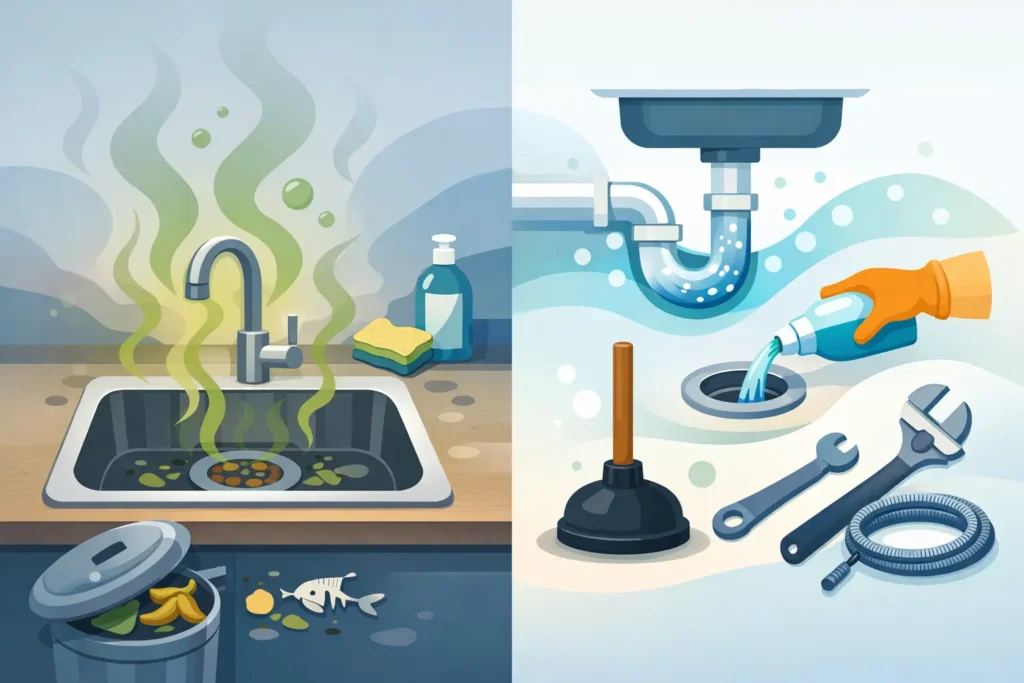
A sink that smells like rotten eggs, sewage, mildew, or old food can make an otherwise clean kitchen or bathroom feel unusable. If you are asking, “why does sink smell bad,” the answer is usually trapped organic buildup, a dry drain trap, or a developing drainage problem. The smell may be easy to fix, but a recurring odor deserves attention before it turns into a clog, leak, or sewer gas issue.
Why Does a Sink Smell Bad?
Your sink drain handles more than water. Kitchen sinks collect food particles, grease, soap, and residue from the garbage disposal. Bathroom sinks collect toothpaste, shaving residue, hair, lotion, soap, and bacteria. Over time, these materials can cling to the drain walls and create a dark, damp environment where odor-causing bacteria grow.
The specific smell offers a useful clue. A sour or musty odor often points to slime and buildup inside the drain. A rotten-food smell commonly comes from a garbage disposal. A strong sewage or sulfur smell may mean the plumbing trap has dried out, the drain has a blockage, or there is a venting or sewer-line concern.
A quick rinse may cover the problem briefly, but it will not remove buildup farther down the pipe. The right solution depends on what is creating the odor in the first place.
The P-trap may be dry
Under most sinks is a curved section of pipe called a P-trap. It holds water at all times, creating a seal that prevents sewer gases from coming back through the drain and into the room.
In a sink that is rarely used – such as one in a guest bathroom, vacant rental, utility room, or seasonal property – that water can evaporate. Once the water seal is gone, odors from the drain system can travel upward. This is one of the simplest causes of a bad-smelling sink.
Run water in the sink for 30 to 60 seconds. If the smell disappears and stays away, the dry trap was likely the issue. For seldom-used fixtures, running water regularly helps keep the trap sealed.
Biofilm and debris are coating the drain
A slippery film inside the drain is not always visible from the sink basin, but it is a frequent source of stubborn odors. This film, called biofilm, is made up of bacteria, soap residue, grease, and organic debris. It can form on the drain stopper, inside the overflow opening in a bathroom sink, and along the first section of drainpipe.
Bathroom sink odors are especially likely to come from the stopper and overflow channel. The overflow is the small opening near the top of the basin that helps prevent flooding. It also stays damp and can collect residue over time.
Remove the stopper if possible, clear away hair and debris, and scrub the visible parts with a small brush and dish soap. Flush the drain with hot tap water afterward. Avoid relying on boiling water if you have older plumbing or PVC drain lines, since very hot water can be hard on certain pipe connections.
Your garbage disposal needs cleaning
If the odor becomes worse when you run water or turn on the disposal, food residue is a likely culprit. Small particles can remain under the rubber splash guard, around the grinding chamber, and in the disposal drain connection. Grease and starchy foods can also cling to the pipe beyond the unit.
Turn off the disposal before cleaning it. Never put your hand inside the unit. Wipe the underside of the rubber splash guard with a brush or cloth, then run cold water while operating the disposal briefly. Cold water helps move food particles through the system rather than allowing grease to soften and coat the drain.
Citrus peels may create a fresher smell for a short time, but they are not a full cleaning solution. If the disposal smells again soon after cleaning, the buildup may be in the drain line rather than the appliance itself.
A partial clog is holding dirty water
A drain does not need to be completely blocked to smell bad. A partial clog can catch soap, grease, food, and hair while still allowing water to drain slowly. That trapped material begins to break down, causing odors that return every few days or after the sink is used heavily.
Watch for slow drainage, gurgling, water backing up into another fixture, or a smell that becomes stronger after running the faucet. These signs suggest the problem is more than surface buildup. Chemical drain cleaners may seem like a fast answer, but they can damage pipes, create hazardous fumes, and make professional repair more difficult if they do not clear the blockage.
A plumber can clear the line with the right equipment, identify where the restriction is located, and confirm that water is flowing properly afterward.
The plumbing vent or sewer line may have a problem
Drain systems need proper venting to move wastewater and sewer gases safely through the pipes. A vent issue can interfere with the P-trap seal or cause drains to gurgle. In other cases, a damaged pipe, failed seal, or sewer-line blockage can allow sewer odors to enter the building.
This is not a DIY diagnosis. If the sink smell is distinctly like sewage, keeps returning after basic cleaning, or comes with gurgling and slow drains, schedule a professional inspection. If multiple drains smell bad or toilets and sinks are backing up together, the problem may involve the main sewer line and should be addressed quickly.
Safe Steps to Remove Sink Odors
Start with the simple checks before assuming the worst. Run water to refill the P-trap, clean the sink stopper and overflow opening, and remove food debris or residue from the garbage disposal. Then flush the sink with hot tap water and a small amount of dish soap to help loosen grease near the top of the line.
For a kitchen sink without a disposal problem, a baking soda and vinegar rinse can help with light odors. Pour baking soda into the drain, follow with vinegar, allow it to foam for several minutes, and rinse with warm water. This method can freshen minor buildup, but it will not remove a serious clog or repair a plumbing defect.
Do not mix cleaners. Never combine bleach with vinegar, ammonia, or commercial drain products. Mixing household chemicals can produce dangerous fumes and may damage your plumbing. If a cleaner has already been used and the drain remains clogged or smelly, tell the plumber exactly what product was applied before service begins.
When a Bad-Smelling Sink Needs a Plumber
A one-time odor after a sink has sat unused is usually straightforward. A smell that returns despite cleaning is different. It often means debris is farther down the drain, the trap is not holding water, or the drainage system needs professional attention.
Call for plumbing service when the odor is accompanied by slow drainage, repeated clogs, gurgling, water backing up, visible leaks below the sink, or a sewage smell that affects more than one room. Property managers and business owners should act promptly, especially when odors affect customer areas, break rooms, restrooms, or tenant spaces.
For Tampa Bay homeowners and businesses, Royal King Plumbing can diagnose the source of persistent sink odors, clear problem drains, and explain the repair before work begins. A qualified plumber can also check the disposal, trap, drain connections, and venting to make sure the fix lasts instead of merely masking the smell.
A bad-smelling sink is rarely something you have to live with. Clean the accessible areas, refill an unused trap, and pay attention to repeat odors. When the smell keeps coming back, a fast professional diagnosis can protect your property from a larger drain or sewer problem.


