Electric Versus Gas Water Heaters Compared
A water heater usually becomes a priority at the worst possible time: the shower goes cold, water appears around the tank, or a tenant calls after business hours. When replacement is necessary, the electric versus gas water heaters decision affects more than the purchase price. It determines how quickly hot water recovers, what the installation requires, and what the property may cost to operate for years.
For homeowners, landlords, and business owners, the best choice is rarely a one-size-fits-all answer. The fuel already available at the property, household demand, venting conditions, electrical capacity, and local utility rates all matter. A licensed plumber can assess those details before you commit to equipment that is inexpensive today but costly or inconvenient later.
Electric Versus Gas Water Heaters: The Core Difference
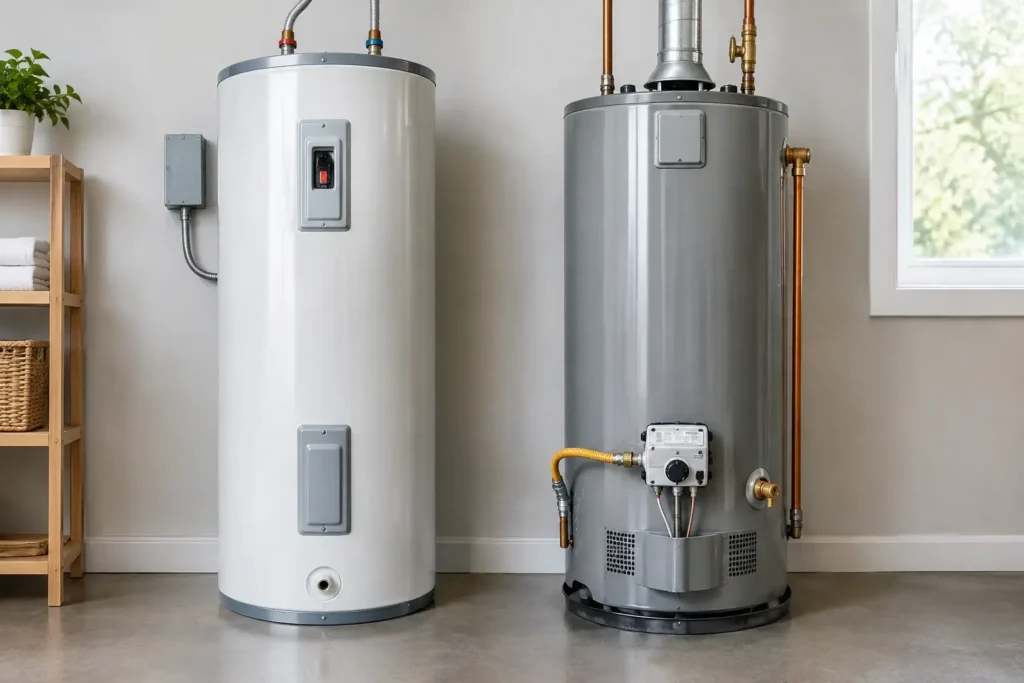
A conventional electric water heater uses one or two heating elements inside the tank. Electricity heats the elements directly, and the tank stores hot water until a fixture calls for it. There is no combustion, no gas line, and no exhaust vent required.
A gas tank water heater burns natural gas or propane beneath the tank. The heat transfers to the water, while combustion gases exit through a vent. Because the burner produces more heat than typical electric elements, gas models generally restore a depleted tank of hot water faster.
That recovery speed is the practical difference most families notice. If several people shower back-to-back, or a dishwasher and washing machine often run during busy morning hours, a gas unit can replenish hot water sooner. Electric units can still serve a household well, especially when properly sized, but they may take longer to catch up after high demand.
Upfront Cost Is More Than the Heater Price
An electric tank water heater often costs less to purchase and is usually simpler to install when an appropriate electrical circuit is already in place. There is no vent pipe to inspect, no combustion air requirement, and no need to extend a gas line. This can make electric replacement the more straightforward option in an all-electric home.
A gas water heater may have a higher installation cost, particularly if the property does not already have a correctly sized gas line and approved venting. Replacing an existing gas unit with another gas model is usually much simpler than converting from electric. Still, the installer must verify the vent path, draft performance, gas connection, shutoff valve, and code requirements. These are safety items, not shortcuts to take during an urgent replacement.
Converting from gas to electric can also require electrical work. A standard electric tank heater typically needs a dedicated 240-volt circuit. If the electrical panel is full or undersized, the project may involve upgrades beyond the water heater itself. The right quote should explain those conditions clearly instead of presenting a surprise after installation begins.
Operating Costs Depend on Your Utility Rates
Many people assume gas is always cheaper to operate. Gas water heaters often do have lower operating costs where natural gas prices are favorable, but utility rates vary, and water use matters. An electric water heater can be competitive when electricity costs are reasonable, household demand is modest, or a high-efficiency heat pump water heater is an option.
Efficiency ratings should be read with care. Electric resistance units convert nearly all the electricity they use into heat at the tank. Gas units lose some heat through venting and standby losses, although high-efficiency gas models reduce those losses. The real monthly bill comes down to the unit’s efficiency, the temperature setting, the number of gallons used, and the local cost of electricity or gas.
For a rental property, predictability may matter as much as the lowest possible energy cost. An electric unit can be easier to standardize across properties without gas infrastructure. For a busy household with an existing gas connection, faster recovery may provide enough day-to-day value to justify the gas option.
Recovery Rate and Household Demand
Tank size alone does not tell you whether a water heater will keep up. First-hour rating matters because it estimates how much hot water the heater can provide during a high-use hour. A gas unit often has a stronger first-hour rating than an electric unit with the same tank capacity because it recovers more quickly.
Consider the actual demand at your property. A one- or two-person household with normal shower schedules may be well served by a properly sized electric tank. A larger family, a home with multiple bathrooms used at once, or a commercial space with regular hot-water demand may benefit from gas recovery performance or a tankless system designed for the application.
Bigger is not automatically better. An oversized tank costs more to buy and creates more standby heat loss. An undersized unit creates cold showers and frustration. Proper sizing starts with fixture use, occupancy, peak demand, and the temperature of incoming water, not guesswork based on the old tank.
Installation and Safety Requirements
Electric water heaters have fewer combustion-related safety concerns, but they still need correct wiring, grounding, temperature-pressure relief protection, and drain-pan provisions where required. A failed relief valve or improperly installed discharge pipe can create a serious hazard.
Gas water heaters require those same water-side protections plus safe combustion and venting. Poor venting can allow exhaust gases, including carbon monoxide, to enter the building. A burner problem, damaged vent connector, or inadequate draft deserves professional attention right away. If you smell gas, leave the area, avoid operating switches or flames, and contact the gas utility or emergency services as appropriate before arranging repair.
In humid Florida conditions, installation details also matter. A drain pan, correctly routed discharge line, and attention to corrosion can help prevent a small water-heater failure from damaging flooring, walls, or nearby belongings. For units located in garages, closets, and utility rooms, access and drainage should be considered before the replacement day.
Maintenance and Expected Service Life
Both gas and electric tank water heaters benefit from periodic maintenance. Sediment can collect at the bottom of the tank, especially where mineral content is higher. That buildup can reduce efficiency, create popping or rumbling sounds, and put added stress on the equipment.
Electric models have heating elements and thermostats that can fail over time. Gas models have components such as the burner, igniter, thermocouple or flame sensor, and venting system that need inspection. Neither type is maintenance-free, and both can develop leaks as the tank ages.
A water heater approaching the end of its expected service life should be watched closely for rusty water, moisture around the base, inconsistent temperatures, reduced hot-water capacity, or unusual noises. Once the tank itself leaks, replacement is normally the practical solution. Acting before a complete failure gives you more time to choose the right fuel type and size rather than making a rushed decision during an emergency.
When Electric Is the Better Fit
Electric is often the sensible choice when the property has no gas service, electrical capacity is already available, and hot-water demand is moderate. It also works well for owners who want a simpler installation with no venting requirements. In some homes, an electric heat pump water heater can offer substantially better efficiency than a standard electric tank, though it needs adequate space and may produce some noise while operating.
Electric may also be the more practical replacement when switching to gas would require major piping, venting, and permitting changes. Spending heavily to add gas infrastructure does not always pay back, particularly in a smaller household or a property with limited water use.
When Gas Is the Better Fit
Gas is often a strong choice when a home already has a properly installed gas line and vent system, and the household needs faster recovery. It can be especially useful for larger families, multi-bathroom homes, and properties where several fixtures may demand hot water in a short period.
A gas replacement also makes sense when the existing installation is in good condition and local fuel costs support lower long-term operating expenses. But a new gas water heater should never be selected on recovery speed alone. Venting, combustion safety, room configuration, and the condition of the gas supply must all be evaluated.
Make the Decision Before the Tank Fails
The best time to compare water-heater options is while the current unit still works. Check its age, note whether it is gas or electric, and pay attention to whether your household regularly runs out of hot water. That information gives a plumber a useful starting point for recommending a properly sized replacement.
If the water heater is leaking, producing discolored water, or failing to heat reliably, fast professional diagnosis can help you avoid property damage and prevent a small issue from becoming an after-hours emergency. Royal King Plumbing can explain the available options in plain language, provide clear pricing, and install a solution that fits the way your property actually uses hot water.
The right water heater is the one that matches your demand, infrastructure, and budget without creating avoidable safety or installation problems. A few careful questions before replacement can mean dependable hot water for years instead of another rushed decision a few months from now.
Leave a Reply