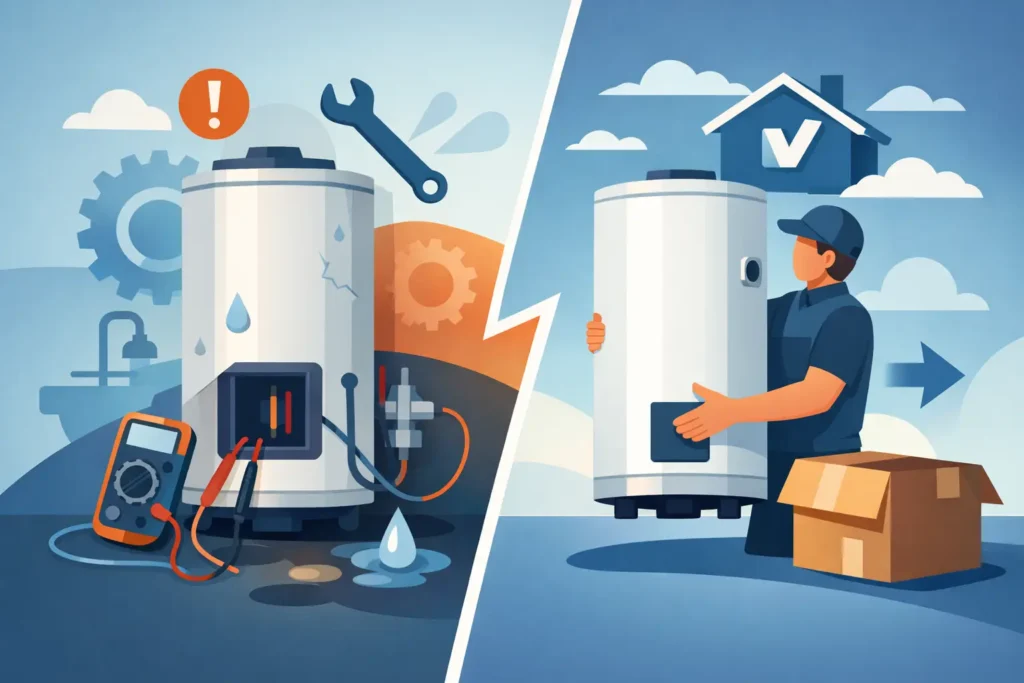
A cold shower is frustrating. Water pooling around the heater, rusty water from the tap, or a popping tank can be more than frustrating – it can signal a problem that needs quick attention. The question is whether to repair or replace a water heater before a manageable issue turns into water damage, a safety concern, or a complete loss of hot water.
The right answer depends on the heater’s age, condition, repair history, and the type of failure involved. A licensed plumber can diagnose the issue, explain the options clearly, and help you avoid paying for a short-term fix when replacement makes better financial sense.
When Water Heater Repair Makes Sense
Many water heater problems can be repaired without replacing the entire unit. This is especially true when the tank is in good condition and the heater is still within the earlier part of its expected service life.
For a traditional tank-style water heater, a repair is often worthwhile when the unit is less than eight years old and the problem is limited to a replaceable component. Electric models may need a new heating element, thermostat, or wiring repair. Gas models can develop issues with the pilot assembly, thermocouple, gas control valve, burner, or venting components. These parts can fail without meaning the tank itself has failed.
A leaking connection above the tank, a faulty temperature and pressure relief valve, or a loose drain valve may also be repairable. The source of the leak matters. Water coming from a fitting or valve can often be corrected. Water seeping through the tank body usually cannot.
Tankless water heaters also have repairable parts, including igniters, sensors, fans, control boards, and valves. In Tampa Bay, mineral buildup can affect performance over time, particularly when routine flushing has been skipped. A professional descaling service and targeted repair may restore steady hot water and improve efficiency.
Signs It Is Time to Replace Your Water Heater
Replacement becomes the safer choice when the tank has reached the end of its life or the repair would only delay another major failure. A standard tank water heater commonly lasts about 8 to 12 years, though maintenance, water quality, installation quality, and usage all affect that timeline. Tankless units can last longer, often 15 to 20 years with proper service.
Age alone does not automatically require replacement. But an older heater with multiple recent repairs deserves a closer look. Spending money on one component after another can cost more than installing a dependable new system with warranty protection.
A Leak From the Tank Itself
A leak at the bottom of the tank is one of the clearest reasons to replace a water heater. Over time, the interior lining can deteriorate and the steel tank can corrode. Once the tank itself is cracked or rusted through, it cannot be reliably repaired.
Do not ignore even a small puddle. It may grow quickly, particularly as the tank heats and pressurizes. If water is actively leaking, turn off the water supply to the heater if you can do so safely, protect nearby belongings, and call for immediate plumbing service.
Rusty Water or Visible Corrosion
Brown, rusty, or metallic-smelling hot water can point to corrosion inside the water heater. In some cases, replacing the anode rod early can help protect a tank. If corrosion is already extensive, however, replacement is usually the more dependable option.
Visible rust around seams, the temperature and pressure valve, or pipe connections should also be inspected. A plumber can determine whether the corrosion is isolated to an external fitting or is a sign of tank failure.
Rumbling, Popping, or Reduced Performance
Sediment builds up at the bottom of many tank water heaters. As the burner or elements heat through that layer, you may hear rumbling, popping, or banging sounds. The heater may also take longer to recover between showers, run less efficiently, or deliver inconsistent temperatures.
Flushing the system can help when sediment is caught early. But heavy buildup in an aging unit may have already stressed the tank or reduced its efficiency enough that replacement is the better long-term decision.
Not Enough Hot Water for Your Property
If your household, rental property, or business has outgrown its current hot water capacity, a repair will not solve the underlying problem. A new correctly sized tank or tankless system can provide more dependable hot water while helping avoid the wait between showers, laundry cycles, or kitchen use.
This is also a good time to evaluate energy source, usage patterns, available space, and venting requirements. A larger unit is not always the right answer. Proper sizing protects comfort, efficiency, and equipment life.
How to Compare Repair Costs With Replacement Costs
The lowest immediate price is not always the lowest overall cost. Start with the age of the heater and the exact repair needed. A modest repair on a five-year-old unit is very different from an expensive repair on a 12-year-old tank with corrosion and declining performance.
A practical rule is to be cautious when a repair is a significant portion of replacement cost, particularly if the unit is near or beyond its expected lifespan. You should also consider whether the heater has required repeated service in the past year or two. One failed component can be normal. A pattern of failures usually indicates an aging system.
Replacement offers benefits beyond avoiding the next repair. New water heaters can improve recovery time and energy efficiency, and they come with manufacturer warranty coverage. For landlords and property managers, a planned replacement may also be less disruptive than an emergency failure that damages flooring, walls, inventory, or tenant belongings.
The best estimate should be itemized and easy to understand. Ask what has failed, why it failed, whether the tank condition supports repair, and what labor, materials, permits, removal, and installation work are included. Clear answers let you compare choices without guesswork.
Tank vs. Tankless: Does Replacement Mean Upgrading?
Replacing a traditional tank water heater does not require switching to tankless. A new tank model can be a practical, cost-effective choice for many homes and commercial properties. It is often simpler to install when the existing space, plumbing, fuel source, and venting are already compatible.
Tankless water heaters heat water on demand, which can reduce standby energy loss and provide a longer service life when maintained correctly. They can be an excellent fit for properties with limited space or owners who want continuous hot water for properly matched demand. However, tankless installation may require changes to gas lines, electrical capacity, venting, or water treatment. The upfront cost can be higher.
A licensed plumber should assess your actual hot water demand instead of recommending a one-size-fits-all upgrade. The number of bathrooms, occupants, appliances, peak-use times, and business needs all matter.
What to Do When Your Water Heater Fails Suddenly
If the heater is leaking heavily, producing a gas smell, showing signs of electrical trouble, or releasing water near electrical equipment, treat it as an urgent plumbing issue. Avoid attempting a major repair yourself. Gas, electricity, high water temperatures, and pressurized tanks require safe handling.
For a water leak, shut off the cold-water supply valve above the heater if accessible. For an electric unit, turn off power at the breaker before touching anything near the unit. For a gas unit, leave gas-related troubleshooting to a qualified professional. Never block the temperature and pressure relief valve or cap a leaking safety valve.
Royal King Plumbing provides fast-response water heater repair and installation across Tampa Bay, with licensed plumbers who explain the problem, present straightforward options, and document the work clearly. Whether the answer is a targeted repair or a full replacement, the goal is reliable hot water and a repair that protects your property.
Make the Decision Before a Small Problem Gets Bigger
You do not have to wait for a full tank failure to get an answer. If your water heater is aging, noisy, rusty, slow to recover, or leaving moisture around the base, schedule an inspection while you still have time to choose the best option. A clear diagnosis now can prevent a cold shower and a much more expensive plumbing emergency later.


