A toilet that keeps refilling after every flush may sound like a small annoyance, but the steady hiss can waste a surprising amount of water and raise your utility bill. If you are searching “why does toilet run constantly,” the answer is usually inside the toilet tank: water is leaking into the bowl, or the tank is filling higher than it should.
The good news is that many running-toilet problems come from a few serviceable parts. The less-good news is that a quick adjustment does not always solve the underlying issue. A worn flapper, a failing fill valve, or an improperly set overflow tube can keep wasting water until the problem is properly diagnosed and repaired.
Why Does a Toilet Run Constantly?
A toilet runs continuously when the fill valve keeps adding water to the tank. That only happens because the toilet believes it has lost water or has not reached the correct fill level. In most homes, one of two things is happening: water is quietly escaping from the tank into the bowl, or water is rising into the overflow tube.
You may hear a constant hiss, a brief refill every few minutes, or water trickling into the bowl long after someone flushed. Each symptom points to a slightly different issue, but all of them deserve attention. A toilet can waste hundreds of gallons over time without creating a dramatic leak on the floor.
The Most Common Causes of a Running Toilet
A worn or dirty flapper is letting water leak into the bowl
The flapper is the rubber seal at the bottom of the tank. When you flush, it lifts to release water into the bowl. After the flush, it should drop into place and create a watertight seal.
Rubber flappers wear out from age, hard water, mineral buildup, cleaning chemicals, and normal use. A flapper can look fine at first glance but still be warped, stiff, cracked, or coated with enough buildup to prevent a complete seal. When that happens, water slowly leaves the tank, the water level drops, and the fill valve turns on again.
A simple dye test can help confirm this problem. Add a few drops of food coloring to the tank and wait about 15 to 20 minutes without flushing. If color appears in the bowl, water is passing the flapper. Do not use the toilet during the test.
Replacing a standard flapper is often straightforward, but the replacement must fit your specific flush valve. Using the wrong size or a universal part that does not seal properly can leave you with the same problem.
The chain is too short, tangled, or caught under the flapper
The lift chain connects the flush handle to the flapper. It needs enough slack for the flapper to settle fully after a flush. If the chain is too tight, tangled, or caught beneath the flapper, it can hold the seal open just enough for water to leak out.
This is one of the easiest issues to check. Remove the tank lid carefully, flush once, and watch the flapper close. The chain should not pull on it after it drops. A little slack is normal. Too much slack, however, can keep the flapper from lifting properly when you flush, so the adjustment needs to be balanced.
The fill valve is failing or set too high
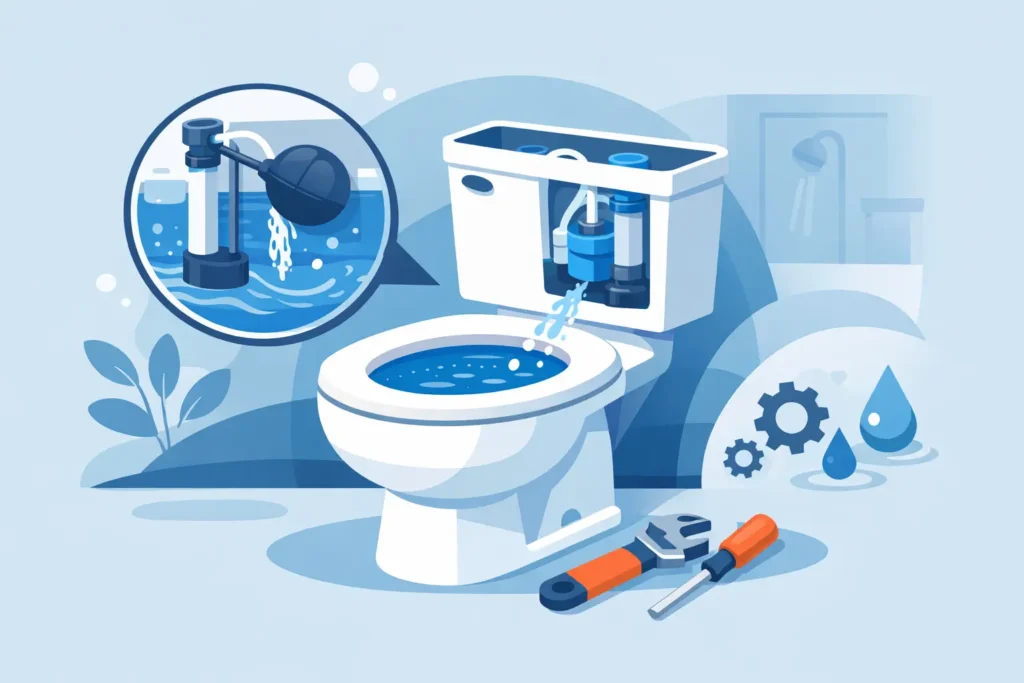
The fill valve controls the water entering the tank after a flush. It should shut off when the water reaches the fill line marked inside the tank. If it does not shut off, water can continue rising until it spills into the overflow tube.
A failing valve may hiss continuously, fill slowly, cycle on and off, or fail to stop altogether. Sometimes the float setting is simply too high and can be adjusted. Other times, internal parts are worn, blocked by debris, or damaged by mineral buildup. In that case, replacing the fill valve is typically the more dependable repair.
Do not ignore water flowing into the overflow tube. While it may not spill onto the bathroom floor, it is still water going directly down the drain all day and night.
The float is sticking or improperly adjusted
Depending on your toilet, the float may be a ball on an arm or a cup-shaped component that moves up and down the fill valve. Its job is to signal when the tank has enough water.
If the float is set too high, sticks against the tank wall, or cannot move freely, the valve may not shut off at the proper level. A quick adjustment may help, but repeated sticking often indicates a valve assembly that is nearing the end of its service life.
The correct water level is usually about one inch below the top of the overflow tube or at the fill line printed on the tank. Never set the water level above that mark to try to improve flushing performance. That only creates waste and can mask a separate flushing problem.
The overflow tube or refill tube is not installed correctly
The overflow tube is the open vertical tube in the middle of most toilet tanks. It protects against overfilling by directing excess water into the bowl. The small refill tube should clip to the top of the overflow tube, not extend down inside it.
If the refill tube is pushed too far into the overflow tube, it can create a siphoning effect that draws water out of the tank. The fill valve then keeps running to replace it. This is a small installation detail with a big effect on water use.
A cracked or damaged overflow tube may also require replacement. Because the overflow tube is usually part of the flush valve assembly, this repair can be more involved than replacing a flapper or making a float adjustment.
Safe Checks You Can Make Before Calling for Service
Start by removing the tank lid and placing it on a towel or stable flat surface. Porcelain lids are heavier and more fragile than they look. Then check whether water is flowing into the overflow tube, whether the flapper sits flat, and whether the chain has reasonable slack.
You can also turn off the toilet’s shutoff valve near the wall or floor. Turn it clockwise until it stops, then wait. If the running sound stops and the tank water level gradually falls, water is likely leaking through the flapper or flush valve. If the tank stays full but the toilet has other flushing issues, a different component may be involved.
Avoid forcing old shutoff valves, overtightening plastic hardware, or using harsh chemical cleaners in the tank. These chemicals can damage rubber and plastic parts, creating more leaks instead of solving them.
When a Running Toilet Needs a Plumber
A basic flapper replacement may be a reasonable homeowner repair. However, call a licensed plumber when the cause is unclear, the toilet still runs after replacing parts, the shutoff valve will not close, or the toilet is leaking from the tank, supply line, or base.
Professional service is also the right choice for commercial restrooms, rental properties, older toilets with corroded hardware, and toilets that have several problems at once. A toilet that runs continuously and also flushes weakly, rocks at the base, or has water on the floor may have an issue beyond the tank components.
For Tampa Bay homeowners, landlords, and businesses, Royal King Plumbing can diagnose the source of the water loss, explain the repair clearly, and replace worn components with parts built to last. A proper inspection can also catch supply-line leaks, damaged shutoff valves, and hidden toilet problems before they become a larger repair.
Do Not Wait if Water Is Reaching the Floor
A running toilet inside the tank is wasteful. Water leaking onto the floor is more urgent. Shut off the toilet’s water supply if you can do so safely, avoid using the fixture, and arrange prompt plumbing service. Water around the base can damage flooring, subflooring, cabinets, and nearby rooms, especially if the leak has been happening unnoticed.
If you cannot stop the water with the shutoff valve, turn off the main water supply to the property and seek emergency help. Fast action can be the difference between a straightforward toilet repair and expensive water damage.
That quiet refill sound is your toilet telling you that something is not sealing, adjusting, or shutting off as it should. Address it early, and you can protect your water bill, avoid unnecessary wear on the fixture, and keep a minor repair from turning into a stressful plumbing call.


