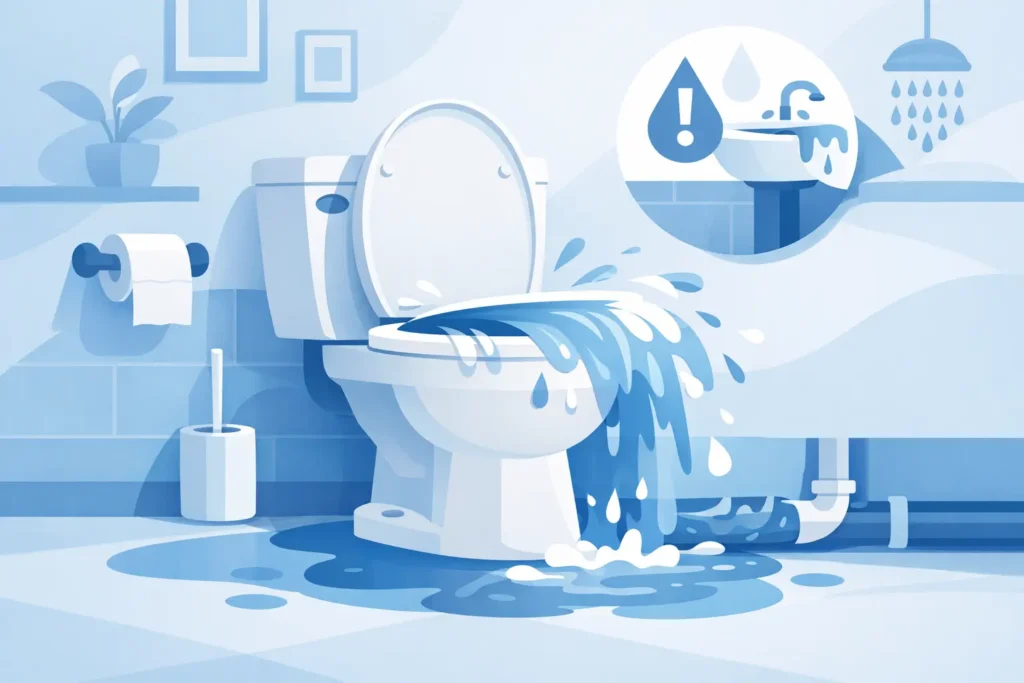
An overflowing toilet can go from annoying to damaging in less than a minute. If your toilet keeps overflowing, the goal is simple – stop the water, limit the mess, and figure out whether you are dealing with a basic clog or a bigger drain problem that needs immediate repair.
What to do first when a toilet keeps overflowing
The first move is not the plunger. Take the tank lid off and push the flapper down if water is still running from the tank into the bowl. That can stop more water from feeding the overflow. Right after that, turn off the toilet shutoff valve behind the toilet by rotating it clockwise.
If the bowl is close to the rim but not spilling yet, do not flush again to “see if it clears.” That second flush is how a small backup turns into water on the floor, soaked baseboards, and damage to nearby rooms. Use towels to contain any spill and keep foot traffic away from the area, especially in commercial spaces or busy households.
Once the water is under control, you can look at the likely cause.
The most common reasons your toilet keeps overflowing
In many homes, the problem starts with a clog in the toilet trap. Too much toilet paper, so-called flushable wipes, paper towels, hygiene products, or a child’s toy can slow or fully block the path out of the bowl. When that happens, each flush adds water faster than the drain can carry it away.
Sometimes the clog is not in the toilet itself. It may be farther down the branch drain or in the main sewer line. That matters because a deeper blockage can affect more than one fixture. If the toilet overflows and you also notice a shower drain backing up, a tub gurgling, or another toilet acting strangely, the issue may be beyond what a plunger can fix.
There are also cases where the toilet is not clogged, but the tank keeps sending too much water into the bowl. A faulty fill valve, flapper issue, or float problem can cause repeated running and contribute to overflow behavior. That tends to look a little different from a standard clog because the tank continues to refill and feed the bowl longer than it should.
In older buildings, worn drain lines, root intrusion, scale buildup, or partial collapses in the sewer line can create recurring overflow problems. If this is the third or fourth time it has happened, the toilet may not be the real problem at all.
Signs the clog is local to the toilet
A single toilet that overflows while nearby sinks and tubs drain normally often points to a blockage inside the toilet trap or just beyond it. In that situation, a flange plunger may be enough to clear it. You may also notice the bowl empties slowly before rising, which is another sign of a localized obstruction.
Signs the problem is in the drain or sewer line
If more than one fixture is backing up, if sewage odor is present, or if the toilet bubbles when other drains are used, that is a different level of problem. Main line issues need a faster, more careful response because they can affect the whole property and create sanitation concerns.
What you can safely try
A proper toilet plunger is usually the best first step for a simple clog. Make sure it is a flange-style plunger, not a flat sink plunger. The flange helps create a seal in the toilet drain opening so you can apply pressure where it counts.
Use steady pushes rather than aggressive jabs. The goal is to move water and pressure through the blockage, not splash contaminated water around the bathroom. If the water level is too high, wait for it to drop a bit or remove some water with a small container before plunging.
A toilet auger is the next step if plunging does not work. It is designed to reach farther into the toilet trap without scratching the porcelain when used correctly. This can clear compacted paper, wipes, or small objects lodged just beyond the visible opening.
What you should not do is pour chemical drain cleaner into an overflowing toilet. These products often do little against a solid toilet clog, and they can make the situation more hazardous for anyone who has to remove the toilet or cable the line later. Hot water and dish soap are also not dependable answers when the bowl is already rising to the rim.
When to stop DIY and call a plumber
There is a point where trying one more thing costs more than it saves. If the toilet overflows again after plunging, if the auger does not restore normal flow, or if any other drain in the building is involved, it is time for professional diagnosis.
This is especially true for landlords, restaurants, offices, and other commercial properties. Recurring toilet overflows are not just inconvenient. They can affect flooring, drywall, subflooring, odor control, and sanitation. A quick response limits damage and helps avoid a larger cleanup bill.
A licensed plumber can determine whether the issue is a toilet blockage, a drain line obstruction, a venting problem, or a sewer line backup. That difference matters because the repair can range from a straightforward toilet auger service to full drain cleaning, camera inspection, or line repair.
Why toilet overflows keep coming back
A lot of customers think they have bad luck with one toilet. More often, they have a partial blockage that never fully cleared. The toilet works once or twice, then backs up again because the restriction is still there.
Another common reason is flushing the wrong items. Wipes labeled flushable are a frequent cause of repeat clogs. They do not break down like toilet paper, and once they catch on scale buildup or roots in a drain line, they create a choke point that keeps building.
In Tampa Bay, aging plumbing infrastructure in some homes and commercial buildings can also play a role. Older cast iron lines, offsets in underground piping, and buildup inside the drain can create a pattern of slow drains and periodic overflows. In those cases, clearing the immediate backup is only part of the solution. You also need to know why the line is vulnerable in the first place.
What a plumber will usually check
A professional diagnosis starts with the basics. Is the toilet itself blocked? Is the tank operating correctly? Are other fixtures showing signs of backup? That initial assessment helps narrow down whether the issue is isolated or system-wide.
If the problem appears deeper in the line, drain cleaning equipment may be used to remove the obstruction. In repeat cases, a camera inspection is often the fastest way to confirm what is happening inside the drain. That can reveal root intrusion, grease or paper buildup, a sag in the pipe, damage, or a foreign object that keeps catching debris.
Good service should also include clear communication about what was found, what was done, and whether there is a risk of the problem returning. When customers are already dealing with water on the floor, they need straight answers and honest pricing, not vague guesses.
How to reduce the chances of another overflow
Prevention is usually less about special products and more about habits. Only human waste and toilet paper should go down the toilet. That rule matters in homes, rentals, offices, and retail spaces because all it takes is one person treating the toilet like a trash can to create a backup.
If you manage an older property, recurring slow drains should not be ignored just because they eventually clear. A slow toilet, bubbling drain, or occasional sewer odor can be the warning sign before a full overflow. Getting the line checked early is usually cheaper and far less disruptive.
For businesses, regular drain maintenance can make sense if the restrooms get heavy use. It depends on the age of the building, the type of occupants, and whether there is already a history of backups. Preventive service is not necessary for every property, but for some, it is the practical move.
Fast action matters more than guesswork
When a toilet overflows once, it may be a simple clog. When a toilet keeps overflowing, there is usually a reason it has not been properly resolved. The safest approach is to stop the water, avoid repeated flushing, and get the problem diagnosed before it turns into a bigger repair.
For homeowners and property managers in Tampa Bay, speed matters. Water damage spreads fast, and sewage-related backups are not something to leave for later. Royal King Plumbing responds quickly, explains the problem clearly, and focuses on repairs that hold up – because in a plumbing emergency, peace of mind starts with getting the right fix the first time.


