
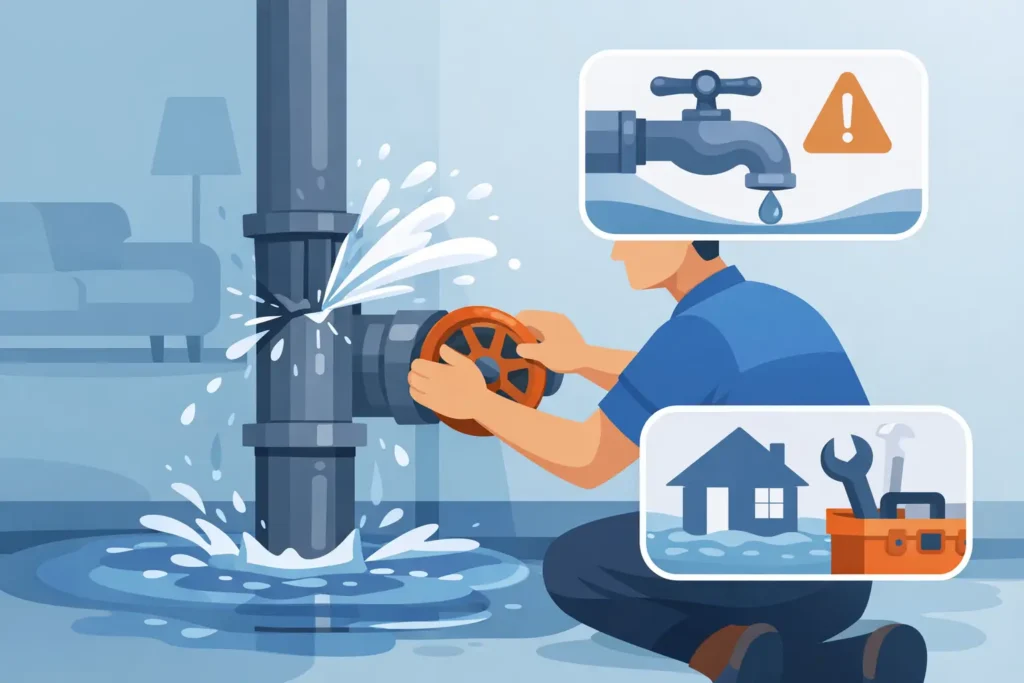
A burst pipe can release gallons of water in minutes, soaking flooring, walls, furniture, inventory, and electrical systems before you have time to process what happened. Knowing how to handle a burst pipe starts with one goal: stop the water source as quickly and safely as possible. The repair can come next, but the first few minutes often determine whether you are dealing with a contained plumbing repair or significant property damage.
For Tampa Bay homeowners, landlords, and business owners, a burst pipe is an emergency worth treating seriously. Even a small split in a supply line can keep feeding water behind a wall or under a cabinet. Move quickly, avoid risky DIY fixes, and get a licensed plumber involved before the damage spreads.
First, Shut Off the Water
Find the nearest shutoff valve if the leak is clearly coming from one fixture. Toilets usually have a small valve on the wall behind or beside the toilet. Sinks have valves under the cabinet, and many appliances have dedicated shutoffs nearby. Turn the valve clockwise until it stops.
If water is coming from a wall, ceiling, slab, or an unknown location, skip the fixture valve and shut off the main water supply to the building. In many homes, the main shutoff is near the water meter, on an exterior wall, in a garage, or near the water heater. Commercial properties may have a utility room or mechanical area with a larger valve.
Do not force a stuck or corroded valve. A valve that breaks while you are trying to close it can make the situation worse. If it will not turn, call for emergency plumbing service right away and use towels, buckets, and containers to limit the water while help is on the way.
Know the Difference Between Water and Gas Shutoffs
Only turn off the water valve unless you smell gas or have another reason to suspect a gas issue. Water and gas shutoffs are not interchangeable. If you smell gas, leave the area, avoid switches or open flames, and contact the appropriate emergency utility service.
Turn Off Electricity Where Water May Reach It
Water near outlets, appliances, breaker panels, extension cords, or exposed wiring creates a shock and fire risk. Do not step into standing water to reach a switch or electrical panel. If you can safely access the breaker panel from a dry area, turn off power to the affected section of the property.
When a ceiling is bulging with water, stay out from underneath it. The ceiling can fail suddenly, and water may be close to electrical wiring. Keep people and pets away from the area until a plumbing professional can assess the leak and the water is controlled.
Relieve Pressure and Drain What You Can
After the main water is shut off, open cold-water faucets at the lowest level of the property. This helps relieve pressure in the pipes and drains remaining water from the system. If you have a multi-story home, begin with a faucet downstairs.
Then turn on a few faucets at higher levels. This allows air into the lines and helps water drain more completely. Flush toilets once if possible, but do not continue using plumbing fixtures after the water is shut off. Your goal is to reduce the amount of trapped water, not test whether the damaged pipe is still leaking.
If the burst pipe is connected to a water heater, do not attempt to drain or repair the heater yourself during the emergency. Shut off the cold-water supply to the unit only if it is safe and you know which valve controls it. Water heater repairs involve pressure, heat, and in some cases gas or high-voltage electricity.
Protect Your Property Without Delaying the Call
Once the water is off, move furniture, electronics, rugs, paperwork, and valuables away from the affected area. Use towels, mops, and wet-dry vacuums only where it is safe to do so. Place buckets under active drips, especially under cabinets or ceilings, but do not use household equipment near electrical hazards.
Take clear photos and short videos of the visible damage before extensive cleanup begins. Document the pipe if it is visible, the affected rooms, damaged belongings, and any standing water. This can help with insurance communication, and it gives your plumber a clearer picture of what happened before the area is dried.
For rental homes, apartments, retail spaces, and offices, notify the owner, property manager, or building contact immediately. A fast report creates a record of the emergency and gets the right people involved sooner. It also helps prevent other tenants or occupants from using water while the system is shut down.
Call an Emergency Plumber for a Lasting Repair
A burst pipe rarely has a one-size-fits-all fix. The plumber needs to identify why the pipe failed before recommending the repair. A pinhole leak from corrosion, a cracked PVC fitting, a failed supply hose, a frozen pipe, and a pipe damaged by shifting or construction all call for different solutions.
A professional repair may involve cutting out a damaged section of pipe, replacing fittings, securing loose lines, repairing a failed valve, or locating a hidden leak behind finished surfaces. In older properties, the visible break may be a symptom of broader pipe deterioration. A qualified plumber can explain whether a targeted repair is appropriate or whether additional inspection is the smarter investment.
Royal King Plumbing provides fast-response emergency plumbing for homes and businesses across Tampa Bay. A licensed plumber can isolate the problem, explain the repair in plain language, provide clear pricing, and document the completed work so you know exactly what was done.
Why Tape and Clamp Fixes Are Usually Temporary
A pipe clamp or repair tape may slow a small leak in a limited situation, but it is not a dependable answer for an active burst pipe. Water pressure can push past weak materials, and hidden moisture can continue damaging drywall, flooring, or cabinets even when the visible drip looks better.
Temporary measures can be useful while waiting for a plumber if they are applied safely and the water supply is off. They should not be used as a reason to turn the water back on. The risk is especially high on pressurized supply lines, where a failed patch can reopen without warning.
What Not to Do During a Burst Pipe Emergency
Avoid opening walls, removing ceilings, or cutting pipes unless you are trained to do so. You could damage electrical wiring, make the water intrusion worse, or create a more complicated repair. Do not use chemical drain cleaners, as a burst supply pipe is not a drain clog problem.
Do not ignore a small leak because it appears to have stopped. Water can travel inside walls and under floors, where it may cause mold growth, warped materials, and structural damage over time. A damp spot, a musty smell, peeling paint, or a rising water bill after the event may mean moisture is still present.
It is also wise not to restore water until the repair has been completed and tested. A good repair includes checking for additional leaks, confirming proper water pressure, and ensuring the affected fixtures operate correctly.
Preventing the Next Pipe Failure
Not every burst pipe is preventable, but regular attention reduces the odds of a surprise emergency. Check exposed pipes under sinks, behind toilets, near water heaters, and around laundry connections for rust, mineral buildup, discoloration, dampness, or loose fittings. Replace aging washing machine hoses and damaged supply lines before they fail.
In Tampa Bay, freezing temperatures are less common than in northern states, but a sudden cold snap can still affect exposed outdoor plumbing, irrigation components, and pipes in uninsulated spaces. Protect vulnerable lines before a freeze, disconnect hoses when temperatures drop, and know where the main shutoff is before you need it.
Older homes and commercial buildings may benefit from professional leak detection or a plumbing inspection, particularly if they have recurring leaks, unexplained water bills, low pressure, or aging pipes. Early repairs are typically less disruptive and less expensive than emergency restoration.
A burst pipe is stressful, but the right response is straightforward: shut off the water, stay safe around electricity, limit the damage, and bring in a licensed professional. Acting quickly protects more than the plumbing. It protects the property and the people who depend on it.


