
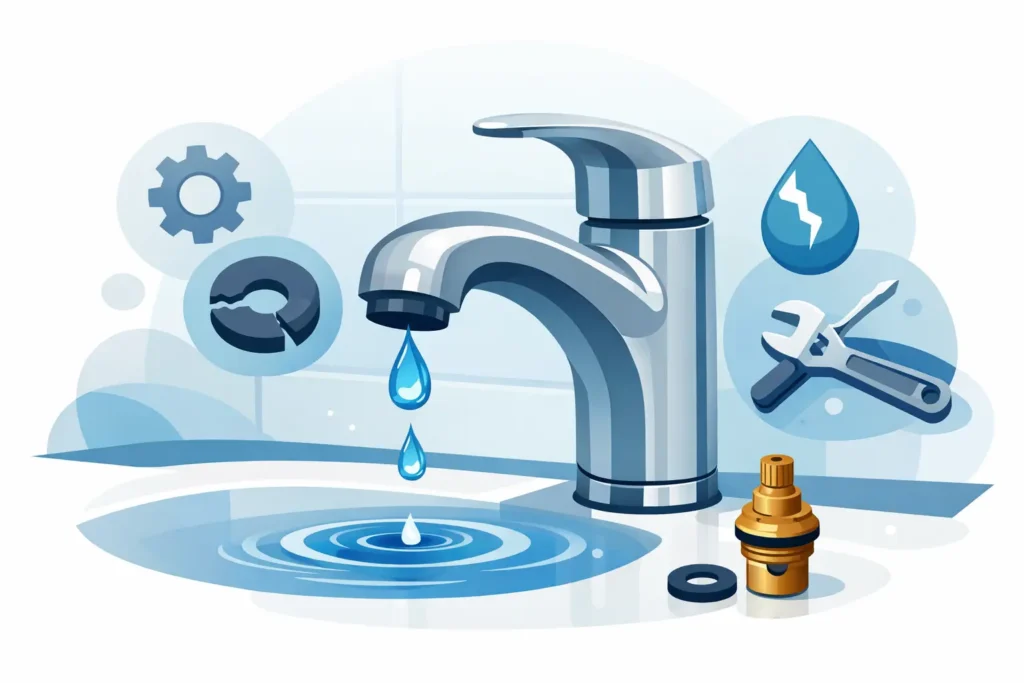
That steady drip can be easy to ignore during a busy week, but it is rarely something that fixes itself. If you are asking, why is my faucet dripping, the most likely answer is a worn internal part that is no longer creating a watertight seal. In Tampa Bay, constant use, mineral buildup, and aging fixtures can all turn a small annoyance into wasted water, cabinet damage, or a larger repair.
A faucet drip may come from the spout, around the handle, or beneath the sink. The location matters because it helps identify the failed part. Some repairs are simple for a confident homeowner, while others are best handled by a licensed plumber who can diagnose the fixture correctly and prevent a repeat leak.
Why Is My Faucet Dripping From the Spout?
When water drips from the faucet spout after the handle is fully turned off, the shutoff mechanism inside the faucet is not sealing completely. The exact component depends on the style and age of your faucet.
A compression faucet, typically one with separate hot and cold handles, often relies on a rubber washer pressed against a valve seat. Over time, the washer hardens, flattens, or cracks. A damaged valve seat can cause the same problem, even after a new washer is installed.
Many newer single-handle faucets use a cartridge, ceramic disc, or ball assembly instead. These parts control water flow and temperature. Sediment, corrosion, worn seals, or a failing cartridge can leave a tiny path for water to pass through after the faucet is shut off.
The repair is not always as simple as tightening a handle. Tightening too aggressively can damage internal parts or strip threads. The right fix starts with identifying the faucet type and replacing the worn component with a compatible part.
Mineral buildup can make the problem worse
Tampa Bay water can leave mineral deposits inside fixtures over time. Those deposits may interfere with moving parts, wear down seals, and cause the faucet to feel stiff or difficult to close. You might also notice reduced flow or an uneven spray from the aerator.
Cleaning the aerator can improve flow, but it will not stop a drip caused by a failed cartridge or worn valve seat. If a faucet has been dripping for weeks or months, it is worth checking the internal components rather than treating the visible symptom alone.
A Drip Around the Handle Usually Means a Seal Problem
Water collecting at the base of a faucet handle points to a different issue. In many cases, the packing nut beneath the handle has loosened, or an O-ring, gasket, or cartridge seal has worn out. The leak may only appear while the water is running, but it can also show up when the faucet is off if water is escaping from a pressurized internal connection.
A loose packing nut can sometimes be tightened carefully, but this is a situation where less is more. Over-tightening can prevent the handle from moving smoothly or damage the valve stem. If tightening does not stop the leak, replacing the seal or cartridge is usually the more reliable repair.
Handle-area leaks should not be ignored. Water can run behind the faucet, stain the countertop, damage the vanity, and create moisture where mold can grow. In a kitchen, it can also work its way into the cabinet below before anyone notices.
Check Under the Sink Before Assuming It Is the Faucet
Not every drip near a sink comes from the faucet body. Open the cabinet and use a dry paper towel to check the supply lines, shutoff valves, drain connections, and garbage disposal connections if one is installed. A paper towel makes small leaks easier to spot than looking alone.
If the lines are dry until you run the faucet, the drain assembly or P-trap may be leaking. If moisture appears even when the faucet is not in use, a supply line, shutoff valve, or faucet connection may be the source. A leak under the sink can cause more damage than a dripping spout because it often goes unnoticed inside a closed cabinet.
If you find active water pooling under the sink, turn off the local shutoff valves if they are working. Then avoid using the fixture until the source is identified. If the shutoff valve itself is leaking or will not turn, a plumber can isolate the water safely and make the needed repair.
When a DIY Faucet Repair Makes Sense
Replacing an aerator or installing a matching cartridge can be manageable if you have the correct part, can shut off the water supply, and are comfortable taking the faucet apart. Take photos as you disassemble it, keep parts in order, and protect the finish with a cloth when using pliers or a wrench.
Before beginning, close both under-sink shutoff valves and open the faucet to relieve pressure. Cover the drain so screws and small parts do not disappear into the pipe. If the shutoff valves are corroded, difficult to turn, or leaking, stop there. Forcing an old valve can create a much more urgent plumbing problem.
DIY work is less appealing when the fixture is heavily corroded, the faucet is an unfamiliar brand, replacement parts are hard to identify, or the leak seems to come from more than one place. In those cases, the time spent guessing at parts can cost more than a proper diagnosis.
Signs You Should Call a Plumber for a Dripping Faucet
A professional repair is the practical choice when the drip returns after a new washer or cartridge, water is leaking below the sink, or the faucet is loose at its base. Those symptoms can signal a damaged valve seat, cracked supply connection, failing mounting hardware, or a problem beyond the faucet itself.
You should also call for service if you cannot shut off the water, the cabinet has visible swelling or water damage, or you hear dripping inside a wall or beneath the floor. A faucet leak is usually contained at the fixture, but hidden water is a different level of concern and may require leak detection.
For rental properties and businesses, fast repair matters even more. A persistent drip can become a tenant complaint, damage a finished cabinet, or disrupt a restroom or breakroom. Clear diagnosis and documented repairs help property owners avoid repeat calls and protect the space.
Repair or Replace the Faucet?
A good faucet can often be repaired with a cartridge, seal kit, or valve seat repair. This is usually the best value when the fixture is in good condition, matches the room, and replacement parts are readily available.
Replacement may make more sense if the finish is badly worn, the body is corroded, parts are discontinued, or the faucet has needed repeated repairs. A new fixture also gives you an opportunity to correct a loose installation, upgrade a kitchen sprayer, or improve accessibility in a bathroom.
The trade-off is straightforward: a small internal repair costs less upfront, but replacement can be the smarter long-term decision for an older faucet with multiple issues. A licensed plumber can explain both options clearly before work begins, so you are not paying for a temporary fix when the fixture is near the end of its service life.
Do Not Let a Small Drip Become a Larger Leak
One drip may not feel urgent, but the water use adds up over time. More importantly, a drip is evidence that a seal, cartridge, valve, or connection is no longer doing its job. Waiting can allow mineral buildup, corrosion, and moisture damage to make the eventual repair more involved.
Royal King Plumbing provides fast, straightforward faucet and leak repairs for homeowners, property managers, and businesses across Tampa Bay. A licensed plumber can identify where the water is coming from, explain the repair in plain language, and help you choose a solution built to last.
If your faucet is dripping today, place a dry towel beneath the sink, watch for changes in the leak, and arrange repair before that small, familiar sound turns into damage you can no longer ignore.


