
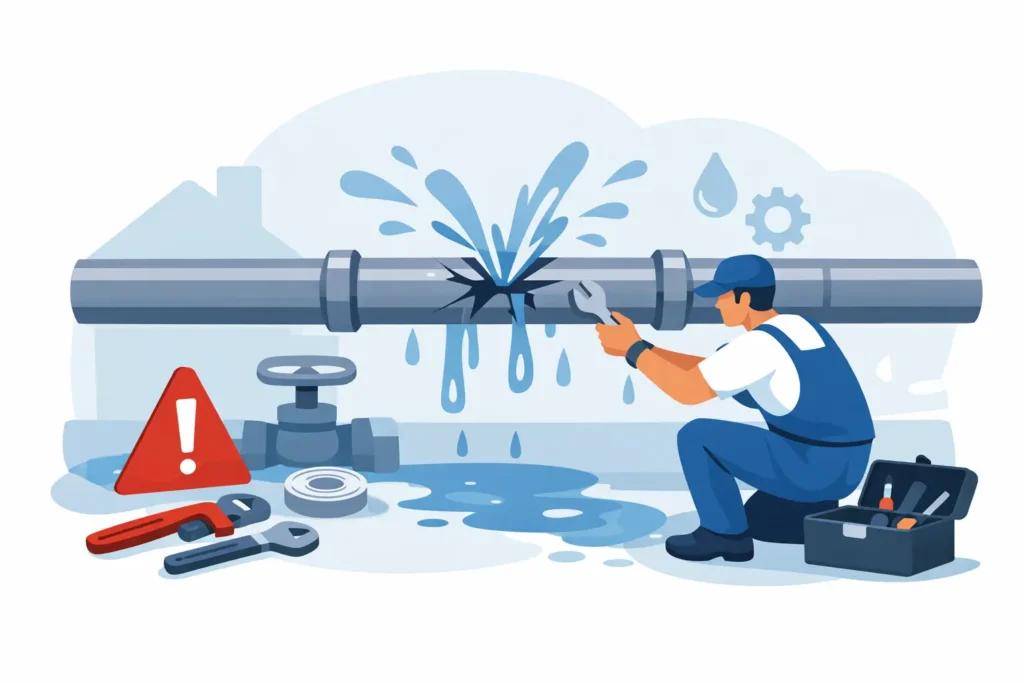
A pipe doesn’t usually burst at a convenient time. It happens before work, in the middle of the night, or right after you notice a strange drop in water pressure and hope it’s nothing. When water is actively pouring into a home or commercial space, burst pipe repair becomes urgent fast – not just to stop the leak, but to limit damage to flooring, walls, cabinets, inventory, and electrical areas.
For homeowners, landlords, and business owners in Tampa Bay, the first priority is simple: stop the water, protect the property, and get a licensed plumber on the way. The faster the response, the better the outcome.
What causes a burst pipe?
A burst pipe is rarely random. In most cases, pressure builds or a weak section of pipe finally gives out. In older properties, corrosion can thin the pipe wall over time until it fails. In newer systems, poor installation, loose fittings, or unsupported pipe runs can create stress points that eventually crack or split.
High water pressure is another common factor. Pipes, valves, and supply lines are built to handle normal operating pressure, but when pressure runs too high for too long, it puts constant strain on the system. That doesn’t always show up as an obvious problem right away. Sometimes the first sign is a sudden rupture behind a wall or under a sink.
Clogs can also play a role, especially in drain lines or sections of pipe dealing with restricted flow. If pressure has nowhere to go, weak joints and damaged sections are more likely to fail. Tree root intrusion, shifting foundations, and aging underground lines can contribute as well, especially in properties that have had recurring leak issues.
In the Tampa Bay area, weather can be a factor too. While frozen pipes are less common here than in colder climates, temperature swings, storm-related stress, saturated soil, and older exterior plumbing can still create conditions that expose weak spots.
What to do before burst pipe repair starts
If you have a pipe burst, speed matters more than guesswork. The first step is shutting off the water supply. If the leak is isolated to a fixture supply line, you may be able to turn off the local shutoff valve. If the source is unclear or the leak is severe, shut off the main water supply to the property.
Once the water is off, turn off electricity to affected areas if water is near outlets, appliances, or electrical panels. Safety comes first. After that, move what you can out of the way – rugs, furniture, boxes, electronics, and anything that can be damaged further by standing water.
Take photos if the damage affects insurance documentation or a rental property record. Then call for professional service. A temporary patch may slow a drip in some situations, but it is not a reliable answer for a split pipe under pressure. Burst pipe repair needs a clear diagnosis and a durable fix, not a short-term bandage that fails again two days later.
Burst pipe repair depends on where and why it failed
Not every repair looks the same. A visible burst under a kitchen sink is a very different job from a slab leak, a broken pipe behind tile, or a failed commercial water line above a ceiling grid. The right repair depends on the location of the break, the pipe material, the extent of damage, and whether the surrounding plumbing is still in good shape.
In some cases, the repair is straightforward. A damaged section can be cut out and replaced, fittings can be reset, and the line can be pressure-tested to confirm the issue is resolved. That is often the best-case scenario.
Other times, a burst points to a larger problem. If the pipe is heavily corroded, if multiple sections show wear, or if the system has had repeated leaks, replacing one small section may not be the smartest long-term choice. A good plumber will explain that clearly. The lowest upfront repair is not always the most cost-effective if another section is likely to fail next month.
That’s one reason customers value straightforward communication during service calls. You want to know what failed, why it failed, what can be repaired today, and what might need attention next. Clear pricing and documented work matter just as much as technical skill when the situation is stressful.
Signs a burst pipe may be hidden
Not every pipe burst is dramatic. Some happen behind walls, under flooring, or above ceilings and show up as secondary damage before the actual pipe is found. If you notice water stains, bubbling paint, warped flooring, moldy smells, or an unexplained increase in your water bill, it may be more than a minor leak.
Low water pressure can also be a warning sign, especially if it changes suddenly. So can the sound of running water when all fixtures are off. In commercial settings, hidden leaks may show up as damp ceiling tiles, wall discoloration, or water near utility rooms and shared plumbing lines.
These situations call for quick leak detection, not waiting to see if the problem gets worse. Hidden pipe failures can continue damaging drywall, framing, insulation, and flooring long before the source becomes obvious.
Why fast response matters
Water damage spreads quickly. Drywall absorbs it, cabinets swell, flooring separates, and moisture finds its way into places you can’t see. The plumbing repair itself may be only part of the cost if the response is delayed.
That is why emergency plumbing service is not just about convenience. It protects the property from a much bigger restoration job. A licensed plumber can isolate the problem, make the repair, and help you understand whether there is additional risk in the system.
For landlords and property managers, quick action also helps protect tenant spaces, reduces liability, and keeps repair timelines from snowballing into larger vacancy or habitability issues. For business owners, especially those with customer-facing spaces, every hour matters. Water near restrooms, kitchens, breakrooms, or service counters can interrupt operations and create safety concerns fast.
How professionals approach burst pipe repair
A proper service call starts with diagnosis, not assumptions. The plumber identifies where the line failed, checks for related damage, and determines whether the problem is isolated or part of a broader issue. That may involve checking water pressure, inspecting nearby fittings, or looking at the age and condition of the surrounding pipe.
From there, the repair plan should be explained in plain language. You should know whether the plumber recommends a spot repair, partial replacement, rerouting, or a larger corrective repair. Honest service means being clear about trade-offs. A fast patch may restore service today, but if the system is in poor condition, a longer-lasting repair may save money and disruption later.
Clean workmanship matters too. Plumbing emergencies are disruptive enough without leaving a mess behind. Professional technicians protect the area as much as possible, document the work, and leave you with a clear record of what was repaired.
That practical, transparent approach is exactly what customers expect from a fast-response company like Royal King Plumbing.
Can a burst pipe be prevented?
Sometimes yes, sometimes not completely. Plumbing systems age, and even well-maintained pipes can fail. But many burst pipe situations do give warning signs first. Recurring leaks, discolored water, rattling pipes, pressure problems, and visible corrosion are all reasons to get the system checked before a failure becomes an emergency.
Routine inspections help, especially in older homes and commercial buildings. If a property has had previous pipe issues, it makes sense to look at the bigger picture instead of treating every leak as a one-time event. Pressure regulation, replacing worn shutoff valves, updating old supply lines, and addressing small leaks early can reduce the chance of a major rupture.
For landlords and business owners with multiple units or high-use plumbing systems, preventive service is often worth it. It’s easier to schedule repairs on your terms than to deal with water pouring into an occupied space after hours.
Choosing the right plumber for burst pipe repair
When a pipe bursts, most people are not comparing plumbing theory. They want someone who answers the phone, arrives quickly, explains the problem clearly, and fixes it properly. That means looking for licensed professionals, emergency availability, transparent pricing, and a company with a track record of showing up when it matters.
It also means choosing a plumber who understands both the urgency and the follow-through. Fast service is important, but so is durable workmanship. A repair should solve the problem, not just buy a few hours.
If you are dealing with a burst pipe, trust your instincts. Shut off the water, protect the area, and get qualified help in motion right away. The best repair outcomes usually start with quick decisions made before the damage has time to spread.


