
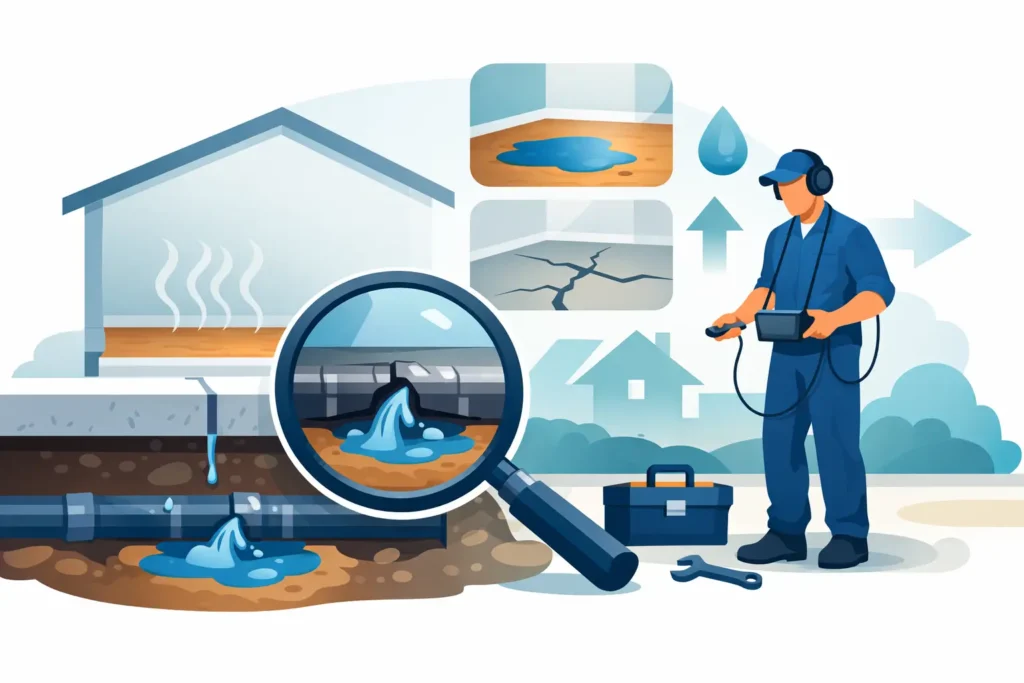
A slab leak rarely announces itself with a burst pipe and a puddle in the middle of the room. More often, it starts quietly – a warm spot on the floor, a higher water bill, the sound of running water when everything is off. By the time the signs are obvious, the damage can already be expensive. That is why slab leak detection matters. The sooner the source is found, the sooner you can stop damage to floors, walls, foundations, and your water line.
For homeowners and property managers in Tampa Bay, speed matters even more. Moisture problems do not stay contained for long in Florida conditions. Water under a slab can lead to flooring damage, mold concerns, foundation movement, and ongoing water loss that drives up utility costs month after month.
What Is a Slab Leak?
A slab leak is a water leak in the plumbing lines that run beneath a concrete foundation. In many homes and some commercial buildings, water supply pipes are routed under the slab. When one of those lines cracks, corrodes, shifts, or develops a weak point, water starts escaping below the structure.
Some slab leaks are on hot water lines, which can create warm areas on the floor. Others happen on cold water lines and stay hidden longer. Either way, the location makes the problem harder to confirm without the right tools and experience.
A slab leak is not always dramatic at first. That is part of the problem. Small leaks can continue for weeks or months before property owners realize what is happening.
Common Signs That Point to Slab Leak Detection
The first clue is often a change that does not make sense. Your water use has not changed, but the bill jumped. The floor feels warm in one area. You hear water moving through pipes late at night when no fixture is running. None of those signs prove a slab leak by themselves, but together they are enough to take seriously.
You may also notice damp flooring, cracked tile, warped wood, or a musty smell that lingers even after cleaning. In some cases, pressure at fixtures starts dropping because water is escaping before it reaches faucets, showers, or appliances.
Foundation movement can also show up over time. Hairline wall cracks, separating baseboards, or doors that suddenly stop closing properly can have more than one cause, but hidden water under the slab is one of them. It depends on how long the leak has been active, how much water is escaping, and the soil conditions under the building.
Why Slab Leaks Happen
There is no single cause behind every slab leak. In older plumbing systems, pipe corrosion is common. Over time, metal pipes can weaken from water chemistry, age, or repeated wear. In other buildings, shifting soil or foundation settlement puts pressure on pipes until they fail.
Poor installation can also play a role. If a pipe was bent too tightly, placed under stress, or left rubbing against concrete or gravel, a weak point can develop. High water pressure is another factor. Pipes under constant strain tend to fail faster, especially if the system already has age-related wear.
Sometimes the cause is simple bad luck. A pipe can last for years and then fail in one spot with little warning. What matters most is finding the leak accurately before repair decisions are made.
How Slab Leak Detection Works
Professional slab leak detection is about narrowing down the leak location without tearing up large sections of flooring just to guess. A licensed plumber will usually start with the symptoms, ask about billing changes or pressure issues, and inspect the plumbing system for obvious causes above ground. That step matters because not every hidden leak is under the slab.
If the signs still point below the foundation, leak detection tools help confirm the problem. Acoustic listening equipment can pick up the sound of water escaping under concrete. Pressure testing may help identify whether a line is losing water. In some cases, thermal imaging helps spot temperature differences caused by hot water leaks. Moisture detection tools can also help track where water is moving.
The goal is to be precise. Good slab leak detection reduces unnecessary demolition, shortens repair time, and gives the property owner a clearer path forward. It also helps avoid paying for the wrong repair.
Why Fast Action Matters
Waiting on a possible slab leak usually costs more than checking it. Water under a foundation does not fix itself, and hidden leaks tend to worsen with time. The longer water escapes, the more likely it is to affect flooring materials, cabinetry, walls, and structural stability.
There is also the issue of mold and indoor air quality. A damp environment below or around finished surfaces can create the right conditions for microbial growth. You may not see it right away, but you can end up paying for far more than plumbing repair if the leak keeps going.
For rental properties and commercial spaces, delays can create tenant complaints, business disruption, and repair complications that spread into multiple units or rooms. Fast diagnosis protects more than the pipe itself.
Slab Leak Detection vs. Slab Leak Repair
Detection and repair are related, but they are not the same service. Detection is the process of locating and confirming the source of the leak. Repair is what happens next once the exact problem is understood.
That difference matters because repair options vary. In some cases, a spot repair makes sense if the pipe damage is isolated and the rest of the line is in good condition. In other cases, rerouting the line above ground is the smarter long-term fix, especially if the pipe material is aging or there is concern about additional failures.
There are situations where tunneling or direct access through the slab is considered, but that depends on the pipe location, the building layout, and the condition of the plumbing system. The best option is not always the cheapest first step. It is the repair that solves the issue without setting you up for another emergency a few months later.
What to Do If You Suspect a Slab Leak
Start by reducing water use and checking whether the signs are consistent. If no fixtures are on and you still hear water movement, that is a strong reason to call a plumber. If your water bill jumped suddenly, note the change. If you see damp flooring or warm spots, avoid assuming it is a surface issue until the plumbing is checked.
Do not start tearing up floors on your own unless a plumber has already confirmed where the leak is. Guesswork often leads to more repair costs and more disruption. A proper diagnosis comes first.
If the leak seems active or severe, especially if you notice spreading moisture or significant pressure loss, shut off the water supply to prevent more damage. Then call for immediate service. Fast response is one of the biggest factors in controlling total repair cost.
Choosing the Right Plumber for Slab Leak Detection
This is not a service where you want a vague answer or a rushed estimate. You want a licensed plumber who can explain what they found, what tools were used, and what repair options make sense for your property. Clear communication matters just as much as technical skill.
It also helps to work with a company that understands urgent plumbing calls and does not treat hidden leaks like a low-priority appointment. Slab leaks can affect the structure, interior finishes, and water bill all at once. You need a team that can diagnose quickly, explain the problem in plain language, and provide honest pricing before major work begins.
For property owners in Tampa, Clearwater, Largo, Safety Harbor, and St. Petersburg, that local responsiveness matters. Royal King Plumbing focuses on fast diagnosis, straightforward recommendations, and repairs built to last, which is exactly what a stressful hidden leak situation calls for.
The Cost of Waiting Is Usually Higher
Many plumbing issues can wait a day or two. A possible slab leak is not usually one of them. Hidden water beneath your foundation can quietly damage materials, waste money, and turn a manageable repair into a much bigger project.
If something feels off in your home or building, trust that instinct and get it checked. The best time to deal with a slab leak is before it has had time to spread. A fast, accurate diagnosis gives you options, protects your property, and helps you move forward with confidence.


