10 Best Emergency Plumbing Tips for Fast Control
A burst supply line can release gallons of water before you have time to process what happened. The best emergency plumbing tips are not complicated, but acting in the right order can protect your floors, walls, inventory, and peace of mind. Your first goal is to control the immediate risk. The repair can come next.
1. Shut Off the Water at the Right Valve
If one fixture is leaking, start with its local shutoff valve. Toilets, sinks, washing machines, dishwashers, and many water heaters have valves on the supply lines nearby. Turn the handle clockwise until it stops, but do not force a seized valve. Closing the local valve may keep water available everywhere else in the property.
If a pipe has burst, a ceiling is dripping heavily, or you cannot identify the source quickly, go directly to the main water shutoff. In many homes, it is near the water meter, in a utility area, garage, exterior wall, or where the water line enters the building. Property managers and business owners should make sure staff know where this valve is before an emergency occurs.
Once water is off, open a cold-water faucet at the lowest practical point in the building. This helps relieve pressure and drain some water from the lines. It will not fix the break, but it can reduce continued leaking.
2. Protect People Before Protecting Property
Standing water and electricity are a dangerous combination. If water is near outlets, extension cords, appliances, electrical panels, or ceiling light fixtures, stay clear of the area. Shut off power at the breaker only if you can reach it without stepping through water or touching wet surfaces. If that is not safe, leave the area and call for qualified help.
A sewage backup deserves the same level of caution. Wastewater can contain harmful bacteria, so keep children, pets, tenants, and employees away from the affected space. Do not try to mop or vacuum a major sewage spill with household equipment. Use gloves only for minor, contained cleanup, and arrange professional plumbing and sanitation support for larger backups.
If you smell gas near a water heater or other appliance, do not operate switches, light matches, or attempt a repair. Leave the building and contact the gas utility or emergency services from a safe location.
3. Stop Using the Affected Fixture or Drain
A slow sink may feel manageable until it turns into an overflow. When a drain backs up, stop running water in that fixture immediately. For a toilet that is rising toward the rim, remove the tank lid and close the flapper over the opening at the bottom of the tank. Then turn the toilet’s shutoff valve clockwise.
If more than one drain is backing up, such as a toilet, shower, and sink, the issue may be in the main sewer line rather than a single fixture. Do not keep testing drains to see whether the problem has cleared. Every flush or faucet run can add more water to an already blocked pipe.
Avoid chemical drain cleaners during an emergency. They rarely solve a serious blockage, can damage certain pipes, and create a hazard for anyone who later works on the line. A plunger can be reasonable for a simple toilet clog, but stop if the water level keeps rising or wastewater appears in another fixture.
4. Contain the Water Without Hiding the Problem
After shutting off the source, use towels, buckets, pans, or a wet/dry vacuum to collect accessible clean water. Move furniture, rugs, boxes, electronics, and stored items away from the wet area. For commercial spaces, protect stock and document the affected area before moving anything that may be needed for insurance records.
Do not cover an active ceiling leak with a tarp and assume the danger has passed. Water can pool above the ceiling and cause drywall to collapse. Move people and valuables out from underneath it. If the ceiling is bulging, keep your distance and call a licensed plumber promptly to locate the water source.
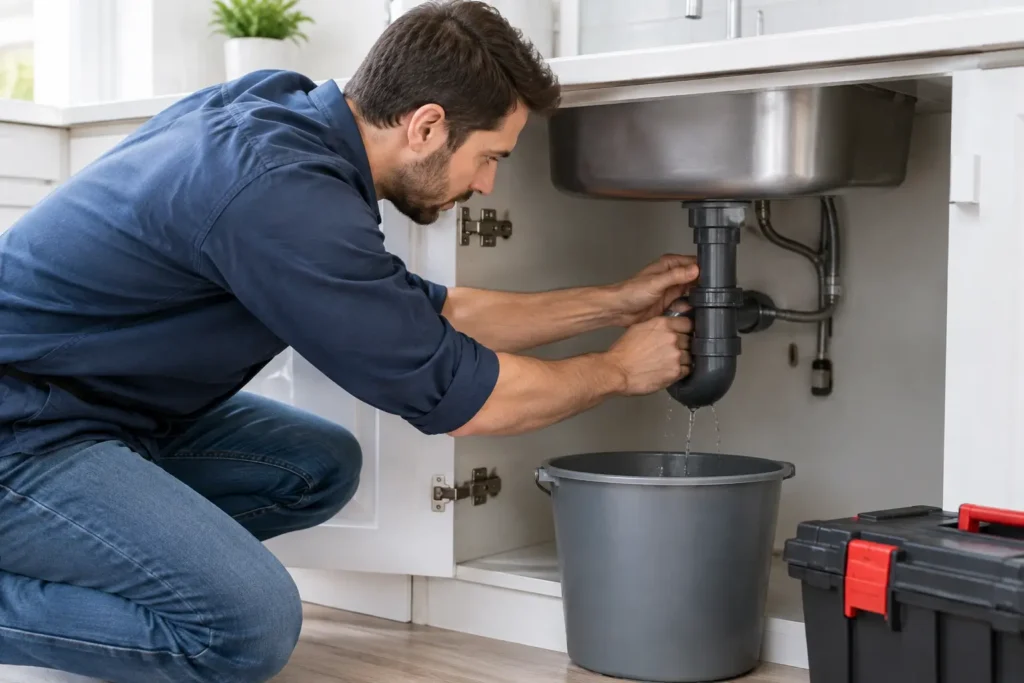
For a small leak under a sink, placing a bucket beneath it is a short-term measure, not a repair. The bucket can overflow, and moisture inside cabinetry can lead to swollen materials and mold growth. Containment buys time. It does not eliminate the need to diagnose the failed fitting, supply line, drain connection, or fixture.
5. Know When a Water Heater Needs Immediate Attention
A leaking water heater can cause serious damage even when the leak looks minor. Shut off the cold-water supply valve above the unit if it is safe and accessible. For an electric water heater, turn off power at the breaker before doing anything else around the unit. For a gas model, do not adjust controls if you smell gas.
Water around the base may come from a loose connection, a pressure relief valve, condensation, or a failing tank. The trade-off is simple: turning off the water may temporarily interrupt hot-water service, but allowing a major leak to continue can damage nearby walls, flooring, and equipment.
Do not drain a water heater unless you understand the process and the unit is safe to handle. Hot water, pressure, and sediment can create additional risks. A licensed plumber can determine whether the unit needs a repair, replacement part, or a full replacement.
6. Take Photos and Note What Happened
Once the immediate danger is under control, take clear photos and short videos of the leak source, visible damage, water levels, and affected belongings. If you are a landlord or business operator, note the time the issue was discovered, which fixtures were involved, and any steps already taken.
This information helps a plumber diagnose the problem faster, especially if the leak slows after water is shut off. It can also support insurance discussions and make it easier to communicate with tenants, owners, or maintenance teams.
Be specific when you call. Say whether water is actively flowing, where it is coming from, whether the main shutoff is closed, whether sewage is involved, and whether electrical equipment is nearby. A clear description helps the dispatcher prioritize the right response and ensures the technician arrives prepared.
7. Do Not Make a Permanent Repair With Temporary Materials
Tape, sealant, clamps, and repair putty can sometimes slow a tiny leak long enough to prevent immediate damage. They should not be treated as a lasting repair for a split pipe, failed supply line, corroded fitting, or leaking drain. Water pressure can cause a weak patch to fail without warning.
The same caution applies to repeatedly resetting a disposal, forcing a drain snake into a pipe, or tightening fittings aggressively. A quick fix can turn a straightforward repair into damaged threads, cracked pipe, or a larger hidden leak.
If you choose a temporary measure, keep it simple and safe: shut off water, catch drips, and leave the plumbing accessible for inspection. Do not close walls, reinstall soaked materials, or run the fixture to test it repeatedly.
8. Call a Licensed Plumber for Active Leaks, Backups, or No Hot Water
Some plumbing problems can wait for a regular appointment. A dripping faucet with a working shutoff valve is usually inconvenient, not urgent. Active water leaks, overflowing toilets, sewage backups, burst pipes, a failed water heater, and a loss of water service need faster attention.
A professional emergency visit should include more than stopping the visible water. Ask for a clear explanation of the source, the recommended repair, and the pricing before work begins when conditions allow. Good service also includes protecting the work area, documenting the repair, and checking for related damage or weak points.
For homeowners, landlords, and businesses in Pinellas and Pasco Counties, Royal King Plumbing provides fast emergency support with licensed technicians, straightforward communication, and repairs built to last.
9. Prepare Before the Next Plumbing Emergency
The most useful emergency plan takes only a few minutes to create. Locate and label the main water shutoff. Test fixture shutoff valves occasionally so they do not seize when you need them. Keep a plunger, bucket, towels, gloves, flashlight, and the contact information for a trusted plumber in an easy-to-reach place.
If your property has older supply hoses, recurring drain clogs, corroded pipes, or a water heater near the end of its expected life, schedule maintenance before a failure forces your hand. Prevention is not always possible, but early repairs are usually less disruptive than an after-hours flood.
When plumbing fails, stay calm, shut off the water, protect the area, and get qualified help before a small problem has time to become a costly one.
Leave a Reply