When Should Pipes Be Replaced? Signs to Act
A pipe can leak once and still have years of useful life left. But when leaks keep returning, water pressure changes without warning, or pipes begin failing in different parts of the property, the question becomes bigger than one repair: when should pipes be replaced?
For homeowners, landlords, and business owners, the right answer depends on the pipe material, the age of the building, the location of the damage, and whether the problem is isolated or part of a wider system failure. Replacing pipes too soon can add unnecessary cost. Waiting too long can lead to water damage, mold, business interruptions, and an emergency repair at the worst possible time.
When Should Pipes Be Replaced Instead of Repaired?
A single, accessible leak usually calls for a repair. A licensed plumber can replace a damaged section, repair a joint, or correct a fitting issue without disturbing the rest of the system. That is often the most practical and cost-effective solution.
Replacement becomes the smarter option when repairs are becoming repetitive, the existing piping is near the end of its expected service life, or the pipe damage is widespread. Think of it this way: a repair addresses one failure. Repiping addresses the condition that is causing failures throughout the system.
The decision should be based on an inspection, not a guess. A professional diagnosis can identify whether a leak came from accidental damage, a loose connection, high water pressure, corrosion, poor installation, or deteriorating pipe material. Those causes have very different solutions.
Warning Signs Your Pipes May Be Failing
Pipe problems are not always dramatic. A burst line is obvious, but aging pipes often give smaller warnings first. Paying attention to them can help you plan a replacement before water reaches walls, flooring, cabinets, or ceilings.
Frequent Leaks in Different Areas
One leak does not automatically mean your home or commercial property needs new pipes. Two or three leaks in unrelated locations within a short period are more concerning, especially if the pipes are older.
Recurring pinhole leaks in copper lines or repeated breaks in aging galvanized piping can indicate system-wide deterioration. Patching each spot may keep water flowing temporarily, but it does not stop the next weak section from failing.
Discolored Water or Rust Particles
Yellow, brown, reddish, or metallic-tasting water can point to corrosion inside older pipes. Galvanized steel pipes are particularly prone to rusting from the inside out. As corrosion builds, it can affect water quality and reduce the inside diameter of the pipe.
Discoloration can also come from a water heater or municipal water work, so it should be checked rather than assumed. If the issue appears only with hot water, the water heater may be the source. If it affects multiple fixtures and continues over time, the supply piping needs attention.
Low or Uneven Water Pressure
A clogged aerator or a failing pressure regulator can cause pressure issues, so low pressure does not always mean repiping. Still, if several fixtures have weak flow and the property has old galvanized pipes, internal corrosion may be restricting water movement.
Pressure that is inconsistent can be just as frustrating as low pressure. One shower may run normally while a nearby sink barely flows. A plumbing inspection can determine whether the problem is isolated to one branch line or affects the larger system.
Visible Corrosion, Stains, or Damp Spots
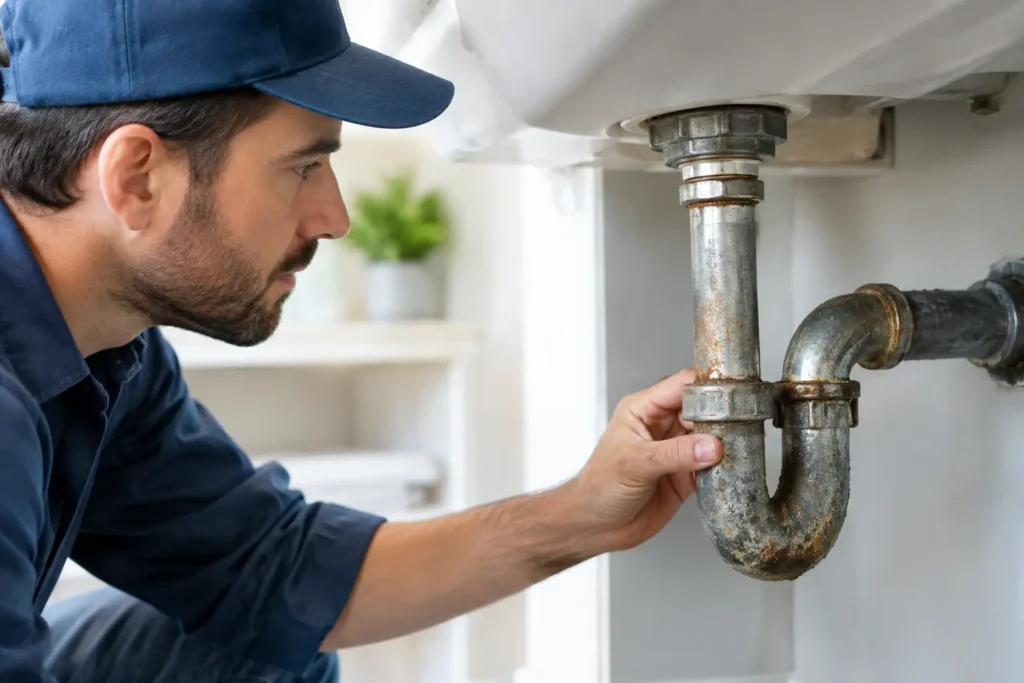
Exposed pipes in garages, utility rooms, under sinks, and commercial back rooms can reveal a great deal. Flaking metal, greenish staining around copper joints, rust, white mineral buildup, or visible corrosion should not be ignored.
Water stains on ceilings or walls, bubbling paint, warped baseboards, and musty odors may indicate a hidden leak. Hidden leaks can cause serious damage long before water becomes visible. Quick leak detection is especially valuable when the pipe runs behind walls, under flooring, or beneath a slab.
High Water Bills Without a Clear Reason
A sudden increase in the water bill can be one of the first signs of a concealed leak. Check toilets, irrigation systems, and fixtures first, since they are common sources of wasted water. If those are not the cause, a damaged water line may be leaking continuously.
For rental properties and businesses, unexplained water use deserves prompt attention. It can raise operating costs while causing damage in areas that are not regularly occupied or inspected.
Pipe Material and Age Matter
Age alone does not decide whether pipes need replacement, but it provides useful context. Materials wear differently, and installation quality, water chemistry, pressure, and maintenance all affect real-world lifespan.
Galvanized steel pipes are common in older properties and often become a replacement priority when corrosion causes low pressure, rust-colored water, or repeated leaks. They may last decades, but internal rust can become a serious issue well before a pipe visibly fails.
Copper piping can last a long time, often 50 years or more under favorable conditions. However, pinhole leaks, corrosion, poor water chemistry, and improper installation can shorten that lifespan. Repeated copper failures deserve a closer investigation before simply replacing another section.
CPVC is used in many Florida properties and can perform well, but age, heat exposure, brittle fittings, and installation conditions can affect it. PEX is a common modern replacement material because it resists corrosion and allows flexible routing. The best material for a repipe depends on the property layout, local code requirements, water conditions, and the areas being served.
Drain and sewer pipes require a separate evaluation. Slow drains, recurring backups, sewer odors, root intrusion, and cracked underground lines may call for repair, lining, or replacement depending on the pipe condition. A drain camera inspection can show what is happening inside the line before major work is recommended.
Repair, Partial Repipe, or Full Repipe?
There is no one-size-fits-all answer. A targeted repair is usually appropriate when damage is limited to one accessible location and the surrounding piping is still in good condition. It is the least disruptive option and may be all that is needed.
A partial repipe can make sense when one section of a property has aging or failure-prone pipes while other sections were updated more recently. For example, replacing a deteriorating branch line serving two bathrooms may be more practical than opening every wall to replace sound piping elsewhere.
A full repipe is worth considering when the property has widespread corrosion, several recent leaks, unreliable water pressure, outdated material throughout, or ongoing repair costs that are adding up. It can also be a smart planned project before a kitchen or bathroom remodel, when walls and finishes may already be opened.
The trade-off is disruption. Repiping may require access points in walls or ceilings, temporary water shutoffs, and coordination with tenants or business operations. A qualified plumbing team should explain the work area, expected timeline, restoration needs, material options, and price before work begins. Clear documentation and photos help property owners understand exactly what was found and what was repaired.
Do Not Wait for a Major Failure
Waiting until a pipe bursts can turn a manageable project into an urgent cleanup. Water can damage drywall, flooring, insulation, electrical components, inventory, and personal belongings within a short time. If a pipe has already failed repeatedly, acting before the next failure gives you more control over scheduling and cost.
That does not mean every older plumbing system needs immediate replacement. Many properties can stay reliable with timely repairs and routine inspections. The key is knowing whether you are dealing with a one-time issue or a system that is steadily wearing out.
If you notice recurring leaks, discolored water, weak pressure, or unexplained water use, arrange a professional inspection before the problem grows. Royal King Plumbing can help property owners identify the cause, explain the options plainly, and make repairs that fit the actual condition of the plumbing system. A clear diagnosis today can prevent a far more expensive surprise tomorrow.
Leave a Reply