
How to Find Water Shutoff Valves in Your Home
A burst supply line can put a surprising amount of water on the floor in minutes. Knowing how to find water shutoff valves before you have an emergency gives you time to act calmly, limit damage, and protect your property while help is on the way.
The right valve depends on the problem. A dripping toilet, leaking dishwasher line, or failed sink faucet may only require shutting off water to that one fixture. Water coming through a wall, ceiling, or floor calls for the main water shutoff valve. Take a few minutes to locate both types now, not while water is spreading through a room.
Start With the Main Water Shutoff Valve
Your main shutoff valve stops water from entering the building. Once it is closed, faucets may still run briefly as the plumbing lines drain, but no new water should enter from the municipal supply.
In many single-family homes, the valve is near where the water line enters the house. That location varies by property, but start your search in practical areas close to the exterior: a garage, utility room, laundry room, water-heater area, crawlspace access, or an exterior wall. In Florida homes, it is often in the garage or outside near the water meter, sometimes inside a small covered box.
Look for a pipe with a handle or round wheel valve. A lever-style ball valve is normally open when the handle runs parallel with the pipe. Turn it one-quarter turn so the handle is perpendicular to the pipe to close it. A round wheel valve closes by turning clockwise. Turn it steadily, but do not force it. Older valves can seize or break when they have not been operated for years.
If your home has a water softener, filtration system, or other equipment near the incoming line, do not assume the closest valve is the main shutoff. Confirm that it is positioned before the plumbing branches out to the rest of the house. If you are unsure, turn the valve off briefly and test a cold-water faucet inside. If water stops after the line drains, you found the correct valve.
How to Find Water Shutoff Valves for Individual Fixtures
Fixture shutoff valves are smaller valves that control water to a specific appliance or plumbing fixture. They are the best first option when the problem is isolated, because the rest of the property can keep using water.
For toilets, look behind the toilet near the floor or wall. A small valve connects the cold-water supply pipe to the flexible hose leading to the tank. Turn the handle clockwise until it stops. If the toilet is overflowing, remove the tank lid and lift the float or flapper if you can do so safely while closing the valve.
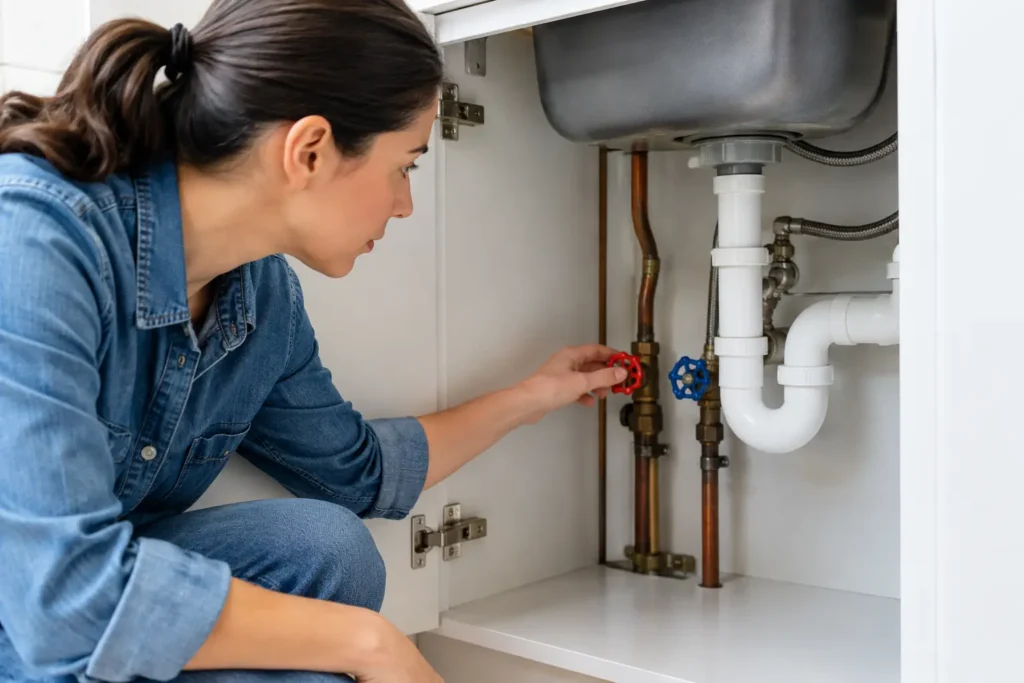
For bathroom and kitchen sinks, look inside the cabinet below the basin. Most sinks have two valves: one for hot water and one for cold water. A faucet leak may require closing one or both, depending on which side is involved. If a supply line has burst, close both valves to avoid guesswork.
Dishwashers usually have a shutoff valve under the kitchen sink because their water line is commonly connected there. Refrigerators with ice makers may have a small valve behind the refrigerator, under the sink, or in a nearby cabinet. Washing machines should have hot and cold valves in the laundry area, typically in a recessed box or on the wall behind the machine.
Water heaters have a cold-water shutoff valve on the pipe entering the top of the unit. This valve is useful if the heater or one of its connected pipes is leaking. Do not confuse it with the temperature-and-pressure relief valve, which is a safety component and should not be used as a routine shutoff.
Check the Water Meter Area, but Use Caution
If you cannot find an indoor main valve, the property may have a shutoff near the water meter. The meter is often located near the street, driveway, sidewalk, or property line in a covered ground-level box. Open the cover carefully and watch for insects, standing water, or damaged components.
There may be a customer-side valve between the meter and your home. That is generally the valve you want to use. The valve on the street side of the meter, sometimes called a curb stop, may belong to the utility. Avoid turning utility-owned equipment unless you have clear authorization and the proper tool. Forcing the wrong valve can create a larger problem or leave you responsible for damage.
Condominiums, apartments, and commercial spaces can be different. Your unit may have an individual shutoff in a utility closet, mechanical room, hallway panel, or above a ceiling access point. In some buildings, the main shutoff is controlled by the property manager or building maintenance team. Ask where it is before an emergency occurs, and keep that information with your lease, maintenance records, or emergency contacts.
Make Sure the Valve Actually Works
Finding a valve is only half the job. A shutoff valve that is corroded, stuck, or leaking around its handle may fail when you need it most.
Test your main shutoff once or twice a year when there is no emergency. Tell everyone in the property first, close the valve slowly, then open a cold-water faucet to confirm the flow stops. Reopen the valve slowly afterward. This simple check can reveal a problem while there is time to schedule a repair rather than deal with it during a leak.
If the valve will not turn easily, do not use excessive force, pliers, or a wrench on the handle. A weakened valve can crack, snap, or begin leaking. A licensed plumber can replace an aging shutoff valve with a dependable modern ball valve and verify that it is installed in an accessible location.
What to Do When You Have an Active Leak
For a small, contained leak at a toilet, sink, appliance, or water heater connection, close the nearest fixture valve first. Place towels or a bucket below the leak, move electronics and valuables away from the area, and avoid using the affected fixture.
For a major leak, a broken pipe, water coming through a ceiling, or water that cannot be contained, close the main water shutoff right away. If water is near outlets, appliances, or an electrical panel, do not step into standing water or touch electrical equipment. Shut off power only if you can reach the panel without entering a wet area. Otherwise, stay clear and contact emergency help.
After the water is off, open a cold-water faucet on the lowest level of the property to relieve pressure and drain remaining water from the lines. Take photos of visible damage for your records if it is safe to do so. Then arrange professional repair before turning the water back on. Restoring water without fixing the failed pipe, valve, or connection can quickly restart the damage.
Give Everyone in the Property a Simple Plan
Homeowners are not the only people who need to know where the shutoff is. Show household members the main valve and explain which direction closes it. Landlords and property managers should document valve locations for each unit and make sure tenants know who to contact after hours. Business operators should make the location part of their opening and closing procedures, especially when a restroom, kitchen, or utility area is left unattended.
A clear label can save valuable time. Use a weather-resistant tag near the main valve, and label fixture valves when plumbing has been modified or when several lines are crowded together. Keep the path to the valve clear of storage boxes, shelving, or equipment.
If you cannot locate your shutoff, the valve is inaccessible, or it does not fully stop the water, it is worth addressing before the next emergency. Royal King Plumbing can identify the correct control point, replace failing valves, and explain exactly what to do if water starts leaking again. The best time to find your shutoff valve is a quiet day when you hope you will not need it.
[…] burst, a ceiling is dripping heavily, or you cannot identify the source quickly, go directly to the main water shutoff. In many homes, it is near the water meter, in a utility area, garage, exterior wall, or where the […]
[…] If water is spreading quickly, take steps to prevent property damage without putting yourself in danger. For general shutoff guidance, read how to locate the home’s water shutoff. […]