Drain Cleaning Service Guide for Clogs That Return
A slow kitchen sink is inconvenient. A toilet that bubbles when the shower drains, a floor drain that smells like sewage, or water rising in multiple fixtures is different. Those are signs that the issue may be deeper than one clogged drain. This drain cleaning service guide helps homeowners, landlords, and business owners recognize the difference, protect their property, and know when to call a licensed plumber.
Start With the Pattern, Not Just the Clog
The location and behavior of a clog tell you a lot. A single bathroom sink that drains slowly often has a local buildup of hair, toothpaste residue, soap, or grooming products near the stopper. A kitchen sink that backs up may have grease, food debris, or a blockage in the branch line serving that sink.
When several fixtures are affected at once, the concern is greater. For example, flushing a toilet may make water rise in a nearby tub, or running the washing machine may cause a floor drain to overflow. Those patterns can point to a blockage in a larger drain line or, in some cases, the sewer line leaving the property.
Do not keep adding water to test a drain that is already backing up. A small clog can become a cleanup problem quickly, especially in a home with one bathroom or a business that depends on working restrooms.
Warning Signs You Should Not Ignore
Some drain issues build gradually, while others need immediate attention. A professional drain cleaning service is worth considering when a clog returns after plunging, a drain becomes slower every week, or there is a noticeable sewage odor around drains or outside cleanouts.
Pay close attention to gurgling sounds. Gurgling happens when air cannot move through the drainage system normally because water or debris is restricting the line. It does not always mean a sewer line failure, but it is a reason to have the system checked before a backup occurs.
Other urgent signs include water coming up through a shower, tub, or floor drain; wastewater near a cleanout; standing water that will not drain; and a toilet that repeatedly overflows without an obvious cause. Shut off water use to the affected fixtures and call for help promptly. Wastewater can damage flooring, drywall, inventory, and personal belongings, and it creates a sanitation concern.
What You Can Safely Try First
A minor, isolated clog can sometimes be cleared without professional service. Start with the least aggressive option. Remove visible hair or debris from a sink or shower drain, clean the pop-up stopper, and use a plunger designed for that fixture. A sink plunger and toilet plunger are shaped differently, so using the right one makes a difference.
For a kitchen sink, avoid pouring boiling water into the drain if you have PVC piping or are unsure of the pipe material. Hot water may help loosen some grease, but it will not resolve a heavy blockage farther down the line. If a garbage disposal is present, turn off power before inspecting it, and never place your hand inside the unit.
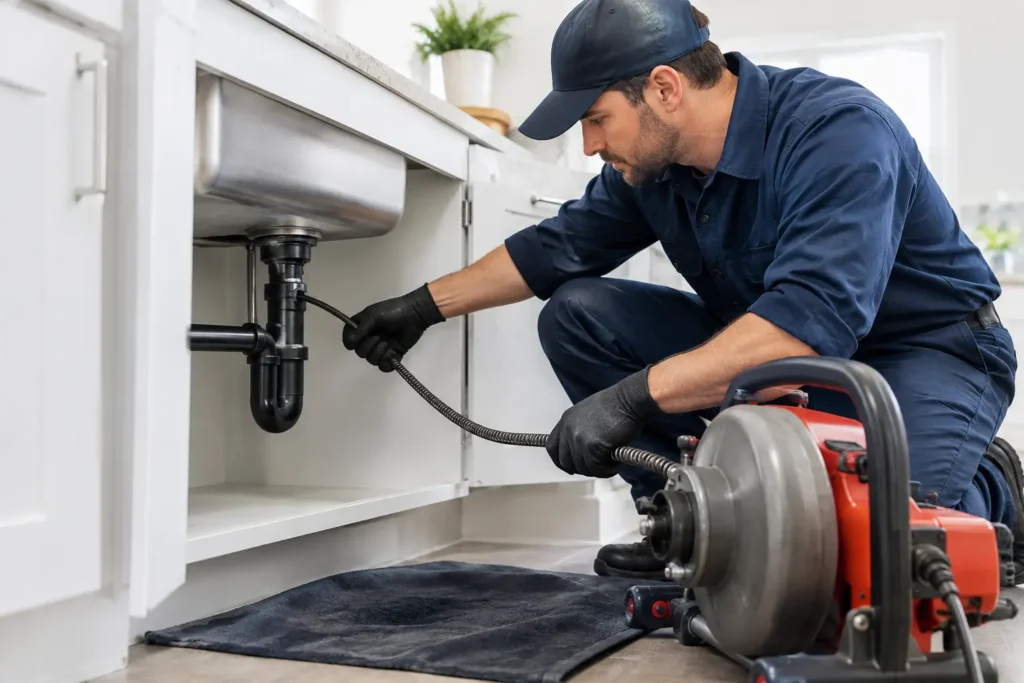
A hand-operated drain snake can help with a simple hair clog close to the opening. Stop if you meet heavy resistance, pull back foul-smelling sludge, or cannot move the cable without force. Pushing too hard can damage a fixture, scratch a pipe, or compact the blockage farther into the line.
Avoid repeated chemical drain cleaner use. These products can be harsh on certain pipes and seals, may not remove the actual obstruction, and create a hazard for anyone who later works on the drain. If chemicals have already been used, tell the plumber before service begins.
When a Drain Cleaning Service Is the Better Choice
DIY methods have limits. A professional is the practical choice when the issue keeps coming back, affects multiple fixtures, involves a commercial kitchen or restroom, or causes a backup. Property managers and landlords should also act quickly when a tenant reports recurring drainage trouble. Waiting can turn a manageable service call into water damage, lost use of the property, or an after-hours emergency.
A licensed plumber can diagnose the source of the problem instead of treating symptoms. That matters because not every blockage is made of hair or grease. Drain lines can be affected by flushed wipes, foreign objects, scale buildup, damaged piping, roots entering an underground line, pipe separation, or low spots where debris repeatedly collects.
For restaurants, offices, retail spaces, and other commercial properties, recurring drainage issues can interrupt operations and create health concerns. The right service plan depends on the building’s use, the age of its drain system, and what is entering the lines each day. A one-time clearing may be enough, but heavily used systems may benefit from scheduled maintenance.
What Professional Drain Cleaning May Include
A good service call starts with questions and a clear inspection of the symptoms. The plumber should identify which fixtures are affected, ask when the problem started, and check accessible drains, traps, cleanouts, and the surrounding area. This narrows down whether the issue is local or part of a larger system.
For many clogs, a professional drain machine clears the line by breaking apart or retrieving the blockage. This is often effective for hair, paper buildup, grease, and common obstructions. The proper cable size and cutting head matter. Using equipment that is too aggressive or incorrectly sized can harm older or fragile piping.
Hydro jetting may be recommended for stubborn grease, heavy buildup, or recurring obstructions in suitable drain lines. This method uses pressurized water to clean the inside of the pipe more thoroughly than a cable alone. It can be highly effective, but it is not automatically the right answer for every property. The plumber should consider the pipe condition first, particularly when pipes are old, damaged, or made from materials that need extra care.
A drain camera inspection is useful when a clog repeatedly returns or when the cause is not clear. A camera can reveal roots, cracks, offsets, scale, or a damaged section of pipe. It helps replace guesswork with visible information and supports a repair recommendation only when one is truly needed.
Questions to Ask Before Approving Work
During a stressful backup, it is easy to focus only on getting water moving again. Fast service matters, but clear communication matters too. Ask what the plumber found, whether the blockage was cleared or only temporarily opened, and whether there are signs of pipe damage or root intrusion.
You should also ask what method is recommended and why. A straightforward explanation helps you compare the immediate solution with any preventive work that may be suggested. If additional repairs are needed, request an itemized estimate before the work begins whenever conditions allow.
Professional documentation is valuable, especially for rental properties and businesses. Notes about the cause of the clog, photos when appropriate, and a detailed receipt can help you track repeat issues, communicate with tenants, and make informed maintenance decisions later.
Preventing the Next Backup
No drain system is maintenance-free, but simple habits reduce the chance of trouble. Keep grease, cooking oil, coffee grounds, and starchy food scraps out of kitchen drains. Use hair catchers in showers and tubs, and only flush toilet paper. Wipes labeled “flushable” can still contribute to clogs in real-world plumbing systems.
For commercial properties, make sure staff understand what should not enter sinks, toilets, and floor drains. A clear routine for grease handling and restroom supplies can prevent many avoidable calls. If the building has older pipes or a history of roots, recurring clogs should be addressed with a maintenance plan rather than ignored until the next backup.
When drainage trouble interrupts your day, the goal is not just to get water moving again. It is to understand why it stopped, protect the property, and choose a repair that holds up. Royal King Plumbing provides prompt, straightforward drain service with clear explanations so you can make the next decision with confidence.
[…] plumbing benefits from preventive maintenance because usage is high and downtime costs more. Regular drain cleaning, inspections of water heaters, checks for leaks, and prompt attention to slow drains can reduce the […]
[…] you wait, check the sink for standing water. A disposal problem and a drain clog can happen at the same time, but they are not always the same issue. If water is draining slowly, […]