Commercial vs Residential Plumbing: Key Differences
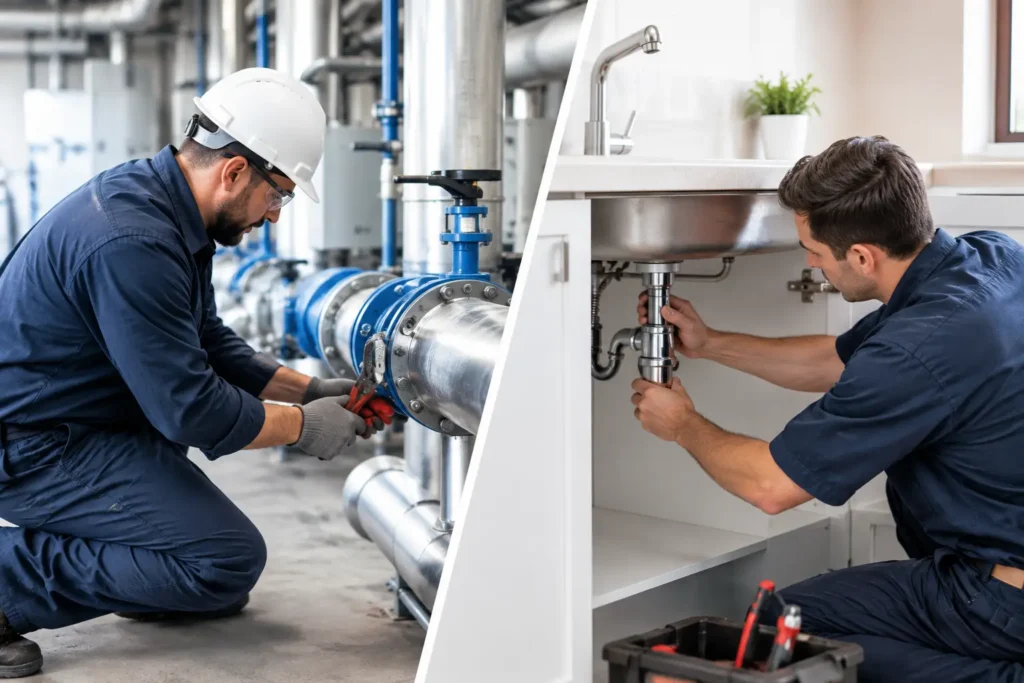
A leaking faucet in a house and a backed-up restroom in a business may look like similar plumbing calls. The response cannot always be the same. Commercial vs residential plumbing differs in system size, fixture demand, local code requirements, access, scheduling, and the cost of downtime. Knowing the difference helps property owners make faster, more informed repair decisions when something goes wrong.
Commercial vs Residential Plumbing at a Glance
Residential plumbing serves the daily needs of a household. A typical home has one water service line, a relatively simple drain system, a water heater, bathrooms, a kitchen, and a limited number of fixtures. Repairs often affect one family, and the work can usually be scheduled around the homeowner’s routine unless there is an active leak, sewage backup, or loss of hot water.
Commercial plumbing supports higher traffic, more fixtures, and more demanding operating conditions. A restaurant, office, retail center, medical office, apartment building, or warehouse may have multiple restrooms, break rooms, water heaters, grease-related drain concerns, and long runs of pipe. A problem can disrupt customers, employees, tenants, and business operations all at once.
The basic principles are the same: water must arrive safely, drains must flow properly, and wastewater must leave the property without leaks or backups. The complexity of keeping that system working is where the differences begin.
System Size Changes the Repair Approach
In a home, a clogged toilet may be isolated to one bathroom. In a commercial property, repeated toilet backups can point to a larger issue in a shared branch line or main sewer line. The affected area may include several restrooms or even multiple tenant spaces.
Commercial buildings often have larger pipe diameters, more extensive drain networks, backflow prevention devices, pumps, and specialized fixtures. A plumber has to identify where the failure begins before recommending a repair. Clearing one drain may restore service temporarily, but it will not solve a damaged pipe, root intrusion, grease buildup, or a blockage farther down the line.
Residential systems can have hidden complications too, especially in older homes. Slab leaks, corroded galvanized pipes, aging sewer lines, and water heater failures require accurate diagnosis rather than guesswork. Still, the layout is generally easier to trace and access than a large commercial system.
Fixture Use Is Higher in Commercial Properties
Homes experience predictable use from a small number of people. Commercial fixtures may see dozens or hundreds of users in a day. That extra volume puts more strain on toilets, urinals, faucets, drains, water heaters, and supply lines.
A public restroom has different needs than a guest bathroom. Commercial fixtures are often selected for durability and water efficiency, but frequent use means parts wear out faster. Flush valves, sensor faucets, shutoff valves, drain components, and seals can fail with little warning.
Restaurants and food-service businesses face another level of drain maintenance. Grease, food debris, and heavy dishwashing can build up inside drain lines. Regular service can prevent an inconvenient backup during business hours, but a slow drain should never be ignored. It is often an early warning that the line needs professional attention.
Codes, Permits, and Compliance Matter More Than Most People Expect
Both commercial and residential plumbing work must meet applicable building and plumbing codes. Commercial projects typically involve more detailed requirements because they serve the public, employees, or multiple occupants. Accessibility standards, backflow protection, fixture counts, sanitation rules, and occupancy requirements can all affect the work.
For a business owner or property manager, the goal is not simply to get water flowing again. The repair needs to be safe, code-compliant, and appropriate for the property. A shortcut can lead to repeated failures, inspection issues, water damage, or unnecessary disruption later.
Residential work also requires proper installation. A water heater replacement, major pipe repair, or new fixture installation should be completed correctly the first time. Licensed plumbers understand how to evaluate the existing system, explain the available options, and perform work that protects the home instead of creating another problem behind a wall or under a floor.
Downtime Has Different Consequences
When a kitchen sink is out of service at home, it is frustrating. When a commercial kitchen sink backs up, a business may have to limit operations or stop service until the issue is resolved. A restroom closure can affect employees and customers. A water leak can damage inventory, offices, equipment, and neighboring tenant spaces.
That is why commercial repairs often need a plan for access, safety, and business continuity. In some cases, work needs to happen before opening, after closing, or during lower-traffic hours. In others, an emergency response is necessary to stop active damage immediately.
Residential emergencies also deserve fast action. Water spreading from a burst supply line, sewage coming up through a drain, or a leaking water heater can cause serious damage quickly. Shut off the nearest water valve if it is safe to do so, move valuables away from the affected area, and call a licensed plumber. Waiting for a small leak to become a large one rarely saves money.
Commercial Plumbing Requires More Coordination
A homeowner can usually authorize a repair directly. Commercial work may involve a property manager, business owner, facilities contact, tenant, maintenance staff, or insurance representative. Access may need to be arranged for utility rooms, vacant suites, ceilings, exterior cleanouts, or shared spaces.
Clear communication matters at every step. Property decision-makers need to know what caused the issue, what repair is recommended, how urgently it needs to be addressed, and what the likely impact will be. Itemized documentation and before-and-after photos are especially useful when managers need records for owners, tenants, or maintenance files.
The best service experience is straightforward: a plumber arrives prepared, diagnoses the problem carefully, explains the findings in plain language, and provides clear pricing before work begins whenever conditions allow. That standard should apply whether the call is for a single-family home or a busy commercial property.
Maintenance Needs Are Not One-Size-Fits-All
Commercial plumbing benefits from preventive maintenance because usage is high and downtime costs more. Regular drain cleaning, inspections of water heaters, checks for leaks, and prompt attention to slow drains can reduce the chance of a disruptive emergency. Properties with older piping, frequent tenant turnover, or high water use may need a more consistent maintenance schedule.
For homeowners, maintenance is often simpler but still valuable. Watch for rising water bills, discolored water, recurring clogs, damp spots, weak water pressure, and changes in water heater performance. These signs do not always mean a major repair is needed, but they are worth investigating before they turn into water damage or a complete system failure.
It depends on the property and its history. A newer office with light use may need less frequent service than an older restaurant or multi-unit building. Likewise, a newer home may have few plumbing concerns, while an older home with original pipes may need a closer look.
Choosing the Right Plumber for the Job
Not every plumbing issue requires a large project, but every issue deserves the right diagnosis. For commercial work, choose a licensed plumbing team with experience handling high-use fixtures, drain problems, water heater issues, pipe repairs, and urgent service needs. Ask how the plumber will identify the source of the problem and how the work will affect your operations.
For residential work, look for the same fundamentals: licensing, clear explanations, honest pricing, respect for your property, and repairs built to last. A plumber should not pressure you into work you do not understand. You should know what is happening, why it is happening, and what options are available.
Royal King Plumbing provides fast-response repair and emergency support for homeowners, landlords, property managers, and businesses throughout Pinellas County, Pasco County, and the surrounding area. When a leak, clog, broken fixture, or water heater problem threatens your property, a quick professional assessment can protect your space, your budget, and your peace of mind.
The right response is rarely just about fixing what is visible. Whether it is a home or a commercial property, address the cause early, document the repair clearly, and choose workmanship you can rely on long after the water stops running.
Leave a Reply