
How to Reset Garbage Disposal Safely at Home
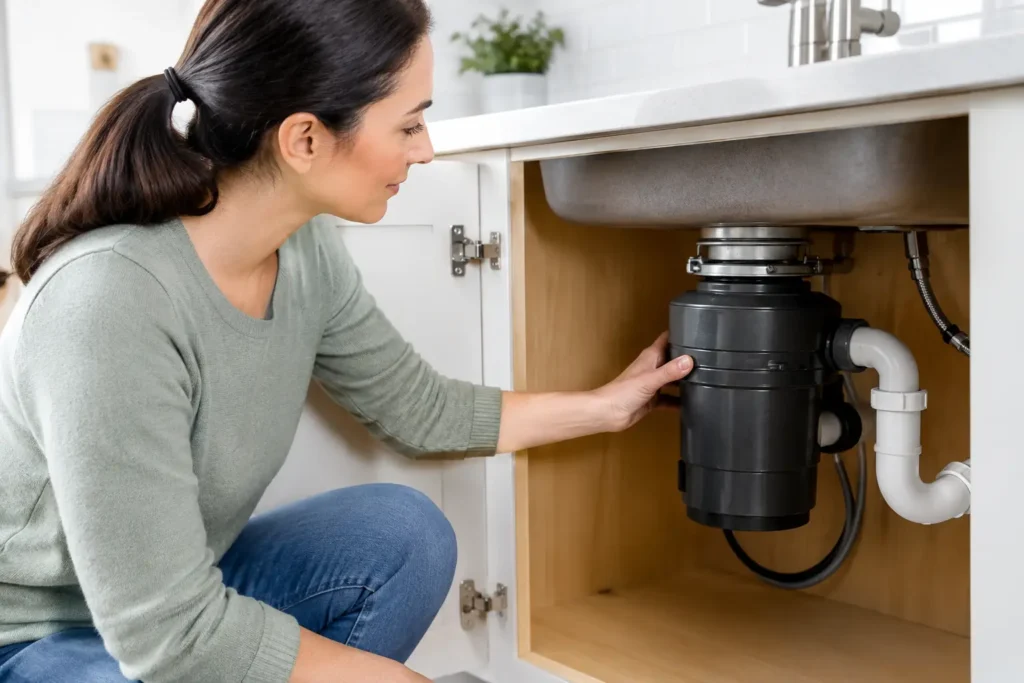
A garbage disposal that suddenly goes silent can bring kitchen cleanup to a stop. The good news is that learning how to reset garbage disposal units is usually straightforward when the motor has simply overheated or tripped its built-in overload protector. The key is to reset it safely, avoid forcing a jammed unit, and recognize when the problem needs professional repair.
Start With Safety, Not the Reset Button
Before reaching under the sink, turn the disposal switch off. If you can access the circuit breaker that controls the disposal, turn that off too. A wall switch can be accidentally bumped, and a disposal has sharp grinding components inside.
Never put your hand into the disposal chamber, even when the power is off. If there is food, glass, a utensil, or another object inside, use tongs or pliers to remove it. Shine a flashlight down through the sink drain so you can see what you are dealing with.
If the disposal is leaking, smoking, giving off a burning odor, or making a loud electrical buzzing sound, do not attempt to reset it. Those symptoms can point to a failed motor, damaged wiring, or a worn seal. Shut off power and arrange a repair as soon as possible.
How to Reset Garbage Disposal Units Step by Step
The reset button is a small safety feature built into the bottom of most garbage disposals. When the motor overheats, the button pops out and cuts power before the unit suffers more serious damage.
Let the Motor Cool Down
Wait about 10 to 15 minutes after the disposal stops working. If it overheated while grinding a heavy load of food waste, the motor needs time to cool before its overload protector can reset.
While you wait, check the sink for standing water. A disposal problem and a drain clog can happen at the same time, but they are not always the same issue. If water is draining slowly, do not keep running the disposal in hopes that it will clear the line.
Find and Press the Reset Button
Look underneath the disposal canister for a small red button, usually near the bottom center. On some models, it may be black or another color. Press it firmly once. You should feel it click into place if it had tripped.
If the button will not stay in, give the disposal a few more minutes to cool. A reset button that repeatedly pops out may mean the motor is overheating because of a jam, an electrical fault, or internal wear.
Restore Power and Test Carefully
Turn the breaker back on, then turn on cold water at a moderate flow. Switch on the disposal for a few seconds. If it runs normally, let cold water continue for another 15 to 20 seconds to move food particles through the drain line.
Cold water helps keep grease and food residue more solid while the disposal grinds them, reducing the chance that oily waste coats the drain. Hot water may feel like the better cleaning choice, but it can melt grease and send it farther into the pipe before it cools and sticks.
If the disposal hums but does not spin, turn it off immediately. The reset button is not meant to solve a mechanical jam.
If It Hums, Check for a Jam
A humming disposal has power, but its grinding plate is likely blocked. Common culprits include fruit pits, bones, twist ties, bottle caps, utensils, eggshell buildup, and pieces of broken dishware.
With power off at the breaker, inspect the chamber with a flashlight. Remove anything visible using tongs or pliers. Do not use your fingers.
Many disposals also have a hex-shaped socket in the center of the bottom. The unit may have come with an offset wrench designed for that socket. Insert the wrench and move it back and forth to manually rotate the grinding plate. You may need to work it in both directions until it moves freely.
Do not use a standard screwdriver in the sink opening to force the grinding plate. It can damage the disposal and may slip unexpectedly. Once the plate turns freely, press the reset button if needed, restore power, run cold water, and briefly test the unit.
If the disposal still hums, trips the breaker, or refuses to spin after a basic jam check, stop there. Repeatedly turning it on can burn out the motor and turn a repairable problem into a full replacement.
Why a Garbage Disposal May Need Resetting
An occasional reset after an obvious overload is not usually alarming. A disposal can overheat if it runs too long, is asked to grind too much at once, or encounters a hard item it cannot process.
Frequent resets are different. They may indicate an aging motor, a partial obstruction, loose electrical connections, or a disposal that is undersized for the way the kitchen is used. In rental properties and commercial break rooms, frequent disposal trouble can also come from users putting the wrong items down the drain.
Disposals are designed for small amounts of soft food residue, not as a replacement for the trash can. Coffee grounds, grease, fibrous vegetables such as celery and corn husks, pasta, rice, flour, bones, and large quantities of potato peels are common troublemakers. Some of these items can jam the unit; others pass through the disposal but create a clog farther down the line.
Check the Power Supply Before Assuming the Disposal Failed
If the disposal makes no sound and the reset button is already pushed in, check the electrical side before assuming the unit is dead. Make sure the wall switch is on and check the circuit breaker panel for a tripped breaker. Reset a tripped breaker once, then test the disposal.
If the breaker trips again, leave it off. A recurring trip can signal a short circuit, moisture around electrical components, or a failing motor. This is not a situation to solve by continually resetting the breaker.
Some disposals plug into an outlet under the sink. Check that the plug is secure, but do not handle a wet cord or outlet. Water under the cabinet should be treated as a plumbing and electrical concern, especially if it is close to the disposal connection.
When Resetting Is Not the Right Fix
A reset button cannot repair every disposal issue. Call a licensed plumber when the unit leaks from the bottom, water backs up into the other side of a double sink, the disposal repeatedly trips its reset button, or the motor makes grinding and screeching noises. Those signs often point to problems beyond a simple overload.
Replacement may be the better value if an older disposal has a failed motor or leaks from its housing. In many cases, repairing an aging unit costs more in time and repeat service than installing a properly sized replacement. A plumber can also check the drain piping, dishwasher connection, and sink flange so the new unit works correctly from day one.
For homeowners, landlords, and businesses in Pinellas County, prompt service matters when a disposal issue is holding up a kitchen. Royal King Plumbing can identify whether the problem is a jam, drain blockage, leak, electrical concern, or a disposal that has reached the end of its service life.
A reset is a useful first step, but it should not become a weekly routine. If your disposal will not stay reset or keeps returning to the same problem, turning it off and getting a clear diagnosis is the safest way to protect your kitchen, plumbing, and budget.
Leave a Reply