
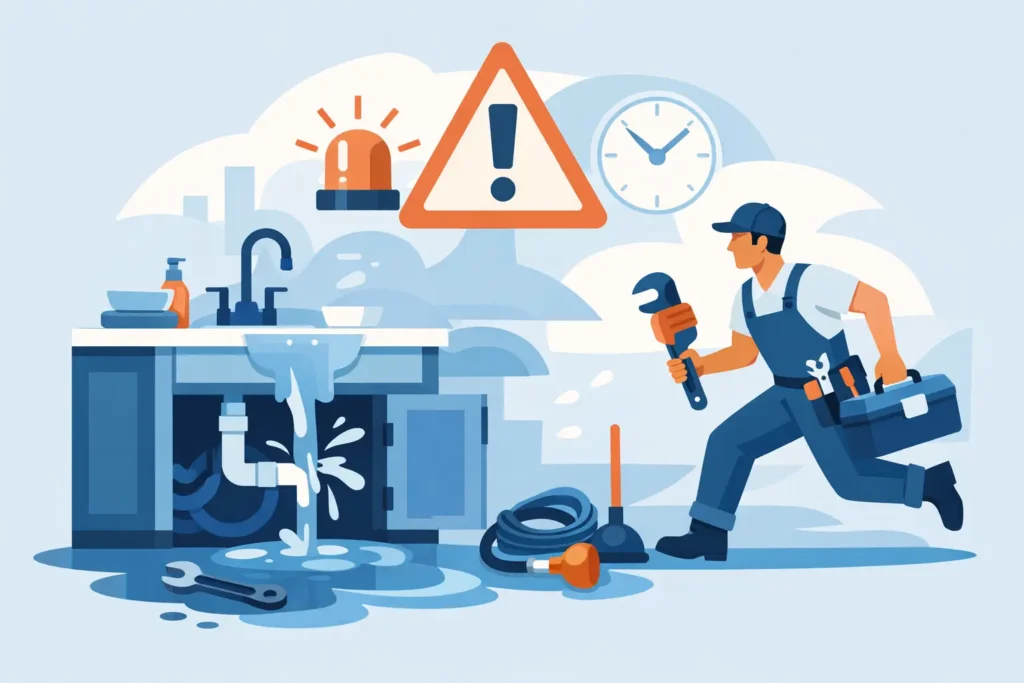
A pipe bursts at 2 a.m., the toilet starts overflowing before guests arrive, or your water heater suddenly gives out on a busy workday. That is when emergency plumbing stops being a routine repair and becomes a property problem that needs action right away. In homes and commercial spaces across Tampa Bay, fast response can make the difference between a simple repair and major water damage.
What counts as an emergency plumbing problem?
Not every plumbing issue is an emergency, but some problems should never wait until next week. Active leaks, burst pipes, sewer backups, overflowing toilets that will not stop, no water service, and water heater failures with leaking tanks all fall into that category. If water is spreading, sanitation is compromised, or a key fixture is unusable in a way that disrupts your home or business, it is time to treat it as urgent.
There is also a practical middle ground. A slow drip under a sink may be inconvenient, but it is not always a middle-of-the-night call unless it is soaking cabinets or flooring. A clogged drain may wait a few hours if another bathroom is available. The real question is simple – is the issue actively getting worse, damaging property, or creating a health and safety concern?
The first steps before emergency plumbing service arrives
When a plumbing emergency starts, most people want one thing: stop the damage. That usually begins with shutting off the water. If the problem is isolated to a sink, toilet, or water heater, the local shutoff valve may do the job. If the leak is larger or you cannot identify the source quickly, turning off the main water supply is often the smartest move.
After that, shut off power if water is approaching outlets or electrical equipment. In the case of a leaking water heater, turn off the unit’s power or gas if it is safe to do so. Move rugs, boxes, electronics, and anything else that can be damaged by water. Take a few photos as well. That helps document the issue and can be useful for insurance or property records.
This is also the moment to avoid a common mistake: trying a quick fix that makes things worse. Store-bought drain chemicals, improvised patches, or aggressive plunging on the wrong fixture can turn a manageable problem into a larger repair. In an emergency, clean and simple damage control is usually better than guesswork.
Why fast emergency plumbing matters
Water damage moves quickly. Drywall absorbs moisture, flooring warps, cabinets swell, and mold risk starts climbing sooner than most people expect. In commercial spaces, a plumbing failure can also interrupt operations, affect employees or customers, and create sanitation concerns that are hard to work around.
That is why emergency service is not only about convenience. It is about limiting the scope of the repair. A fast diagnosis can reveal whether the issue is a failed supply line, a cracked drain pipe, a sewer blockage, or a fixture malfunction. Once the cause is identified, the repair can be made at the source instead of treating symptoms and hoping for the best.
Speed matters, but so does accuracy. A rushed repair that does not address the real issue often leads to repeat leaks, more downtime, and more cost. The better approach is immediate response paired with licensed troubleshooting and a clear explanation of what failed.
Common emergency plumbing calls in Tampa Bay
In this area, emergency calls often involve leaks under slabs, broken shutoff valves, backed-up drains, failed water heaters, overflowing toilets, and damaged supply lines behind walls or under sinks. Older properties may have aging pipes or worn fittings that fail without much warning. Newer buildings are not immune either. Poor installation, defective parts, and heavy fixture use can cause sudden problems in any property.
Commercial plumbing emergencies have their own pattern. Restaurants, offices, retail spaces, and rental properties often call for clogged restroom lines, sewer odor issues, leaking water heaters, and fixture failures that affect customers or tenants. In those cases, response time matters not just for the property itself but for the people using it.
For landlords and property managers, there is another layer to consider. A delay in addressing a leak or sewage issue can turn a maintenance call into a tenant complaint, a damaged unit, or a much more expensive restoration job. Fast service protects the building and helps keep occupancy problems from escalating.
What a professional emergency plumbing visit should look like
A good emergency plumbing response should feel organized, not chaotic. The plumber should arrive ready to assess the issue, isolate the source, and explain what is happening in plain language. You should know whether the immediate goal is to stop active damage, restore function, or complete a permanent repair on the spot.
Transparency matters here. Customers dealing with an urgent leak or backup are already under stress. They should not be left guessing about cost, next steps, or whether the proposed solution is temporary or long term. Clear pricing, straightforward communication, and professional documentation all make a real difference.
That is one reason many local customers choose companies like Royal King Plumbing for urgent calls. The value is not only that someone answers quickly. It is that the work is handled by licensed plumbers who explain the problem, document the repair, and focus on a solution that lasts.
When repair is enough and when replacement makes more sense
Not every emergency ends with replacement. A failed angle stop, damaged supply hose, or isolated section of pipe can often be repaired quickly and reliably. In many cases, that is the best outcome – especially when the rest of the plumbing system is in good shape.
But sometimes the emergency points to a larger problem. A leaking water heater near the end of its service life, repeated drain backups caused by deteriorated piping, or multiple slab leaks may signal that patching one spot is only buying time. In those situations, a plumber should be honest about the trade-off. A lower upfront repair may be possible, but it may not be the most cost-effective choice over the next six months.
This is where experience matters. The right recommendation depends on the age of the system, the extent of the damage, and how critical the fixture is to daily use. Homeowners, landlords, and business operators all have different priorities, so the answer is not always the same.
How to choose an emergency plumbing company
In an urgent situation, people often call the first company that answers. That is understandable, but a few basics still matter. Look for licensed plumbers, true emergency availability, clear communication, and a company that can handle more than one type of problem. A leak may turn out to involve drain repair, fixture replacement, or water heater work, so broad service capability helps.
It is also worth paying attention to how a company communicates before arrival. Are they direct about response time? Do they explain what you can do safely while waiting? Do they sound organized? In emergency service, professionalism starts on the phone.
Honest pricing matters too. Nobody wants surprises after a stressful repair call. A trustworthy plumbing company explains the issue, provides clear options, and documents the work. That level of transparency builds confidence, especially when the repair is happening under pressure.
Reducing the chances of another plumbing emergency
Some emergencies cannot be predicted, but many are preceded by warning signs. Slow drains, inconsistent hot water, unexplained moisture, higher water bills, rust-colored water, and recurring clogs often point to a problem that is already developing. Addressing those issues early is usually far less disruptive than waiting for a full failure.
Routine inspections are especially useful for older homes, rental properties, and commercial buildings with frequent use. A plumber can catch worn valves, corroded connectors, compromised supply lines, and water heater issues before they become urgent calls.
The goal is not to overreact to every small plumbing issue. It is to know when a minor problem has the potential to become a major one. That kind of practical attention can save time, money, and a lot of avoidable stress.
When plumbing fails without warning, people need more than a quick patch. They need a fast, professional response that protects the property, explains the problem clearly, and gets life back to normal with as little disruption as possible.


