
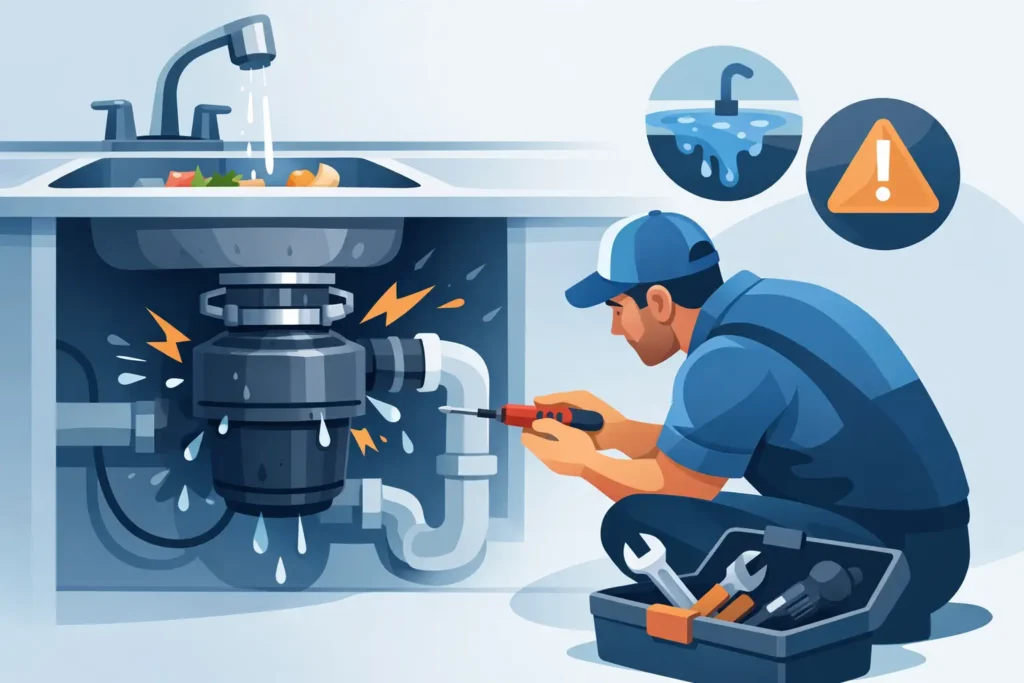
A garbage disposal usually fails at the worst time: after dinner, during a busy morning, or just before guests arrive. When the unit hums without grinding, backs water into the sink, leaks into the cabinet, or will not turn on at all, prompt garbage disposal repair can prevent a small kitchen problem from becoming a drain clog, water-damage issue, or complete appliance replacement.
For Tampa Bay homeowners, landlords, restaurants, and other businesses, the goal is not simply to get the disposal running again. It is to identify why it failed, make the right repair, and confirm the kitchen drain is working the way it should. A licensed plumber can diagnose the disposal and connected drain system clearly, explain the options, and complete a repair built to last.
Signs You Need Garbage Disposal Repair
A disposal that will not start may have tripped its reset button, lost power at the switch, or developed a motor problem. Before assuming the unit has failed, turn the switch off and check the electrical panel. Many disposals also have a small reset button on the underside of the unit. If it has popped out, pressing it once may restore operation.
A humming sound is different. It often means the motor is receiving power but the grinding plate is jammed. This can happen when hard food debris, a utensil, a small bone, or another object becomes lodged inside. Do not keep running a humming disposal. That can overheat the motor and turn a straightforward jam removal into a replacement job.
Slow drainage or standing water in the sink can point to a clog in the disposal, the dishwasher connection, or the drain line beyond the unit. If the disposal runs but food waste does not clear, the problem may not be the disposal itself. This is why a proper diagnosis matters. Replacing a working unit will not solve a blocked kitchen drain.
Leaks deserve quick attention, especially when water is collecting beneath the sink. A leak at the top flange may come from failed plumber’s putty or a loose mounting assembly. Water around the discharge pipe can signal a worn gasket, while water coming from the disposal body often means the internal housing has failed. External seals can sometimes be repaired. A cracked or corroded housing generally calls for replacement.
Common Causes of Disposal Failure
Garbage disposals are built for small amounts of soft food waste, not every item left on a plate. Grease, coffee grounds, fibrous vegetables, eggshells, pasta, rice, fruit pits, bones, and large amounts of food can create jams or clogs. Even foods that seem harmless can cause trouble when they are fed in too quickly or without enough cold running water.
Age is another factor. A well-maintained disposal may provide years of dependable service, but motors wear out, internal components corrode, and seals eventually fail. In coastal Florida, humidity and regular kitchen use can make under-sink inspection especially worthwhile. Catching a minor drip early is much easier than repairing a swollen cabinet base or damaged flooring.
Safe Steps Before Calling for Garbage Disposal Repair
If the disposal has stopped working, switch it off and do not place your hand inside the unit. Even when the power is off, sharp debris may be present. Never use chemical drain cleaners in a disposal. These products can damage components, create hazardous splash risks, and complicate a professional repair.
You can check whether the reset button underneath the unit has tripped. If the disposal is silent and the reset does not help, the electrical connection, wall switch, or motor may need attention. If it hums, turn it off immediately. Some units can be manually turned with the correct disposal wrench inserted from below, but this should only be attempted with the power disconnected and the instructions for that specific unit followed carefully.
For a visible object near the opening, use tongs or pliers, never your fingers. If water is backing up, stop using both sides of the sink and avoid running the dishwasher. A dishwasher often drains through the disposal, so continuing a cycle may send water back into the sink or onto the floor.
Repair or Replace? The Right Answer Depends
Not every malfunctioning disposal needs to be replaced. A jam, loose connection, tripped reset, worn splash guard, failing drain gasket, or clogged discharge line may be repairable at a reasonable cost. These repairs can restore performance without replacing the entire unit.
Replacement makes more sense when the disposal is leaking from its main body, the motor repeatedly trips or overheats, internal grinding components are badly worn, or the unit has reached the end of its service life. It can also be the practical choice if repair costs approach the price of a quality new disposal.
The right replacement is not always the largest or most powerful model. A household with light use may do well with a standard unit, while a large family, rental property, or commercial kitchen may benefit from a higher-capacity model with stronger grinding capability. Noise level, available cabinet space, electrical requirements, septic system considerations, and the condition of the existing drain connection should all be considered before installation.
What a Professional Disposal Service Includes
A professional visit should begin with diagnosis, not guesswork. The plumber checks the disposal’s power supply, reset system, mounting assembly, discharge connection, and drainage performance. They can also inspect for issues that often appear alongside disposal failures, including a clogged trap, a blocked branch drain, a leaking sink basket, or dishwasher drain problems.
If a repair is practical, the work may involve clearing a jam, removing a blockage, tightening connections, replacing a gasket, correcting a drain installation issue, or addressing the electrical connection. If the unit needs replacement, a plumber can remove the old disposal, install the new one securely, reconnect the drain and dishwasher line, test for leaks, and verify that the sink drains properly.
That process matters because a disposal installation is more than attaching an appliance. An improperly aligned drain connection can leak. A loose mount can vibrate. A poorly configured dishwasher drain can lead to backups and odors. Professional workmanship protects the equipment and the kitchen around it.
Keep Your Disposal Working Longer
Use cold water before, during, and after running the disposal. Cold water helps move food particles through the drain and keeps grease from softening and coating the pipe. Feed food scraps gradually instead of forcing large amounts into the unit at once.
Avoid using the disposal as a substitute for the trash can. Grease and cooking oil should be collected and discarded properly, not poured down the drain. Stringy vegetables, large quantities of potato peels, expandable foods such as pasta and rice, and hard objects should stay out of the disposal.
A simple rinse after use helps, but there is no need to rely on harsh cleaners or gimmicks. If odors continue despite normal cleaning and flushing, the cause could be trapped food debris or a drain issue that needs professional attention.
Fast Help for Disposal Leaks, Jams, and Backups
A leaking or backed-up kitchen sink can interrupt a home or business quickly. For property managers and landlords, it can also affect a tenant’s daily routine and create avoidable water damage. When the issue is urgent, quick service and a clear explanation of the repair options make a real difference.
Royal King Plumbing provides fast-response plumbing service across Tampa Bay for garbage disposal problems, kitchen drain backups, leaks, and related sink repairs. A licensed plumber can determine whether the issue is a simple repair, a drain problem, or a disposal that should be replaced, with honest pricing and professional documentation of the work performed.
If your disposal is humming, leaking, or sending water back into the sink, turn it off and protect the area under the cabinet. Addressing the problem early gives you the best chance of avoiding a larger kitchen plumbing repair and getting back to a clean, working sink.


