Sewer Backup Restoration Starts With Safety
A sewer backup is not a cleanup job to put off until morning. Wastewater can spread quickly through flooring, walls, cabinets, and stored belongings, while creating a real health risk for everyone in the property. Proper sewer backup restoration starts with stopping exposure, identifying the source, and making sure the plumbing problem is repaired before cleanup begins.
For homeowners, landlords, and business owners, the first few decisions can limit damage and make the restoration process far more manageable. Acting fast matters, but safety matters more.
What Makes a Sewer Backup Different From a Typical Overflow
A toilet overflow caused by too much paper may be unpleasant, but a sewer backup can involve wastewater returning through a drain, toilet, shower, or floor drain because it has nowhere else to go. This water may contain bacteria, viruses, and other contaminants. Restoration professionals commonly treat it as highly contaminated water.
The source also affects the repair. A blockage in one bathroom fixture may be local to that drain line. Wastewater coming up through multiple drains, especially the lowest drains in the building, often points to a main sewer line problem. Tree roots, grease buildup, damaged piping, collapsed sections, or a blockage in the public sewer can all be factors.
That distinction matters because disinfecting the affected area without fixing the line only sets the property up for another backup.
What to Do Immediately After a Backup
First, keep people and pets away from the affected area. Do not walk through the water unless it is necessary, and do not let children near contaminated surfaces. If water is close to electrical outlets, appliances, or the electrical panel, avoid the area and have power assessed safely before anyone begins work.
Stop using water throughout the property. Do not flush toilets, run sinks, take showers, operate the dishwasher, or start laundry. Every gallon sent down the drain may add to the backup if the main line is blocked.
If the backup is actively rising from a toilet or a single fixture, turn off the fixture’s local water supply valve if doing so is safe. For a larger backup involving several drains, the urgent need is diagnosis of the sewer line. A licensed plumber can determine whether the obstruction is on the private sewer lateral or may involve the municipal side.
Take clear photos and short videos before moving items or starting cleanup, provided it is safe to do so. Document water levels, visible damage, affected rooms, and any belongings that may need to be included in an insurance claim. Keep receipts for emergency service, cleanup, and temporary accommodations if the property cannot be safely occupied.
Sewer Backup Restoration Has Two Separate Jobs
The plumbing repair and the property restoration are connected, but they are not the same service. The plumbing issue must be diagnosed and corrected so wastewater can flow out of the building normally. Restoration addresses the contamination and moisture left behind.
A plumber may clear a blockage with professional drain cleaning equipment, inspect the line with a sewer camera, and identify cracked, offset, root-intruded, or deteriorated pipe. Camera inspection is especially useful when a drain clears temporarily but the underlying cause is still unknown. It provides a clearer basis for deciding whether cleaning is enough or whether a damaged section needs repair or replacement.
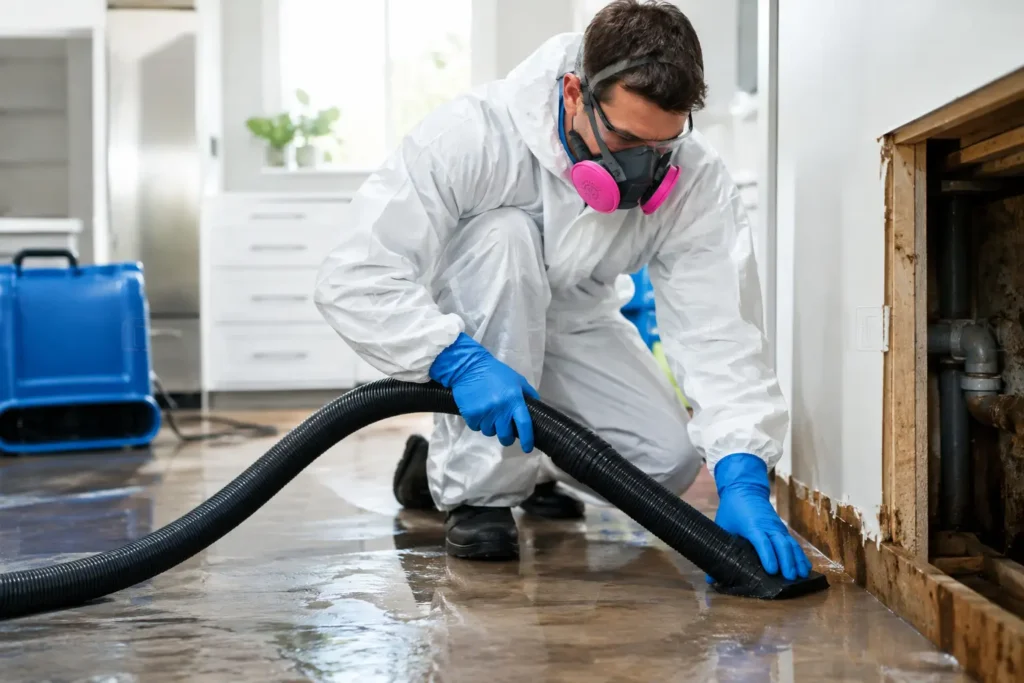
Once the flow problem is controlled, cleanup can begin. Depending on how far the wastewater traveled and how long it remained, restoration may involve removing contaminated porous materials, extracting water, cleaning and disinfecting hard surfaces, drying structural materials, and checking for hidden moisture. Carpet, padding, insulation, particleboard cabinets, and some drywall may not be salvageable after sewage exposure. The decision depends on the material, level of contamination, and how quickly it can be addressed.
Do Not Assume Bleach Solves the Problem
Bleach has a place in some household cleaning situations, but it is not a complete sewer backup restoration plan. It does not remove sewage solids or restore materials that have absorbed contaminated water. Mixing bleach with other cleaning products can also create dangerous fumes.
Avoid using a regular household vacuum, shop vacuum, or fan in contaminated water unless the equipment is specifically intended for that work and can be properly cleaned afterward. Fans can spread odors and contaminants if used before solids are removed and surfaces are cleaned. Opening windows may help with odors when weather permits, but ventilation is not a substitute for safe removal and disinfection.
Homeowners can sometimes handle a very small, contained overflow on a nonporous surface after the source has been stopped. A backup that reaches carpet, baseboards, drywall, cabinets, multiple rooms, or a commercial work area is usually not a practical do-it-yourself project. The greater the spread, the more important it is to use qualified plumbing and restoration help.
Signs the Main Sewer Line May Be the Cause
One slow drain does not automatically mean a sewer line failure. Several symptoms together deserve prompt attention, especially when they repeat.
- Toilets gurgle when a sink, washer, or shower drains.
- Water rises in a tub or shower when a toilet is flushed.
- Multiple fixtures drain slowly at the same time.
- Wastewater appears at a floor drain or the lowest fixture in the building.
- Backups return shortly after plunging or using a chemical drain product.
Chemical drain cleaners are a poor answer for suspected main line clogs. They may not reach or dissolve the obstruction, can damage some piping, and can leave hazardous chemicals in standing water for the technician who later has to clear the line. If the problem affects more than one fixture, stop using water and arrange for a professional diagnosis.
Protecting Your Property and Your Insurance Claim
Contact your insurance carrier early if the damage is significant. Coverage for sewer and drain backup often depends on the policy and whether the property has specific water backup coverage. An insurer may want photos, a list of damaged belongings, invoices, and details about what caused the loss.
Do not discard damaged items until they have been documented unless they create an immediate health hazard or your insurer instructs otherwise. If removal is necessary, photograph the items first. Keep affected items separate from clean areas to avoid spreading contamination through the property.
For rental properties and businesses, document the incident in writing for tenants, employees, or customers as appropriate. Clear records of the timing, affected areas, repairs performed, and restoration steps can be valuable later. They also show that the property was handled responsibly.
Preventing the Next Backup
Prevention begins with knowing what enters the drain system. Grease should never go down a kitchen sink, even when chased with hot water. Wipes, paper towels, hygiene products, cotton swabs, and so-called flushable wipes belong in the trash, not the toilet. In commercial settings, regular drain maintenance can be especially helpful for kitchens, restrooms, and older buildings with high daily use.
Older properties may benefit from a sewer camera inspection if they have frequent clogs, mature trees near the sewer route, or a history of backups. A camera inspection does not repair the line, but it can reveal whether roots, scale, breaks, or pipe shifts are developing before wastewater enters the building.
A backwater valve may be worth discussing for properties that are prone to sewage flowing back from the public sewer during heavy rain events. It is not right for every system and must be installed and maintained correctly, but it can provide another layer of protection in the right situation.
Fast Action Helps the Repair Last
Sewer backups are stressful because they combine a plumbing failure with a contamination concern. The right response is not to cover the smell or rush into cleanup. It is to stop using water, protect people from exposure, document the damage, and have the sewer line properly diagnosed.
When a backup affects your home, rental, or business in Pinellas County, a prompt professional response can help contain the damage and explain the repair in plain language. The goal is simple: restore safe drainage, address contaminated materials correctly, and leave you with clear documentation of what was found and what was done.
Leave a Reply