Trenchless Pipe Repair vs Excavation Compared
A sewer line problem can put a property owner in a tough position fast. One day, drains are slow or backing up. The next, you may be facing repairs beneath a driveway, patio, landscaping, or building floor. When comparing trenchless pipe repair vs excavation, the real question is not which method sounds easier. It is which repair will solve the actual pipe problem safely, last for years, and make sense for your property.
A camera inspection and professional diagnosis should come first. The condition of the existing pipe, the location of the damage, access to the line, and the type of failure all affect the right recommendation.
What trenchless pipe repair means
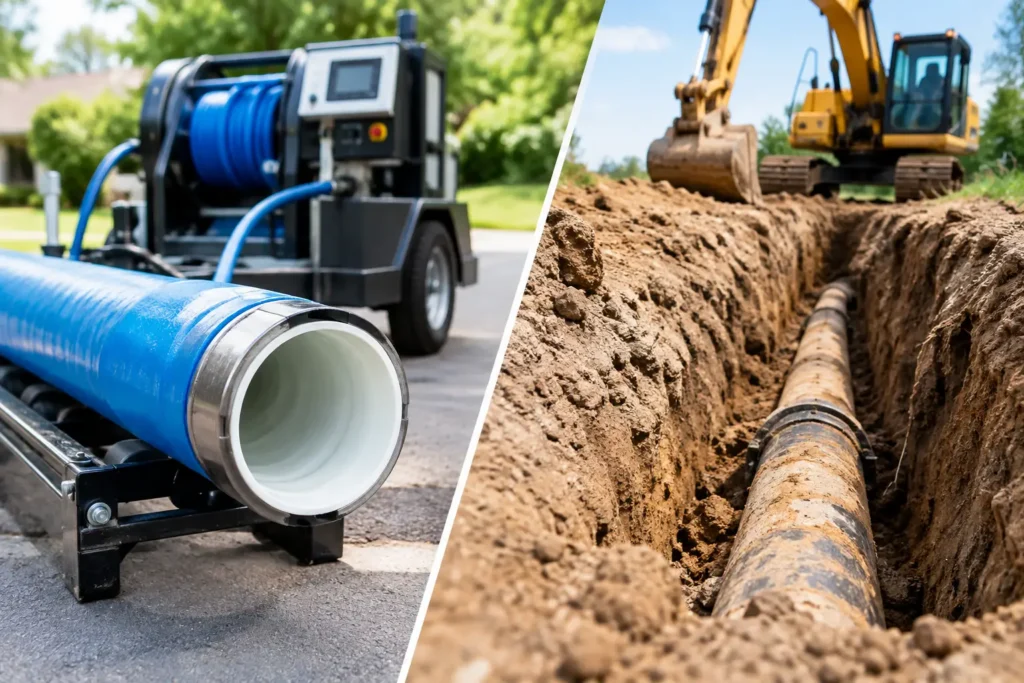
Trenchless repair is a broad term for methods that repair or replace an underground pipe with little or no full-length digging. Instead of opening a long trench across the yard, a licensed plumber may work through a cleanout, access pit, or other entry point.
One common method is cured-in-place pipe lining. A resin-saturated liner is inserted into the damaged pipe, inflated, and cured to create a new pipe within the old one. Another method, pipe bursting, pulls a new pipe through the ground while breaking apart the old pipe. Each option has different requirements, so they are not interchangeable.
The main appeal is clear: trenchless work can reduce disruption. If the failing line runs under mature landscaping, concrete, pavers, or a driveway, avoiding major excavation may save considerable restoration work. It can also shorten the time your property is disturbed.
That does not mean trenchless repair is automatically less expensive. The equipment, materials, access needs, pipe layout, and amount of preparation all matter. A short, accessible excavation can sometimes be the more practical and cost-effective option.
When trenchless pipe repair is a strong option
Trenchless methods are often a good fit when the existing pipe still has enough structure to support the chosen repair. For pipe lining, the line usually needs to be reasonably continuous, accessible, and capable of being thoroughly cleaned before the liner is installed.
It can work well for cracks, small separations, root intrusion, corrosion-related leaks, and aging pipe walls. Lining may also be useful when the damaged section sits under a hard-to-replace surface, such as a slab, pool deck, driveway, or established landscape.
The property layout matters just as much as the pipe condition. A line that is difficult to reach with excavation equipment may be a better trenchless candidate. For commercial properties, minimizing downtime and keeping access areas open can be a major benefit.
Still, a camera inspection may reveal conditions that change the plan. Heavy scale buildup, severe offsets, collapsed sections, or a pipe that has lost its proper slope can prevent lining from being a reliable solution. No responsible plumber should promise trenchless repair before seeing the inside of the pipe.
Benefits homeowners and property managers may see
The most obvious benefit is less digging. That can mean less damage to sod, shrubs, irrigation lines, fencing, concrete, or exterior features. There may also be fewer restoration costs after the plumbing work is complete.
Trenchless repairs can also move quickly once access, cleaning, and preparation are finished. However, speed depends on the job. A complicated line with roots, buildup, multiple bends, or difficult access still takes careful work. Fast service should never mean skipping the steps that protect the quality of the repair.
When excavation is the better repair
Excavation means digging down to expose the failing pipe so it can be repaired or replaced directly. It is more disruptive on the surface, but it gives the plumber full access to inspect the line, correct its slope, replace damaged fittings, and address soil-related issues around the pipe.
This approach is often necessary when a pipe has collapsed, sagged, shifted significantly, or broken into multiple pieces. It may also be the best choice when the line is too damaged or misshapen for a liner to pass through safely.
A belly in a sewer line is a good example. A belly is a low area where wastewater and solids can collect because the pipe no longer has the correct grade. Lining can strengthen a pipe wall, but it cannot reliably lift a sagging pipe back into proper position. Excavation allows the installer to rebuild that section with the correct slope.
Excavation can also be preferable for a localized issue in an open yard. If the damaged spot is easy to reach and the repair area is small, direct replacement may provide a straightforward, durable solution without the added cost of trenchless equipment.
Why direct access can be worth it
Opening the ground is not anyone’s first choice, especially when landscaping or hard surfaces are involved. But it can reveal hidden problems that a camera alone cannot fully address, including unstable soil, damaged connections, or improperly installed pipe from a previous repair.
With full access, the plumber can replace a failed section rather than work around it. For severely compromised pipes, that level of correction may offer the best long-term value.
Trenchless pipe repair vs excavation: key factors
The best way to compare trenchless pipe repair vs excavation is to look beyond the initial estimate. A lower up-front price does not help if the repair does not match the failure, and a larger excavation quote may be reasonable if it prevents repeat backups or another repair in a few years.
Start with the type and extent of damage. Minor cracking or root intrusion in an otherwise stable pipe may suit lining. A crushed pipe, major separation, or poor slope usually calls for excavation and replacement.
Next, consider where the line runs. A pipe below a driveway, patio, or carefully maintained yard can make trenchless methods very appealing. A pipe in open soil near a property boundary or utility area may be simpler to excavate.
Then consider restoration. Excavation estimates should account for what must be removed and what will need to be restored afterward. This can include sod, plants, pavers, concrete, fencing, irrigation, or asphalt. Ask what is included in the plumbing scope and what restoration work may require a separate contractor.
Finally, think about the pipe’s remaining life. If one small section has failed but the rest of the line is in good condition, a spot repair may be sensible. If the camera inspection shows widespread deterioration, repeated root intrusion, or multiple weak areas, a broader repair plan may save frustration later.
Questions to ask before approving either repair
A clear estimate should explain the diagnosis, the repair method, and why that method fits your line. You should not have to guess what the plumber found or what your property may look like when the job is complete.
Ask whether a camera inspection was performed and whether you can review the findings. Ask if the issue is isolated or present throughout the line. It is also reasonable to ask about access points, cleanup, restoration expectations, permits when applicable, and warranty details.
For trenchless work, ask whether the existing pipe has the correct slope and enough structural integrity for the proposed method. For excavation, ask how much of the area must be opened and whether the quote includes replacing the pipe, testing the line, and backfilling the work area.
A professional recommendation should be specific. “Trenchless is always better” and “we always dig” are not answers tailored to your property.
Choose the repair that protects the property
The right repair is the one that corrects the source of the problem without creating unnecessary cost or disruption. In Pinellas County and surrounding communities, older homes, shifting soils, mature landscaping, and hardscape features can all influence the decision.
Royal King Plumbing starts with a clear diagnosis, explains the available options in plain language, and provides honest guidance on the repair that makes sense for the pipe in front of us. Whether the right answer is trenchless work or direct excavation, the goal is the same: a dependable pipe repair that helps you move forward with confidence.
Leave a Reply